


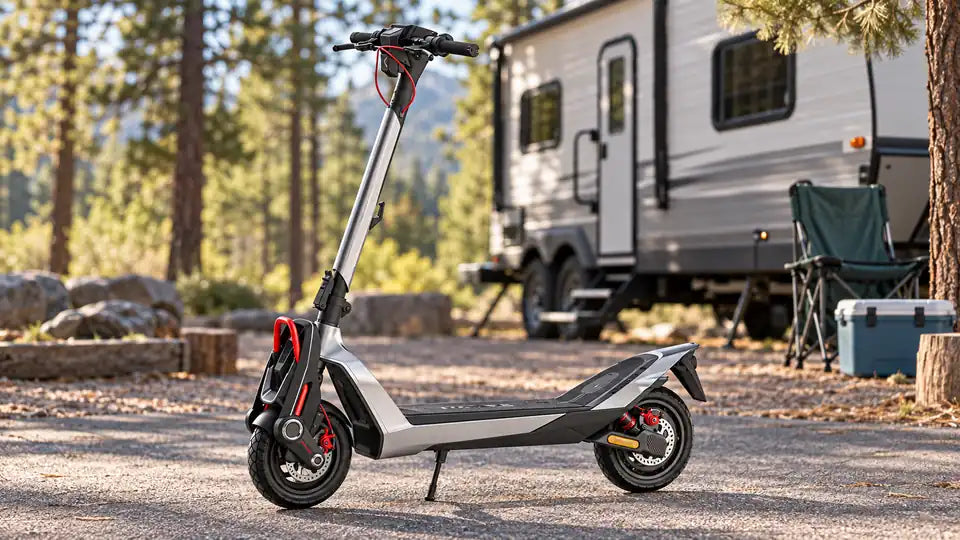
Electric scooters for camping can make trips to the camp store or restrooms easier without starting the RV. The right setup depends on three things: where riding is permitted, how well the scooter handles the surface, and whether it fits alongside your camping gear. Check those first, then plan range and charging around the routes you'll actually use.
Check Riding Rules Before You Go
Campground and Park Policies
Check policies for both the campground and any routes outside it. Permission inside a private campground does not extend to a nearby park or public road.
Before departure, confirm:
- Where electric scooters are permitted.
- Applicable speed limits, helmet rules, and age requirements.
- Seasonal closures and restrictions during quiet hours.
- Whether the planned route crosses land managed by another agency.
In national parks, the National Park Service's powered micromobility rule permits qualifying devices, including electric scooters, only in designated locations. Check the park's current notices and superintendent's compendium, the document containing local designations and restrictions.
For national forest routes, use the Forest Service Motor Vehicle Use Map guidance to understand motorized access by vehicle class and season. Confirm your scooter's classification and route eligibility with the local ranger district. A road open only to highway-legal vehicles may have requirements a recreational scooter does not meet.
Save maps and access information offline. Cell service may disappear before you reach the campground.
Scooter Rules vs. E-Bike Rules
A bicycle symbol or an e-bike-friendly trail description does not establish scooter access. Different rules can apply to standing electric scooters, bicycles, and e-bikes.
When asking about access, describe a standing, throttle-operated electric scooter and identify the exact route.
Trail Etiquette
Keep speeds low around campsites, pedestrians, intersections, and blind corners. Announce passes politely and wait for enough room.
Stay on the designated surface, give wildlife space, and avoid cutting through campsites or riding around puddles through vegetation. When conditions deteriorate, turn back rather than widening the route.

Match Your Scooter to the Terrain
Paved Campground Roads
Permitted paved loops are a practical setting for short trips between a campsite, restrooms, and nearby amenities. Watch for potholes, broken edges, speed bumps, and gravel washed across the pavement.
For paved campground errands, the NAVEE GT5 Max commuter scooter combines 10-inch tubeless tires with front-fork and rear damping-cylinder suspension to soften impacts from pavement joints and minor irregularities.
Keep enough stopping distance for children, pets, and vehicles backing out of campsites.
Compacted Dirt and Gravel
Firm, dry dirt and tightly compacted gravel need closer inspection. Loose stones, washboard sections, deep ruts, and soft shoulders can change handling quickly.
For permitted routes with mild surface irregularities, consider the NAVEE UT5 Max with hydraulic suspension. Its 12-inch tubeless tires can roll over small irregularities more easily than smaller wheels, while front and rear hydraulic suspension helps absorb repeated bumps. The specified 6-inch ground clearance provides more room beneath the deck, reducing the likelihood of scraping on uneven ground.
These features cannot guarantee grip on loose gravel. Follow the manual's riding limits and inspect unfamiliar sections.
Sand, Mud, and Rocky Trails
Avoid deep sand, mud, water crossings, and rocky sections that exceed the scooter's intended use. Small wheels can sink, deflect sideways, or stop abruptly. More motor power cannot make up for inadequate grip.
Consider the return trip, too. A hill you can climb may be difficult to descend under control, especially with loose gravel or extra gear.
Pack and Transport Your Scooter
Check Weight and Folded Size
Measure the storage space remaining after loading your tent, cooler, chairs, and other equipment. Check the vehicle opening as well as the interior, leaving room for padding and securing straps.
The roughly 20-pound weight difference favors the GT5 Max for frequent loading; the UT5 Max requires more lifting effort and storage height. Arrange help when needed, and leave room to secure either scooter.

Secure It in Your Car or RV
Review how to fold an electric scooter, then follow the exact procedure and approved lifting points in your model's manual.
For transport:
- Turn the scooter off and secure the folding mechanism.
- Position it so other gear cannot press against the controls, display, or charging port.
- Use appropriate vehicle anchor points and securing methods to prevent movement.
- Keep exits clear and protect the charger from moisture and impact.
Do not assume the folding latch or handlebar is an approved tie-down point.
Pack Riding and Repair Essentials
Pack for the scooter's tire type and the repairs you know how to perform.
Before departure, check tire pressure, brakes, lights, and the folding lock. Self-sealing tires still need inspection and pressure checks.
Carry Gear Within Payload Limits
Include clothing, water, bags, and supplies when calculating total payload. The GT5 Max has a maximum load of 286 pounds; the UT5 Max supports up to 330 pounds. Follow any separate limits for approved accessories.
Keep loads small and balanced. Avoid hanging bags from the handlebars, secure loose straps away from moving parts, and transport bulky camping equipment in the vehicle.

Plan Range and Campsite Charging
Account for Hills, Terrain, and Gear
Maximum advertised range reflects specified test conditions. The GT5 Max's 55.9-mile figure, for example, applies at 9.3 mph; it does not predict a camping route with hills, loose surfaces, and extra cargo.
Build a route plan around:
- Total round-trip distance, including campground errands.
- Elevation changes and surface conditions.
- Rider and cargo weight.
- Temperature, tire pressure, and riding speed.
- A reserve for detours or unexpected battery use.
Use a short loop near camp to gauge battery consumption before extending the route. Keep a return-trip reserve without counting on downhill energy recovery.
Confirm Power and Charger Compatibility
Ask whether scooter charging is permitted and which outlet you may use. An electric campsite does not guarantee a convenient charging location or enough available capacity alongside other appliances.
Allow roughly 5–6 hours for a standard GT5 Max charge and about 7 hours for the UT5 Max. Starting charge and operating conditions affect the actual time.
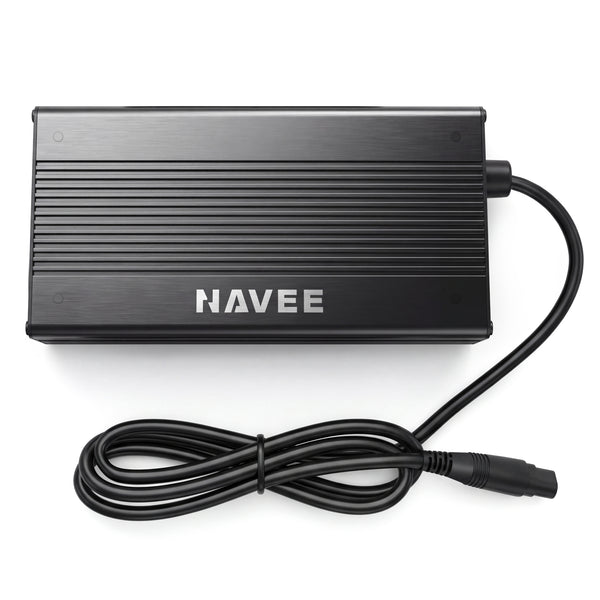
With the optional NAVEE 10A fast charger, the UT5 Max supports a fast-charging time of about 2 hours, making shorter charging windows more practical. Confirm sufficient outlet capacity and use this charger only with expressly supported models. Current compatibility specifications do not include the GT5 Max.
Charge Safely and Store Overnight
Follow the manual's charging-temperature requirements, especially after a hot ride or a cold night. Keep the charger and connections dry, and use a stable, ventilated location away from bedding, tents, and exits.
The Consumer Product Safety Commission's charging guidance recommends using the supplied or manufacturer-recommended charger, staying present during charging, and never charging while sleeping. Unplug the scooter when charging is complete.
After charging, disconnect the scooter and secure it in a dry location within the manual's storage-temperature limits.
FAQs
Are Electric Scooters Allowed on Hiking Trails?
Only where the land manager explicitly permits them. When a hiking trail's policy does not address electric scooters, ask the managing office before riding.
Do You Need an Off-Road Scooter for Camping?
Not for paved campground loops. Choose a scooter around the actual surface, riding distance, and loading requirements. Rougher routes need appropriate tires, suspension, and clearance, but an “off-road” label does not establish legal trail access.
Can a Portable Power Station Charge a Scooter?
Yes, if its AC output meets the approved charger's input requirements. Check voltage, continuous power, and usable energy capacity. For example, do not assume a 716Wh power station can fully recharge the UT5 Max's approximately 716Wh battery from empty: conversion losses reduce the energy reaching the battery. An ordinary USB power bank is generally unsuitable.
Can You Leave a Scooter Outside Overnight?
A dry, locked storage location is preferable. Water resistance does not protect against theft or make prolonged rain exposure acceptable. If outdoor storage is unavoidable, follow the manual's temperature and weather-protection requirements, and let the scooter cool and dry before covering it.
Compartir:
Mejores patinetes eléctricos con control por aplicación en 2026: características que importan
Mejora de la batería de patinete eléctrico vs. reemplazo OEM: ¿Qué debe coincidir?