


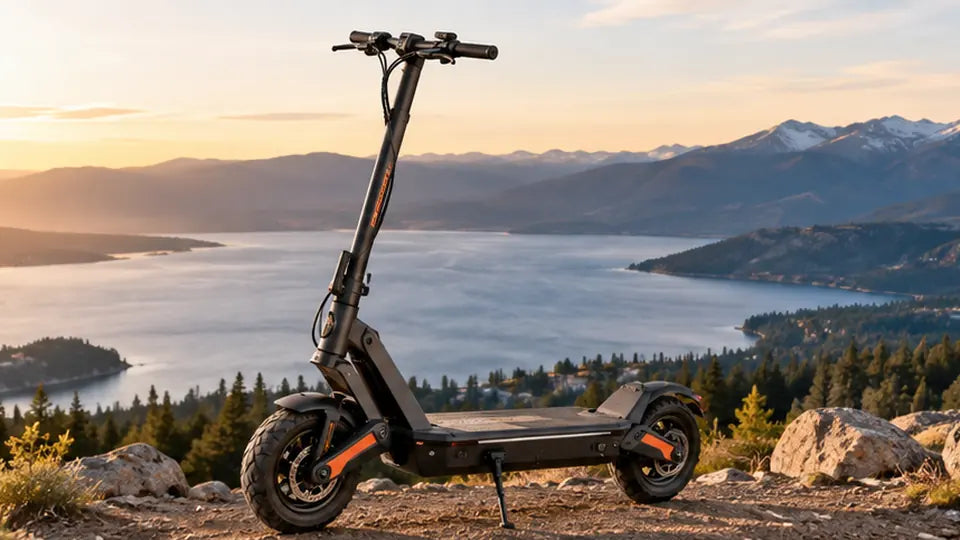
Many electric scooters now come with a phone app, but only some app features change how you ride. Adjustable speed limits, remote locking, and a reliable battery readout get used every day. Others look good on a spec sheet and go untouched after the first week. This guide covers the app features worth paying for, the hardware that makes them useful, and three scooters that put those features to work.
Why App Control Matters
What App Control Does
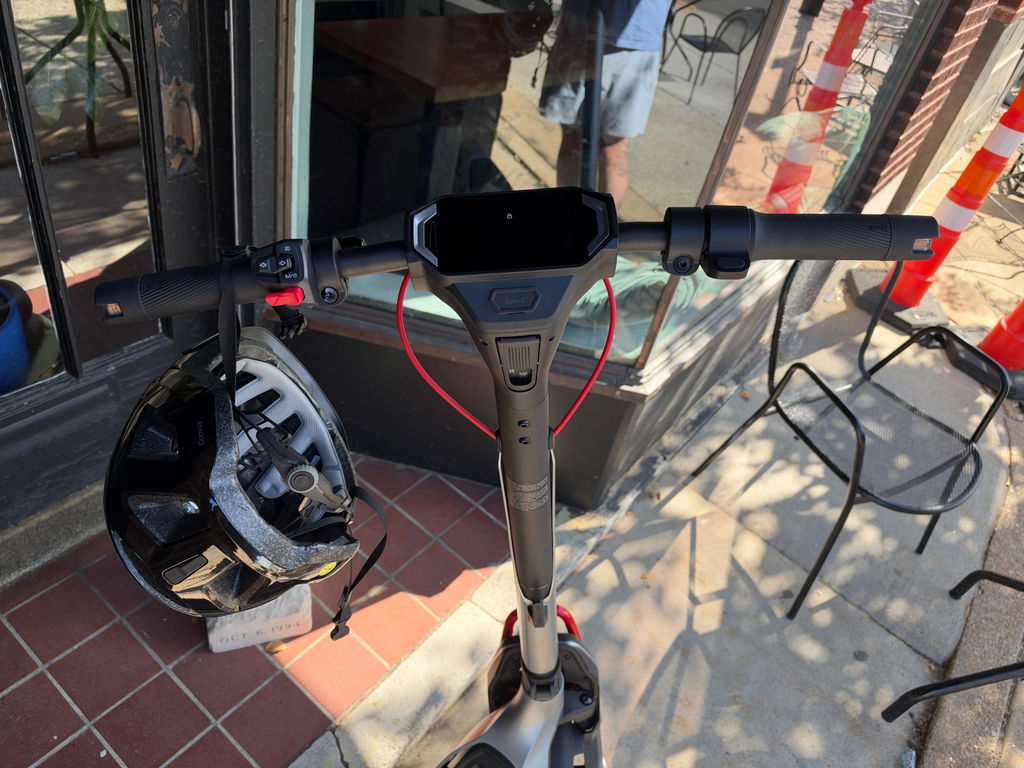
A scooter app connects to your phone over Bluetooth and works as a second control panel. You can check the battery, switch riding modes, lock the scooter, and review trip data without reading a small display on the handlebar. Some apps also install firmware updates (software updates for the scooter itself) and help you find the scooter if it goes missing.
A good app saves time. A poor one adds a step before every ride.
Who Benefits Most
App control helps three groups of riders the most:
- Daily commuters: They ride the same route every day, so battery planning and theft protection matter.
- New riders: They can start with a low speed limit and raise it as they get comfortable.
- Shared users: Family members can each use a different speed limit on the same scooter.
Occasional riders may open the app only a few times a year. That is fine, as long as the scooter rides well without it.

App Features Worth Paying For
The table below shows which app features are most useful and why.
Speed Modes
Speed modes are the feature most riders use every day. The best apps let you set your own speed limit instead of choosing from a few fixed presets. A custom limit helps on shared paths, in bike lanes, and in places where local rules cap scooter speeds.
Also check how each mode changes acceleration, not only top speed. A slower start is easier for new riders and uses less battery.
Cruise Control
Without cruise control, you hold the throttle down for the whole ride, which gets tiring on a 30-minute commute. Choose a version that switches on after you hold a steady speed for a few seconds and switches off as soon as you touch the brake.
Remote Lock and Alerts
An app lock turns off the motor, so a thief cannot simply ride the scooter away. A movement alert warns you if someone moves it while it is parked. Some apps also unlock the scooter automatically when your phone gets close, which saves a step at every start.
Scooters that work with Apple's Find My network also show their last known location in the Find My app on your iPhone. Use these features together with a strong physical lock, since no app can stop someone from carrying the scooter away.
Battery and Range Tracking
A battery percentage tells you how much charge is left. An estimated remaining range is more useful, because it tells you how far that charge will take you.
Treat claimed range as a best-case figure. Manufacturers measure it at slow, steady speeds, and range drops quickly as speed goes up. The NAVEE UT5 Max, for example, is rated for 62.1 miles at 9.3 mph but 40.4 miles at 15.5 mph. Hills, heavier riders, and cold weather cut range further.
Ride Stats
Trip history and distance logs are nice if you like seeing your totals, but they do not change how well the scooter works. Do not pay extra for them.
Hardware That Supports Smart Features
An app cannot make up for weak hardware. Check these basics first.
Motor Power
Scooter listings usually show two motor numbers. Rated power is what the motor can sustain, and peak power is a short burst used for acceleration and climbing. Compare both, and also check the maximum climbing grade. A 28% grade, for example, means the road rises 28 feet for every 100 feet traveled. Real hills with a rider on board are usually less forgiving than the test number.
Battery Capacity
Battery size is measured in watt-hours (Wh). More Wh generally means more range, but it also adds weight and charge time. A battery that is often drained to zero tends to wear out sooner, so a claimed range well above your daily distance protects the battery as well as your commute.
Brakes and Safety
Look for two separate brakes on any scooter that goes faster than about 15 mph. Many scooters pair a disc or drum brake with EABS, an electronic anti-lock system that helps prevent wheel lockup on wet or slippery pavement. Bright lights, reflectors, and a traction control system (TCS), which reduces wheel slip, add to that.
It also helps to confirm that the electrical system has been tested to a recognized safety standard. In the U.S., UL 2272 is the standard most often used for e-scooter electrical safety. It covers the battery, charger, and wiring that power the scooter. It does not test how well the scooter rides or how long it lasts.
Weight and Portability
If you carry your scooter up stairs, onto a train, or into an office, weight matters as much as range. Lightweight electric scooters for city commuting are easier to carry and still handle daily rides well. Also check the folded size, since a compact fold makes under-desk storage easier.

Connectivity and Software
Bluetooth Stability
The app only works well if the Bluetooth connection is stable. Owner reviews are the best place to check this. Several reports of dropped connections or slow pairing are a warning sign. It is also a good sign if the scooter rides normally with the app closed.
Firmware Updates
Firmware updates can fix bugs, improve battery management, and add features after you buy. A brand that releases updates regularly is a better long-term choice than one that does not, so look at the app's update history.
App Ratings and Privacy
Before buying, look up the scooter's app in the App Store or Google Play and check three things:
- Recent reviews: Look for complaints about crashes, slow pairing, or missing features.
- Permissions: Location access makes sense for tracking. Access to your contacts or photos does not.
- Privacy policy: Check what ride data the brand collects and how long it keeps it.
Features You Can Skip
Gimmicky Customization
Custom light colors and startup sounds can be fun, but they do not justify a higher price. If they come free, enjoy them. If they cost extra, put that money into a bigger battery or better brakes.
Social and Gamified Tools
Leaderboards, badges, and ride-sharing communities do not help you get to work. An app that pushes these features hard may care more about keeping you in the app than about being useful.
Best Electric Scooters With App Control
Best Overall
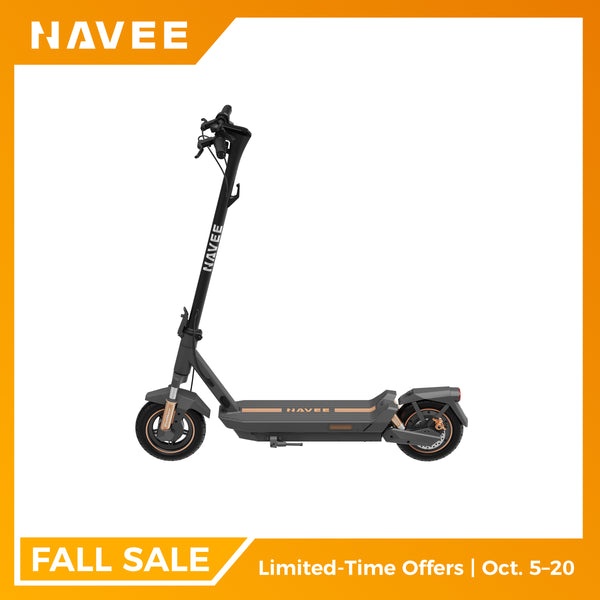
No single scooter is best for everyone, so the table compares three NAVEE models on the specs that matter most for app-connected riding. The GT5 Max balances range and braking, the UT5 Max offers the most range and power, and the G5 Max has the lowest price and lowest weight. Prices change often during sales, so check each product page for the current price.
IPX5 covers water jets and road splash, and IPX6 covers stronger jets, so neither is meant for deep puddles.
Best for Commuters
For a smart commuter scooter with app control, the NAVEE GT5 Max gives you the app, Apple Find My tracking, and TCS in one package. Its 596.7Wh battery is rated for 55.9 miles at 9.3 mph and charges in 5 to 6 hours. In mixed city riding, expect closer to 30 to 45 miles, which still covers a 10 to 20 mile round trip for two or three days.
Braking combines a front drum brake, a rear disc brake, and EABS. Dual suspension and 10-inch tubeless tires smooth out cracked streets, and the 28% maximum climbing grade handles moderate hills. The maximum load is 286 lbs. It folds to 580 mm tall, but at about 55 lbs it is better for short flights of stairs than long carries.
Best Budget Option
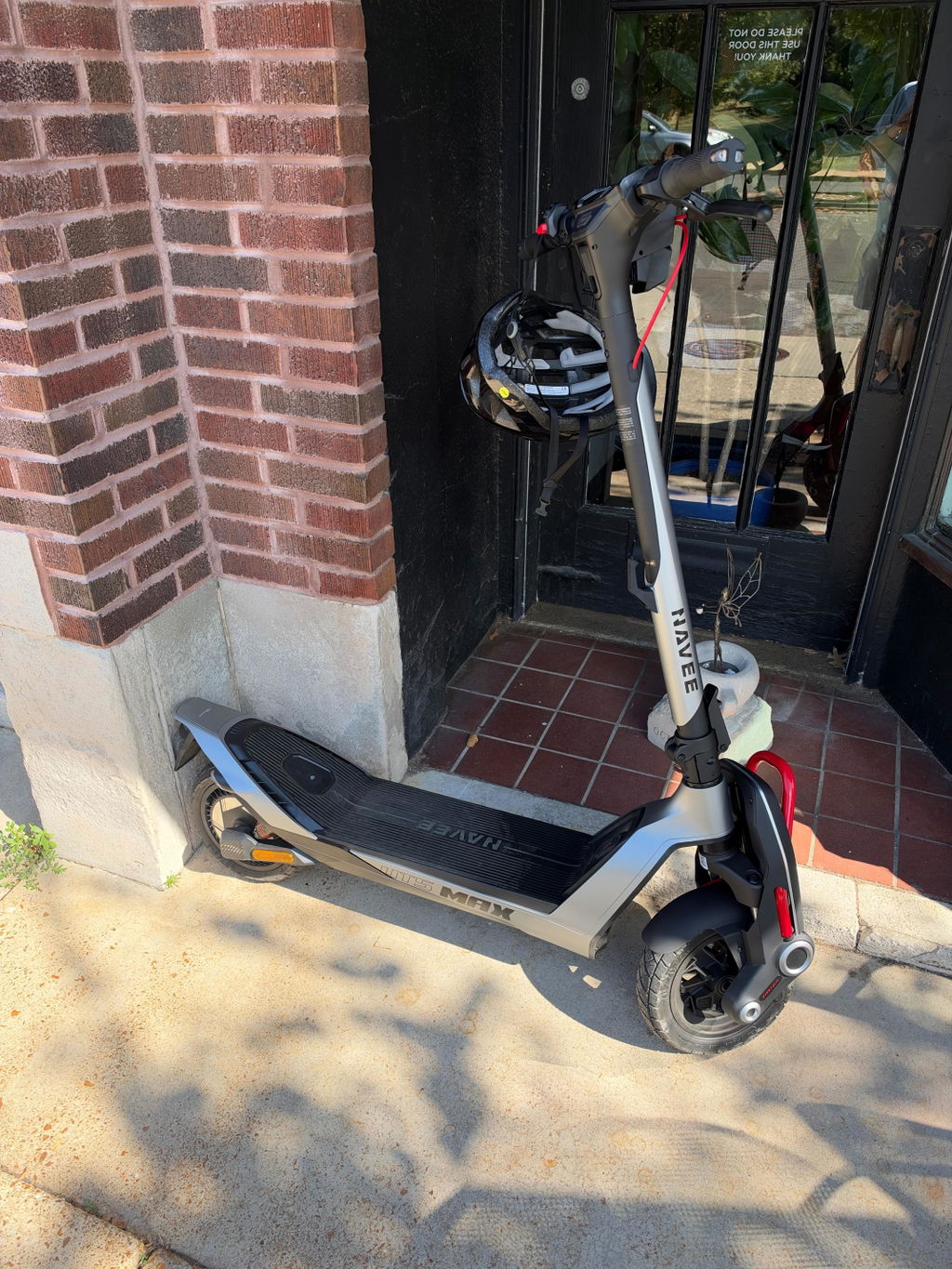
The NAVEE G5 Max is the lowest-priced scooter in this group and still includes the app, Apple Find My, and TCS. Its 477Wh battery is rated for 43.5 miles at 9 mph. The 1000W peak motor reaches 20 mph and handles a 24% maximum grade. At 49.8 lbs net, it is the lightest of the three, and handlebar turn signals add visibility in traffic.
The trade-offs are an 8-hour charge, a 265 lb maximum load, and a simpler brake setup of a front drum brake plus rear EABS, with no disc brake. For flat commutes and bike lanes at 20 mph, that is usually enough.
Best for Long Range
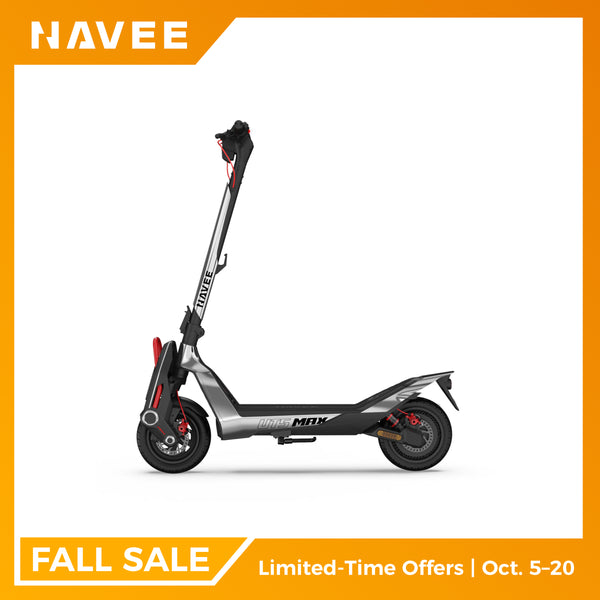
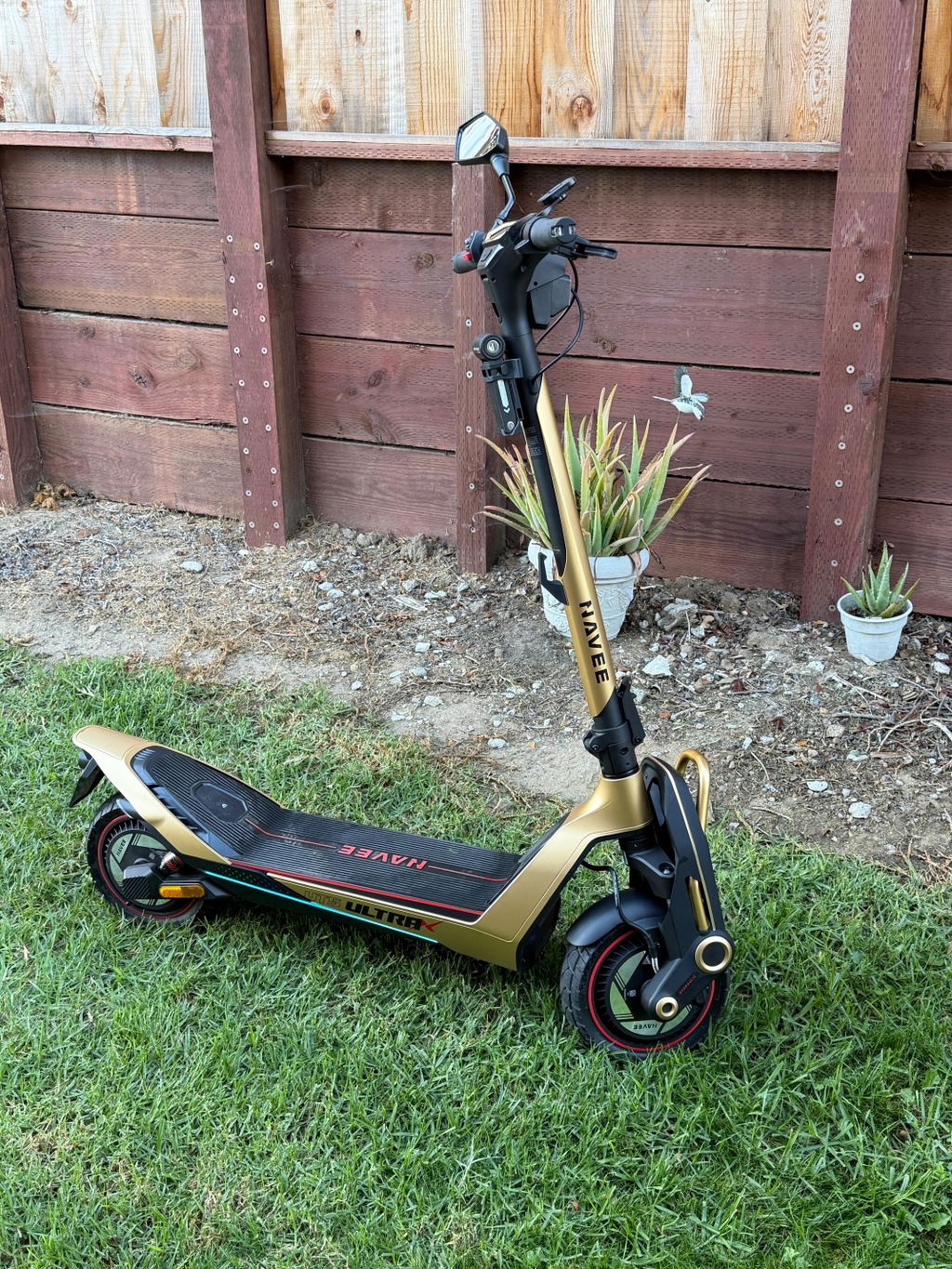
For long routes or fewer charging days, a long-range electric scooter like the NAVEE UT5 Max gives you the most room. Its 716Wh battery is rated for 62.1 miles at 9.3 mph and 40.4 miles at 15.5 mph. A full charge takes 7 hours, or about 2 hours with the Flash Charge option.
The app adds Auto Unlock as you approach, and a 3.5-inch screen shows speed, battery level, and riding mode. Apple Find My and TCS are included. The 2400W peak motor climbs a 39% grade and reaches 31 mph, so check local speed rules before riding at full power. Front and rear disc brakes with EABS, dual hydraulic suspension with adjustable damping, and 12-inch self-healing tubeless tires round out the setup. The trade-off is weight. At 75 lbs net, it is built for door-to-door rides, not for carrying up stairs.

How to Choose the Right Scooter?
Match Your Daily Route
Start with your actual route and answer these questions:
- How far is your round trip?
- Are there steep hills or rough roads?
- Will you carry the scooter on stairs or public transit?
A short, flat commute does not need a powerful scooter. A hilly route with rough pavement needs a stronger motor and suspension. Frequent carrying makes net weight a top priority.
Set a Realistic Budget
Scooter prices vary widely, and sales change them often. You can compare electric scooters at different price points to see what each tier adds, such as a larger battery, disc brakes, or a higher waterproof rating. Judge the whole package, not the app alone.
Compare Warranty and Support
A longer warranty and quick customer support can save you money later. The three scooters above list a 24-month limited warranty on most parts, including the motor, hub, and frame. Check what is covered and for how long on any scooter you consider. Also plan for scooter maintenance costs, since tires, brakes, and suspension wear faster on higher-performance models.
FAQ
Do electric scooters with app control cost more?
Not always. App connectivity now comes on scooters at many price levels, including entry-level models. Bigger price differences usually come from battery size, motor power, and suspension.
Can I use a scooter without the app?
In most cases, yes. The main controls are on the handlebar, so many scooters ride normally without the app. Features like custom speed limits, remote locking, and firmware updates usually need it, so check what a specific model requires.
Which app features prevent theft?
Remote lock, movement alerts, automatic locking, and location tracking help the most. They make the scooter harder to ride away and easier to find, but a strong physical lock is still needed.
Do app updates improve performance?
Often, yes. Updates can fix bugs, make the battery readout more accurate, and sometimes add new settings. Keeping both the app and the scooter's firmware up to date is an easy way to get more from your scooter.
Compartir:
Electric Scooter Maintenance: Commuter vs. Performance