


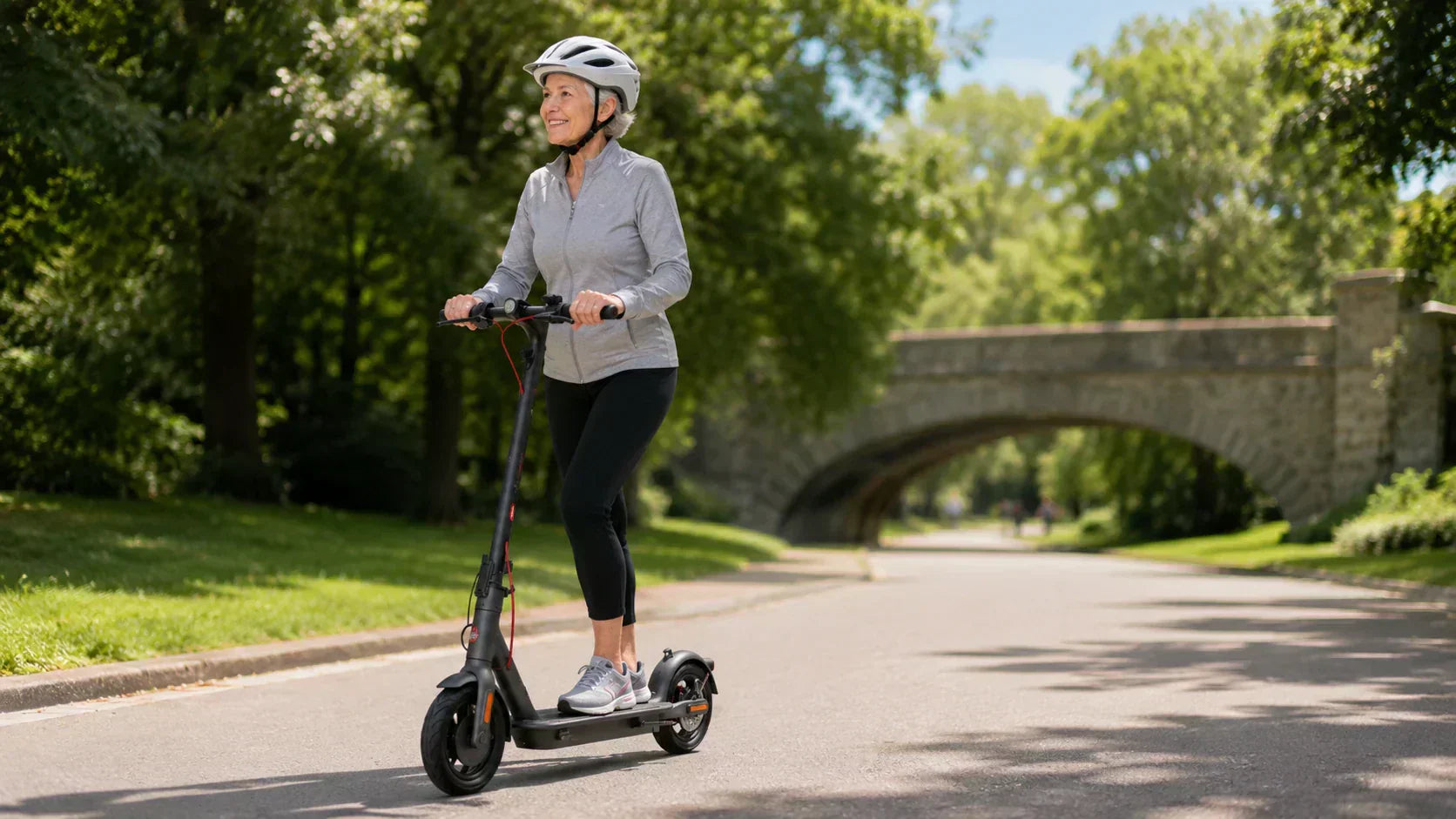
Electric scooters are a fantastic tool for active seniors looking to maintain their independence and handle short daily trips with ease. However, choosing the right model means looking past flashy top speeds and focusing entirely on stability, portability, and safety.
This guide breaks down everything you need to know to make the right choice, including a comparison of stand-up versus seated designs, the absolute must-have safety features, a look at a top senior-friendly option—the NAVEE V40i—and essential tips for a safe first ride.
Is an Electric Scooter Good for Seniors?
The short answer is yes—but with a few caveats. For active seniors, an electric scooter offers an incredible blend of freedom and utility. It’s an eco-friendly, fun way to cruise around retirement communities, zip over to a neighbor’s house, or run quick errands at the local market.
However, it’s not a one-size-fits-all solution. Riding an electric scooter requires a baseline level of physical confidence, decent reflexes, and steady balance. If a senior is dealing with severe vertigo or mobility challenges that require a traditional wheelchair, a standard electric scooter won't be the right fit. But for an older adult who is relatively active and wants to save their joints on longer walks, a scooter can be an absolute game-changer.
Stand-Up Electric Scooter vs. Seated Electric Scooter for Seniors
When shopping around, you’ll quickly notice the market is split into two main designs: stand-up models and scooters that feature a seat. Choosing between them depends entirely on the rider’s physical comfort and daily habits.
Riding Posture and Balance Needs
-
Stand-Up Scooters: These require the rider to remain upright, engaging their core and leg muscles to maintain balance. Standing provides a higher vantage point, making it easier to see obstacles ahead, but it can become tiring on longer jaunts.
-
Seated Scooters: By adding a seat, these models lower the rider's center of gravity significantly. This configuration takes the pressure off the knees, hips, and lower back, making it a much safer, more stable option for anyone prone to fatigue or minor balance issues.
Comfort, Storage, and Daily Use Differences
Stand-up electric scooters are generally much more compact. They are lighter, fold down easily, and can be tossed into a car trunk or stored in a front closet without breaking a sweat. Seated scooters offer unmatched comfort and frequently come with a basket for groceries, but they are notably bulkier, heavier, and much tougher to transport if you plan on taking them on road trips.
What Safety Features Matter Most for Senior Riders?
Safety isn't just an afterthought—it's the whole ballgame. When evaluating different models, look for these specific engineering features designed to keep riders upright and out of harm's way.

Larger Tires for Smoother Paved Rides
Small, solid plastic tires will make a rider feel every single pebble, crack, and uneven seam in the sidewalk. For older riders, 10-inch pneumatic (air-filled) tires are a must. They act as natural shock absorbers, cushioning the ride and drastically reducing the risk of a tire getting caught in a sidewalk gap.
Predictable Braking Control
The last thing a senior needs is a brake system that is either too spongy to stop in time or so sudden that it risks throwing them over the handlebars. Look for a dual braking system—ideally combining an electronic front brake (like E-ABS) with a mechanical rear disc brake. This setup ensures smooth, predictable, and reliable slowing and stopping power.
Lights and Turn Signals for Visibility
Being seen by drivers and pedestrians is crucial. A great senior-friendly scooter should feature a bright front headlight, a clear rear brake light, and built-in handlebar turn signals. Turn signals allow seniors to indicate their next move without having to take their hands off the grips to use hand signs, preserving their balance at all times.
Foldable Design and Scooter Weight
A scooter isn’t practical if it’s too heavy for a parent to manage. Look for a frame made of lightweight, durable material (like automotive-grade steel or aluminum) that stays around the 35 to 40-pound mark. A smooth, quick-folding mechanism ensures that either the rider or a family member can fold it down easily for effortless storage.
Simple Display and Riding Modes
An over-complicated dashboard is a dangerous distraction. Seniors benefit from a large, high-contrast display that shows speed and battery life at a glance, even in direct sunlight. Additionally, the scooter should offer customizable riding modes, including a low-speed "eco" or "walking" mode, which limits the top speed while a beginner is still getting a feel for the throttle.
What to Check Before Buying an Electric Scooter for a Parent
Before you add a scooter to your cart for an aging parent, run through this quick checklist:
-
Weight Capacity: Check the maximum payload. Ensure it can comfortably accommodate your parent plus any extra weight from backpacks or groceries.
-
The Local Terrain: Take a look at their neighborhood. Are there steep hills, or is it mostly flat? If they face steep inclines, you’ll need a scooter with higher peak motor power.
-
Local Regulations: Look into city or community rules. Some neighborhoods restrict scooters to bike lanes, while others allow them on sidewalks.
-
Physical Dexterity: Make sure your parent has the necessary hand grip strength to confidently squeeze the brake levers and steady control over their wrists for the throttle.

Why the NAVEE V40i Is a Strong Fit for Active Seniors
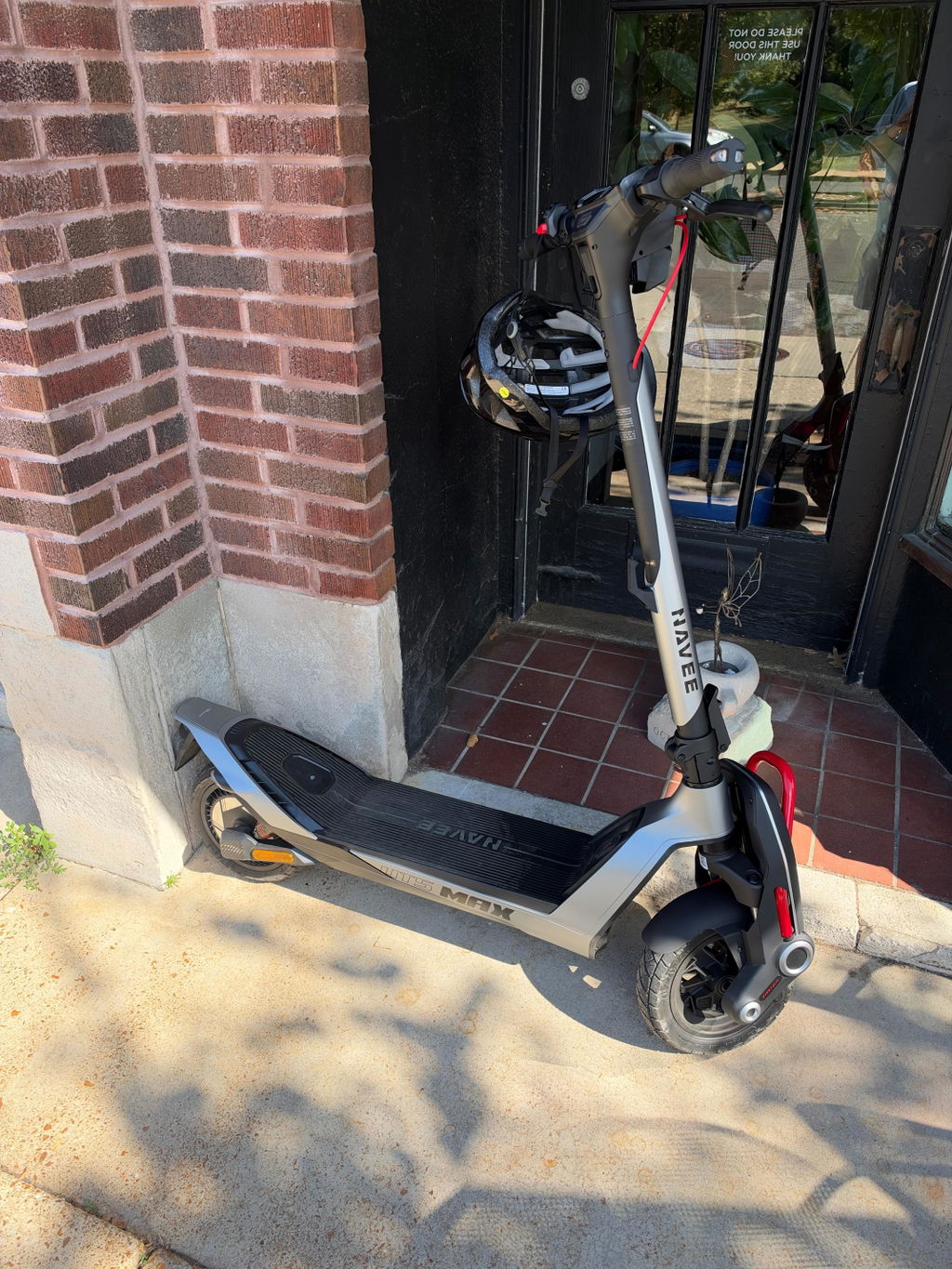
If you're looking for a specific model that hits the sweet spot for senior safety and portability, the NAVEE V40i Electric Scooter stands out as a top-tier choice for active older adults.
NAVEE V40i Quick Specs:
| Spec | NAVEE V40i |
|---|---|
| Motor Power | 350W Rated / 700W Peak |
| Max Range | 24.9 Miles |
| Top Speed | 20 MPH with safer low-speed modes |
| Tires | 10-Inch Pneumatic Tires |
| Max Load Capacity | 265 lbs |
| Weight | 39 lbs |
The V40i is engineered with a commuter-first mindset that directly benefits older riders. Its motor delivers a powerful 700W of peak power, allowing it to tackle up to 18% inclines effortlessly so your parent won’t stall out on neighborhood hills.
Here is why the NAVEE V40i is particularly well-suited for seniors:
-
Joint-Friendly Ride: The 10-inch pneumatic tires excel at soaking up road vibrations, preventing that "numb hand" feeling that comes from rough pavement.
-
Linear Braking: Its dual-braking system (front E-ABS and rear disc) delivers incredibly smooth, progressive deceleration without sudden, jerky stops.
-
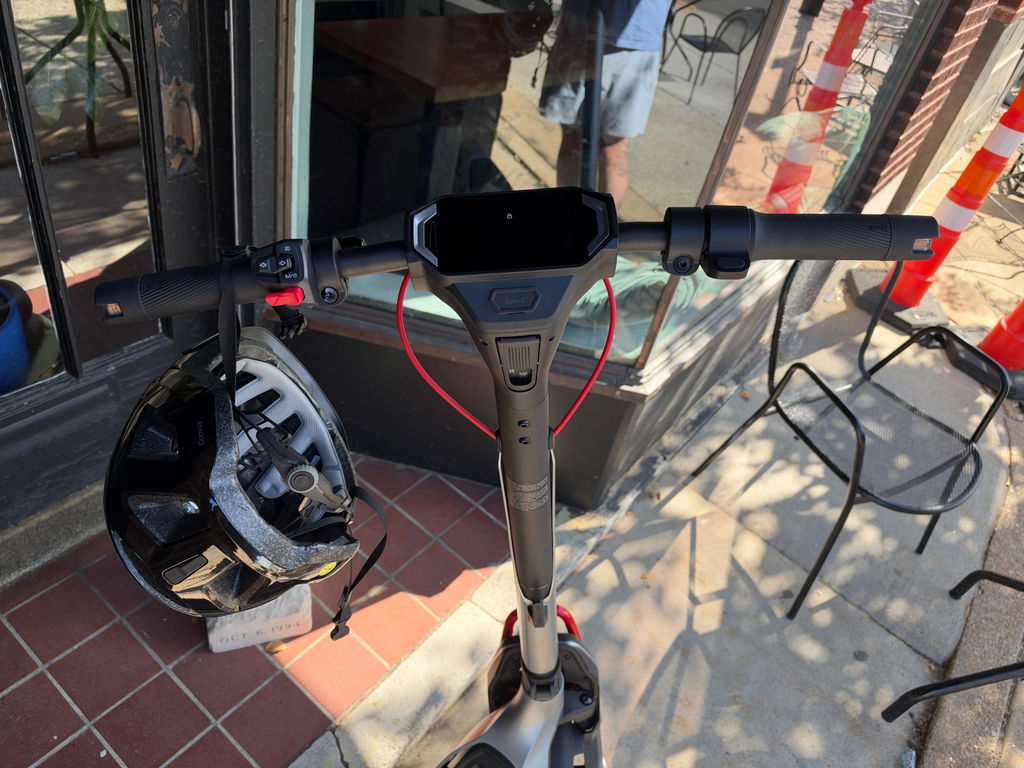
Thoughtful Ergonomics: It features a 3.5-inch high-definition suspended display tilted at a 14-degree angle, ensuring it can be read effortlessly without forcing the rider to strain their neck or squint in bright daylight.
-
High Visibility: It comes standard with built-in handlebar turn signals and an auto-sensing headlight that turns on automatically when the sun starts to set.
-
Extra Peace of Mind: Weighing 39 lbs with a double-folding stem, it is highly portable. Best of all, it features a hidden AirTag slot built right into the frame, allowing family members to easily track the scooter's location through their smartphones if it's ever misplaced or forgotten.
First-Ride Safety Tips for Senior Riders
Never Skip the Helmet: Even for a quick trip down the driveway, a properly fitted helmet is non-negotiable. Knee and elbow pads are also a smart idea for the first few outings.
Start in the Lowest Gear: Keep the scooter set to its lowest speed mode until the rider completely masters the sensitivity of the thumb throttle.
Find an Empty Practice Space: Head over to an empty parking lot or a flat, quiet cul-de-sac to practice mounting, turning, and braking smoothly.
Keep Both Hands on the Wheel: Avoid holding bags, phones, or waving to neighbors while moving. Let the built-in turn signals do the talking so your hands stay focused on steering.
Final Thought
Electric scooters are no longer restricted to the younger crowd—they are an exceptional gateway to prolonged freedom and mobility for seniors. By focusing heavily on stable 10-inch air-filled tires, predictable dual brakes, and highly visible signaling, you can find a scooter like the NAVEE V40i that gives your parents the independence they crave with the safety and peace of mind you both deserve.
FAQs
1. Can seniors ride electric scooters on sidewalks?
In many U.S. cities, electric scooters are not allowed on sidewalks unless local rules clearly permit it. New York City, for example, allows e-scooters in bike lanes and on streets with speed limits of 30 mph or less, but does not allow them on sidewalks. For safety, older riders should use bike lanes, paved paths, or quiet low-speed streets where legal, and check local rules before riding.
2. Do you need a license to ride an electric scooter?
In many places, a driver’s license is not required for low-speed electric scooters, but rules vary by state and city. Some areas may also have age limits, helmet rules, or speed limits, so it is worth checking an electric scooter license guide before riding in your area.
3. Can an electric scooter fit in a car trunk?
Some folding scooters can fit in a trunk, but size and weight matter. Always check folded dimensions and scooter weight before buying, especially if one person will need to lift it.
4. Does Medicare cover folding electric scooters?
Medicare usually does not cover personal stand-up electric scooters used for recreation or commuting. Medicare coverage is generally limited to medically necessary wheelchairs or power-operated scooters prescribed by a treating provider for use in the home, according to Medicare’s wheelchair and scooter coverage guidance.
More reading: How To Ride An Electric Scooter For Beginners In 5 Easy Steps
Compartir:
E-Scooter Battery Fire Risks and How to Stay Safe
How Much Is An Electric Scooter? Budget vs. Premium Models Explained