


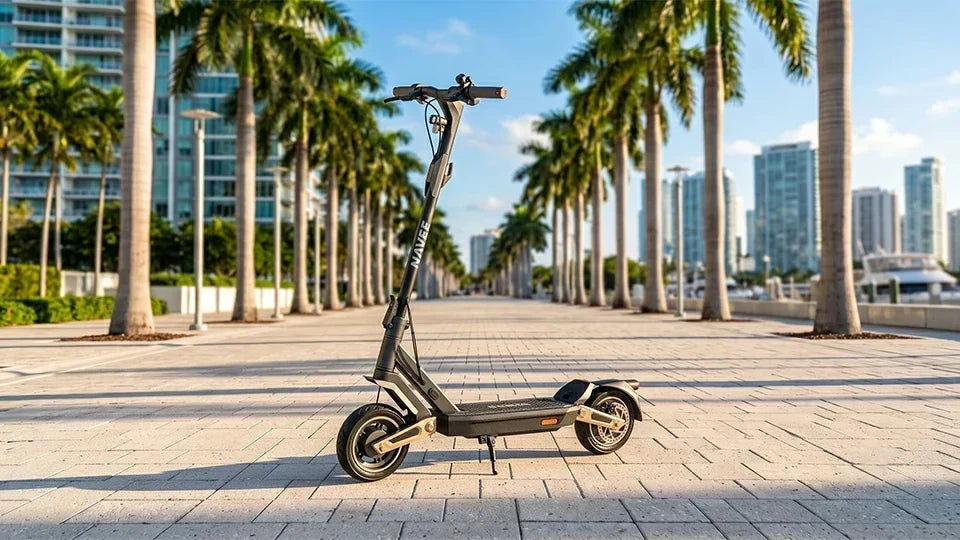
Sí, los patinetes eléctricos son 100 % legales en Florida. Según el Estatuto de Florida § 316.2128, los patinetes eléctricos se clasifican como «dispositivos de micromovilidad» y tienen exactamente los mismos derechos y responsabilidades que las bicicletas. Esto significa que no necesita licencia de conducir, registro del vehículo, matrícula ni seguro de automóvil para poseer uno y conducirlo. Puede circular legalmente en su patinete eléctrico por todo el estado en carriles bici designados y por vías públicas (con límites de velocidad señalizados de 30 mph o menos), siempre que respete el límite de velocidad de 20 mph para patinetes eléctricos establecido por el estado.
Sin embargo, antes de salir a la carretera, hay un inconveniente: Florida funciona con un sistema de «mosaico municipal». Aunque el gobierno estatal establece esta base legal tan generosa, las ciudades individuales como Miami, Orlando y Tampa tienen plena autoridad para crear sus propias normas estrictas sobre la circulación por las aceras, la reducción de los límites de velocidad (a menudo de 7 a 15 mph en zonas peatonales) y las normas de estacionamiento.

Si está investigando la mejor manera de mejorar su trayecto urbano diario, desplazarse por un campus universitario extenso o explorar pintorescos senderos costeros, comprender estas leyes marca la diferencia entre un trayecto sin contratiempos y una frustrante multa de tráfico.
Elegir un patinete con modos de velocidad ajustables —algo que tratamos en la guía de compra que aparece a continuación— es la forma más sencilla de cumplir la normativa sin importar en qué ciudad circule. (Puede explorar toda la gama de NAVEE si quiere ver cómo se aplica esto en la práctica.)
En esta guía de 2026, explicaremos exactamente lo que exige la ley de Florida, dónde puede circular de forma segura y cómo elegir el patinete eléctrico adecuado y legal para la vía pública para que se sienta cómodo, seguro y cumpla plenamente la normativa desde el primer momento.
Comprender las leyes sobre patinetes eléctricos en Florida
Según los códigos estatales de control de tráfico, los patinetes eléctricos (clasificados oficialmente como «dispositivos de micromovilidad» o «patinetes motorizados») tienen exactamente los mismos derechos y deberes que las bicicletas tradicionales. Esto hace que poseer un patinete eléctrico en el Estado Soleado sea increíblemente práctico, pero hay algunas normas legales que debe seguir.
¿Necesito licencia de conducir, registro o seguro?
Los legisladores de Florida reconocieron que los patinetes eléctricos de baja velocidad son una herramienta fundamental para reducir el tráfico de automóviles y las emisiones en las zonas urbanas congestionadas. Dado que, según la ley estatal, funcionan más como bicicletas que como vehículos de motor, el estado ha eliminado toda la burocracia habitual del DMV.
Su lista de verificación legal antes de la compra:
- Licencia de conducir: NO es necesaria para los patinetes de propiedad privada (regidos por Fla. Stat. § 316.2128(3)).
- Registro y título: NO son necesarios. No necesita matrícula ni certificado de título del DMV.
- Seguro de automóvil: NO es obligatorio por ley estatal (aunque siempre es una buena idea comprobar si su seguro de inquilino o propietario incluye cobertura de responsabilidad personal).
Aunque la burocracia es mínima, recuerde que aún debe obedecer las normas de tráfico habituales aplicadas por el Departamento de Seguridad Vial y Vehículos Motorizados de Florida (FLHSMV). Pasar un semáforo en rojo, ignorar una señal de stop o causar un accidente aún puede dar lugar a graves multas de tráfico.
Requisitos de edad y leyes sobre el casco
Aunque no necesita licencia de conducir, existen normas estrictas sobre quién puede circular y qué equipo de protección es obligatorio en las infraestructuras públicas.
- Edad mínima: La edad mínima estatal para conducir un patinete eléctrico por vías públicas es de 16 años.
- Consejo útil: Tras las recientes actualizaciones legislativas, los municipios locales están autorizados a exigir a los usuarios que lleven una identificación con foto emitida por el gobierno para verificar su edad. Lleve siempre su identificación en el bolsillo o una copia digital en el teléfono.
- Norma sobre el casco: Según el Estatuto de Florida § 316.2065(3)(d), si el usuario tiene menos de 16 años, el casco es obligatorio. Si tiene 16 años o más, el casco es opcional por ley en la mayoría de las zonas, pero se recomienda encarecidamente usarlo para protegerse del tráfico impredecible.
¿Tiene curiosidad por saber cómo se comparan las normas de Florida con las del resto del país? Consulte nuestra guía de licencias estado por estado para ver el desglose completo.
¿Dónde puede circular legalmente en Florida? (El mosaico municipal)
Saber dónde puede circular suele ser la parte más confusa de tener un patinete eléctrico en Florida. Veamos cómo evaluar sus rutas de circulación.
Carriles bici y vías públicas
La ley estatal permite los patinetes eléctricos en carriles bici designados y en vías públicas con límites de velocidad señalizados de 30 mph o menos.
Instrucciones paso a paso para circular de forma segura por la carretera:
- Manténgase a la derecha: Circule siempre lo más a la derecha de la carretera que sea posible, al igual que un ciclista. No zigzaguee entre los carriles de los coches.
- Utilice carriles bici exclusivos: Si hay un carril bici designado, las normas estatales recomiendan utilizarlo. Le mantiene separado de los coches pesados y rápidos y le permite cumplir la ley.
- Indique sus intenciones: Como comparte la carretera con los coches, utilice señales claras con las manos o los intermitentes integrados de su patinete antes de girar o cambiar de carril.
- Evite las rampas de acceso a las autopistas: Nunca intente circular con su patinete eléctrico por autopistas de acceso limitado, interstatales o rampas de acceso a vías rápidas.
Aceras y ordenanzas municipales locales
La ley estatal no prohíbe explícitamente la circulación de patinetes eléctricos por las aceras en todo el estado, siempre que ceda el paso a los peatones y emita una señal sonora antes de adelantar. Sin embargo, el Estatuto de Florida § 316.2128(1) otorga a los municipios locales plena autoridad para restringir o prohibir por completo su circulación por las aceras.
- Miami y el sur de Florida: La circulación de patinetes eléctricos por las aceras está muy restringida en los distritos comerciales con mucho tránsito peatonal. Cuando se permite circular por la acera, las normas locales a menudo reducen el límite de velocidad en la acera a solo 7 mph.
- Orlando: Generalmente permite los patinetes eléctricos en aceras y senderos de uso compartido, siempre que los usuarios cedan el paso a los peatones y limiten la velocidad cerca de las zonas con tránsito peatonal.
- Tampa: La circulación por las aceras está estrictamente prohibida en los concurridos distritos del centro y en las zonas designadas como «No Ride», como el Tampa Riverwalk y Bayshore Boulevard.
Consejo útil sobre el estacionamiento: Muchas ciudades de Florida aplican ordenanzas estrictas contra los patinetes que bloquean las aceras que cumplen con la ADA. Utilice siempre el soporte de su patinete y estacione de forma ordenada cerca de los aparcamientos para bicicletas para no obstruir los pasos peatonales ni las rampas para sillas de ruedas.
Las normas para las aceras varían mucho de una ciudad a otra en todo el país. Lea nuestro desglose completo: ¿Puede circular con un patinete eléctrico por la acera?
Límites de velocidad y elección del patinete eléctrico adecuado
En Florida, la velocidad máxima legal de funcionamiento de un patinete eléctrico en una vía pública o un carril bici es de 20 mph.
Pero ¿qué pasa si quiere comprar un patinete de alto rendimiento que vaya más rápido?
La ley de Florida no le prohíbe poseer un patinete rápido. El límite de 20 mph se aplica estrictamente a la velocidad máxima a la que puede conducirlo legalmente por infraestructuras públicas.
Cómo cumplir la ley con patinetes de alto rendimiento
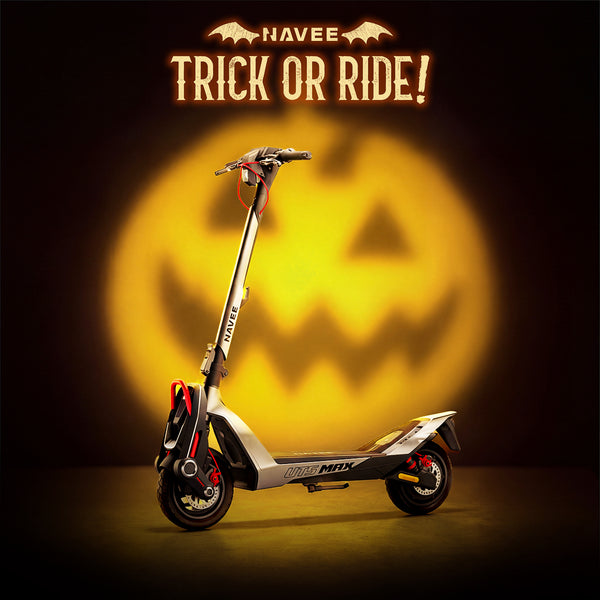
Si está considerando un patinete eléctrico todoterreno o de neumáticos anchos, no tiene que preocuparse por infringir la ley durante su trayecto diario entre semana. Busque un modelo con firmware inteligente que le permita fijar un Modo Legal para la Vía Pública de 20 mph para los trayectos diarios por la ciudad y, después, liberar toda su potencia en propiedades privadas o senderos todoterreno designados los fines de semana. El UT5 Max es un ejemplo de patinete diseñado con este enfoque de doble modo.
Para los usuarios urbanos de todos los días, busque un patinete con modos de velocidad integrados y conmutables directamente en la pantalla del manillar:
- Modo Eco/Peatonal (aprox. 6 mph): Le permite cumplir la normativa en aceras urbanas con normas estrictas y senderos compartidos con peatones.
- Modo Drive (aprox. 15 mph): El equilibrio perfecto entre velocidad y autonomía de la batería para pasear por el vecindario.
- Modo Sport (20 mph): Alcanza el límite legal para seguir el ritmo del tráfico de forma segura en el carril bici.
Lista de verificación de equipo esencial y equipo de seguridad para Florida
Si circula de noche o se desplaza por el clima impredecible de Florida, la ley estatal y el sentido común establecen requisitos obligatorios de equipo.
Iluminación obligatoria y protección contra la intemperie
Según el Estatuto de Florida § 316.2065(7), los vehículos que se conducen entre la puesta y la salida del sol deben cumplir requisitos estrictos de visibilidad. Para asegurarse de que es visible para los coches y estar seguro durante los repentinos aguaceros tropicales, siga esta lista de verificación:
- Faro delantero: Debe tener un faro blanco visible desde al menos 500 pies de distancia.
- Luz/reflector trasero: Debe tener una luz trasera roja o un reflector visible desde al menos 600 pies de distancia.
- Sistema de frenado fiable: Su patinete debe tener frenos en funcionamiento capaces de detenerlo de forma segura sobre pavimento mojado.
- Resistencia a la intemperie: La lluvia de Florida no es ninguna broma. Asegúrese de que su patinete tenga una clasificación de resistencia al agua IP alta para evitar daños en la batería.
Busque un patinete urbano que venga totalmente equipado con faros LED con detección automática, luz de freno trasera, sistemas de doble frenado y una clasificación de resistencia al agua IPX5 o superior — esa combinación le permite cumplir la normativa de la vía pública y estar listo para el asfalto mojado desde el primer momento.
Respuestas a preguntas comunes sobre la legalidad de los patinetes eléctricos
1. ¿Puedo ser arrestado por conducir bajo la influencia con un patinete eléctrico en Florida?
Sí. Dado que está conduciendo un vehículo motorizado por vías públicas, se aplican las normas habituales de Conducción Bajo la Influencia (DUI) según Fla. Stat. § 316.193. Conducir un patinete a casa desde un bar estando intoxicado puede dar lugar a arresto, multas elevadas y posible suspensión de la licencia. Pida siempre un servicio de transporte compartido si ha estado bebiendo.
2. ¿Pueden dos personas ir en un solo patinete eléctrico?
No. Según la ley de Florida (F.S. 316.2065(3)(a)), circular en tándem (llevar un pasajero) está estrictamente prohibido a menos que el patinete haya sido diseñado específicamente por la fábrica con un segundo asiento dedicado. Los patinetes urbanos estándar de una sola plataforma están diseñados para un solo usuario. Sobrecargar el patinete también supera la capacidad máxima de carga, lo que hace que frenar sea peligroso.
3. ¿Se permiten los patinetes eléctricos en las playas o paseos marítimos?
Generalmente, no. La mayoría de las ciudades costeras de Florida prohíben estrictamente los patinetes eléctricos en las playas de arena y los paseos marítimos de madera para proteger el intenso tránsito peatonal. Consulte siempre las señales de la playa o las ordenanzas municipales antes de circular cerca de la costa.

Cómo elegir un patinete urbano legal para la vía pública
¿Listo para dejar atrás el tráfico, ahorrar dinero en gasolina y disfrutar del sol de Florida? Así es como puede evaluar el patinete adecuado para su estilo de vida específico:
- Para trayectos urbanos cortos: Busque un modelo ligero y ágil que alcance justo el límite legal de velocidad, con suficiente autonomía (30+ millas) y potencia de motor para superar puentes y pendientes urbanos — lo suficientemente ligero para levantar y meter en el maletero de un coche o subir por las escaleras de un apartamento. (El ST3 Pro es una opción en esta categoría.)
- Para los aventureros de fin de semana: Un patinete todoterreno con un modo legal para la vía pública conmutable, como el UT5 Max mencionado anteriormente, le ofrece lo mejor de ambos mundos — cumple la normativa para el trayecto diario entre semana y se libera para senderos de tierra el sábado.
- Integración de seguridad inteligente: ¿Le preocupa dejar su patinete aparcado fuera de una cafetería de Florida? Busque modelos con integración con Apple Find My y bloqueos por aplicación Bluetooth para que pueda rastrear su inversión desde cualquier lugar.
Los patinetes eléctricos siguen siendo una de las formas más rentables y fluidas de desplazarse por Florida. Explore la gama completa de patinetes eléctricos Navee para comparar especificaciones y encontrar el modelo que se adapte a su trayecto.
Compartir:
¿Cuáles son los mejores patinetes eléctricos para campus universitarios?
Seguro para patinete eléctrico: lo que necesitas saber