


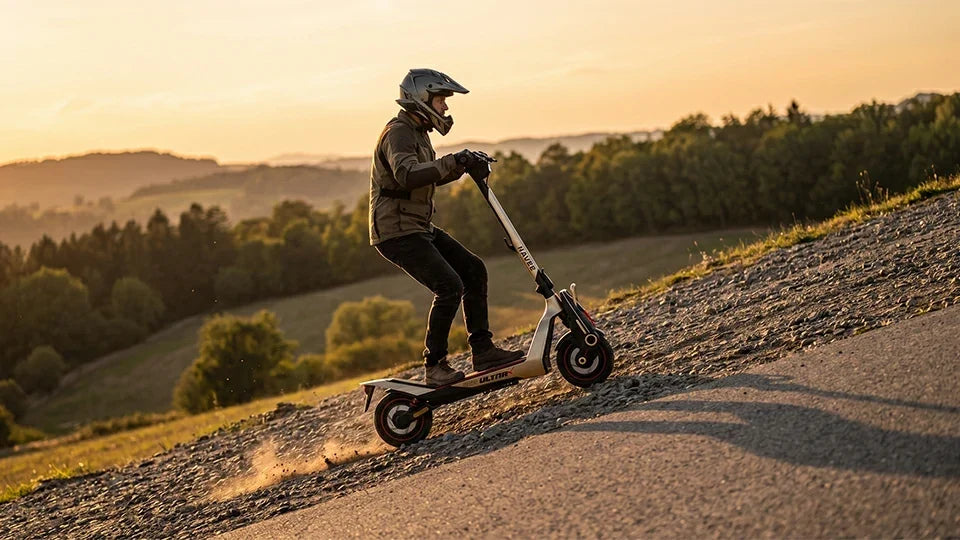
A high-performance scooter should do more than accelerate quickly. The extra performance needs to hold up on hills, last through the ride, remain controllable when speed increases, and still make sense for the roads and storage conditions you deal with every week.
That is why choosing one by motor wattage alone can lead to the wrong purchase. A rider struggling on steep hills has a different problem from someone who wants longer weekend rides. A rider moving onto rougher roads needs more from the tires and suspension, while someone increasing speed should expect stronger braking and better stability as part of the package.
The useful question is therefore: What kind of performance do you need, and does the whole scooter support it?
What Makes A High-Performance Electric Scooter Worth The Upgrade?
Start with the weakness you are trying to remove from your current ride.
If your scooter already handles your route comfortably but runs short on longer trips, more motor power will not solve the main problem. A larger usable battery range is more relevant. If long or repeated hills are causing noticeable slowdown, motor output under load becomes more important. If your goal is higher-speed recreational riding, braking, suspension, tires, and chassis stability all move higher on the priority list.
Road surface can change the answer again. Riders regularly moving between rough pavement, gravel, hills, and uneven roads have a stronger reason to consider all-terrain electric scooters. NAVEE’s current all-terrain collection, for example, groups scooters with larger tubeless tires, stronger suspension systems, higher motor output, and climbing specifications reaching up to about 46%.
A few cracks in an otherwise smooth city commute do not automatically justify that level of hardware. Rough surfaces, steep grades, or longer recreational routes need to be a regular part of your riding before those upgrades begin to provide consistent value.
The first buying decision is therefore not “How powerful should my scooter be?” It is which part of performance is currently limiting your ride.
Can It Deliver Enough Power Under Your Real Riding Conditions?
Power matters when the scooter has to work harder: climbing, carrying more weight, accelerating repeatedly, or moving over resistant surfaces.
That is where rated power, peak power, rider load, and climbing capability need to be read together.
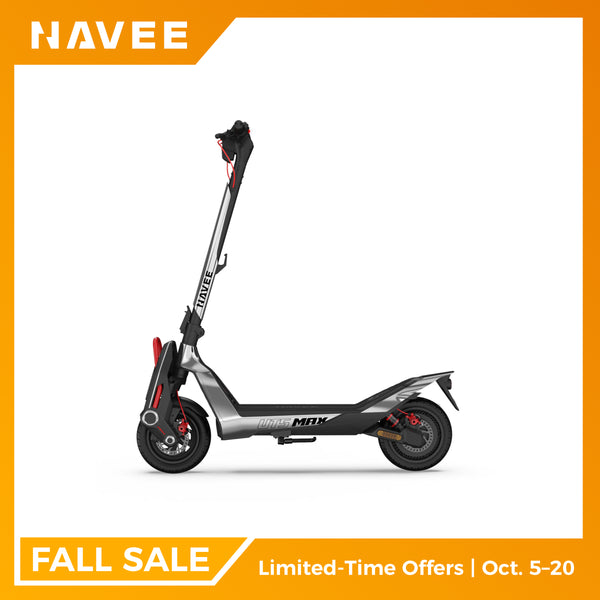
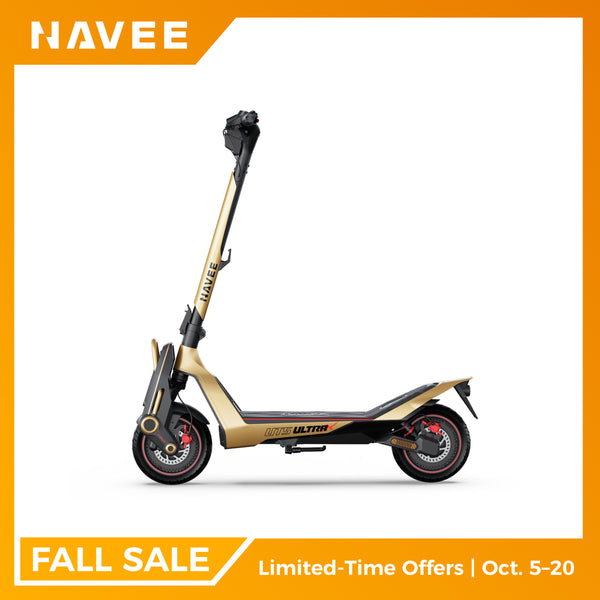
Consider NAVEE’s two current UT models. The UT5 Max uses an 850W rated motor with up to 2,400W peak output and a listed 39% maximum gradeability. The UT5 Ultra X moves to two 1,200W rated motors, up to 2,400W peak per motor, and a listed 46% gradeability. Both support a maximum load of 330 lb.
Those numbers lead to different recommendations.
A rider dealing with moderate-to-demanding hills and wanting a noticeable step above commuter-level performance may already have enough capability in the UT5 Max. The Ultra X becomes easier to justify when steep climbs are frequent, total rider load is higher, or much stronger acceleration is part of the goal.
This is also the right way to judge whether a dual motor electric scooter is worthwhile. The second motor has value when your route gives it a repeated job to do. If most of your riding is flat and moderate-speed, it may add more weight and battery demand than useful performance.
For someone specifically looking for an electric scooter for hills, I would therefore start with the hardest regular climb, total riding weight, and how much speed you expect to maintain on that climb. Then compare motor and gradeability figures against that requirement.
Can It Maintain That Performance For The Whole Ride?
A scooter can feel powerful during a short acceleration test and still be poorly matched to a long ride.
Battery capacity and range determine how long you can keep using the performance you bought. More importantly, the range figure needs to match the way you intend to ride.
The UT5 Ultra X shows why. NAVEE lists up to 74.6 miles of range at 9.3 mph, but 37.3 miles at 24.9 mph. Its 1,284Wh battery has not changed; the riding speed has.
The UT5 Max shows the same pattern, with 62.1 miles listed at 9.3 mph and 40.4 miles at 15.5 mph from its 716.04Wh battery.
For someone comparing a long range electric scooter, this means the largest advertised number should not be the deciding figure. The useful range is the number measured closest to the speed and conditions you actually expect to use.
If your normal weekend ride is 30 miles, a 60-mile low-speed maximum may look generous. But if the relevant higher-speed figure is closer to 35 or 40 miles, your real battery margin is much smaller.
Charging also belongs in this decision. NAVEE lists seven hours for standard charging on the UT5 Max, with a two-hour flash-charge option, while the Ultra X lists six hours standard and three hours with flash charging.
That creates a practical distinction. A larger battery makes more sense for riders who routinely use longer distances and stronger performance. A rider making shorter but more frequent trips may care just as much about how quickly the scooter can be ready again.

Can You Control The Speed And Acceleration?
Once performance increases, acceleration is only half of the story. The scooter also needs to slow down predictably, maintain traction, and remain manageable when power is delivered.
This is why I would be cautious about a scooter that spends most of its product page talking about top speed and motor wattage while giving little detail about braking or traction control.
The Ultra X provides a useful example of a more complete performance package. Alongside its 43 mph maximum speed and dual motors, NAVEE specifies front and rear oil-disc brakes with EABS, dual hydraulic suspension, 12-inch self-healing tubeless tires, and TCS anti-slip control.
The connection between those specifications matters. A 90.4 lb scooter capable of 43 mph places different demands on braking and road contact than a lighter commuter traveling around 20 mph. The motor creates the speed; the braking and traction systems help the rider manage it.
Throttle behavior deserves attention as well. If you are considering a very powerful scooter, look for riding modes, acceleration adjustment, traction management, and real rider feedback about low-speed control. A fast 0–20 mph time tells you how quickly a scooter accelerates, but it does not tell you how easy that acceleration is to use around intersections or tight turns.
Recommended Reading: What Is the Top Speed of Electric Scooters? Your Complete Guide
Will It Stay Stable On The Roads You Actually Ride?
Suspension and tires are sometimes treated as comfort features. On a performance scooter, they also influence how the scooter behaves when the road changes beneath you.
Imagine reaching a pothole or broken road joint while braking. The suspension has to manage the vertical movement while the tire maintains useful contact with the surface. At higher speeds, the rider has less time to compensate for a sudden change in the road.
This is why tire and suspension design should match terrain.
Both current NAVEE UT Series models use 12-inch self-healing tubeless tires and dual hydraulic suspension. The series is positioned for all-road and all-terrain riding, with the UT5 Max aimed at more balanced long-range all-road use and the Ultra X at stronger flagship performance.
For riders regularly dealing with broken pavement, gravel, hills, and mixed surfaces, We will give priority to recommending this type of larger tire and capable suspension setup over chasing a slightly higher top-speed figure.
For mostly smooth pavement, however, there is less reason to pay for extreme terrain capability. The recommendation should still come from where you ride.
Stability also extends beyond suspension. NAVEE lists additional high-speed stability features on the Ultra X, including adjustable steering damping and geometry designed to increase straight-line stability at higher speeds.
That is the kind of supporting hardware worth looking for when moving into faster performance classes.
Does The Performance Still Make Sense In Everyday Use?
The final part of high performance is easy to overlook because it happens when the ride is already over.
Larger motors, batteries, suspension systems, and tires usually add weight. If the scooter stays in a garage, that may be a reasonable trade. If it needs to go upstairs every evening, it can become the deciding factor.
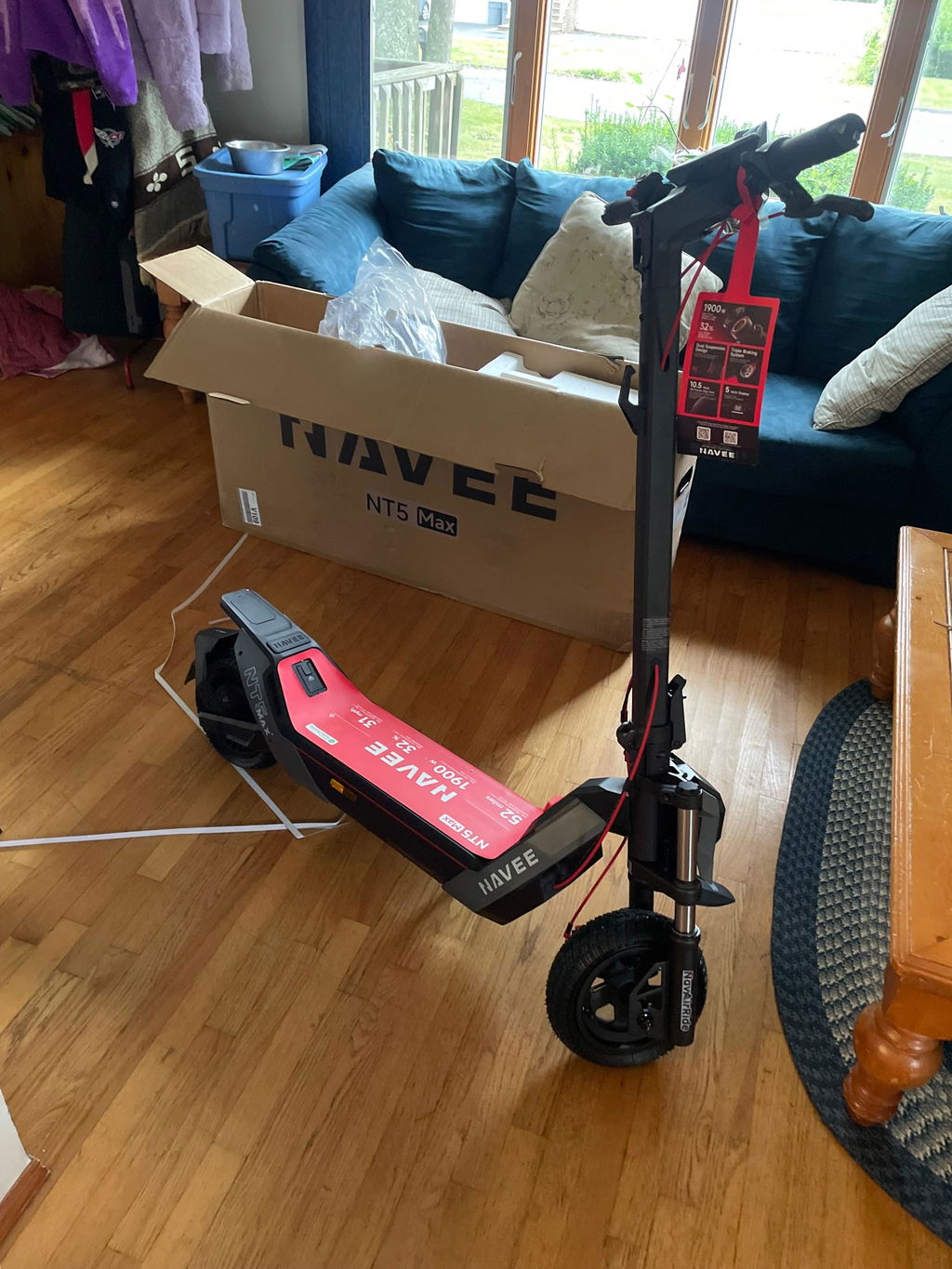
The NAVEE UT5 Max weighs 75 lb. The more powerful Ultra X weighs 90.4 lb.
That roughly 15 lb difference helps explain why I would not automatically recommend the Ultra X simply because its performance ceiling is higher.
For riders dealing with repeated steep climbs, demanding terrain, stronger acceleration requirements, and higher-speed recreational riding, the Ultra X has a clear reason to carry more motor, battery, braking, and stability hardware.
For someone who still wants 31.1 mph performance, a 39% listed climbing capability, hydraulic suspension, 12-inch tubeless tires, and substantial range while keeping the scooter lighter, the UT5 Max is the more balanced recommendation.
Performance only creates value when you use it often enough to justify the extra weight, charging demands, and size.
FAQs
What Should I Look For In A High-Performance Electric Scooter?
Look at the scooter as a complete system. Motor output should match your hills and rider load, battery range should match your real riding speed, and higher speed should be supported by appropriate brakes, suspension, tires, and stability features. Weight and charging time then determine whether that performance works in daily ownership.
Is A Dual Motor Electric Scooter Always Better?
No. Dual motors make more sense when steep hills, heavier loads, stronger acceleration, or demanding terrain repeatedly require extra drive power. For flatter routes or riders who frequently carry the scooter, a strong single-motor model can offer a better balance.
How Much Range Should A Performance Scooter Have?
Start with your longest regular ride and compare it with a range figure tested near your expected riding speed. Leave additional battery margin for hills, temperature, rider load, detours, and battery aging instead of planning around the maximum advertised number.
Are Hydraulic Brakes Important On A Fast Electric Scooter?
They become more relevant as scooter speed and weight increase. A heavier, faster model places greater demand on the braking system, so front and rear braking hardware should be evaluated as part of the performance package rather than as an optional comfort upgrade.
Can A High-Performance Scooter Work For Daily Riding?
Yes, if its performance solves something you encounter regularly, such as hills, longer distances, rough roads, or heavier loads. Check weight carefully if stairs, vehicle loading, or indoor storage are part of your routine.

Choose The Performance Package That Fits Your Ride
The best choice depends on which part of performance you will actually use.
If hills and heavier loads are the problem, start with power under load. If longer rides are the goal, focus on usable range at your normal speed and charging time. If you want higher speed, expect braking, traction, tires, suspension, and stability hardware to rise with it. Rougher roads make suspension and tire capability more valuable, while frequent carrying makes vehicle weight harder to ignore.
The UT5 Max is the more balanced option for riders who want strong all-road performance, long range, and hydraulic suspension without moving to the heavier dual-motor setup. The UT5 Ultra X makes more sense when steeper climbs, stronger acceleration, higher speed, and more demanding riding justify the additional motor, battery, braking, and stability hardware.
Ready to compare the two setups? Explore the NAVEE UT Series and compare power, range, suspension, braking, and terrain capability before choosing your model.
Compartir:
Which NAVEE Scooter Is Best for City Roads and Weekend Trails?
Is An Electric Dirt Bike An E-Bike, OHV, Or Motorcycle?