


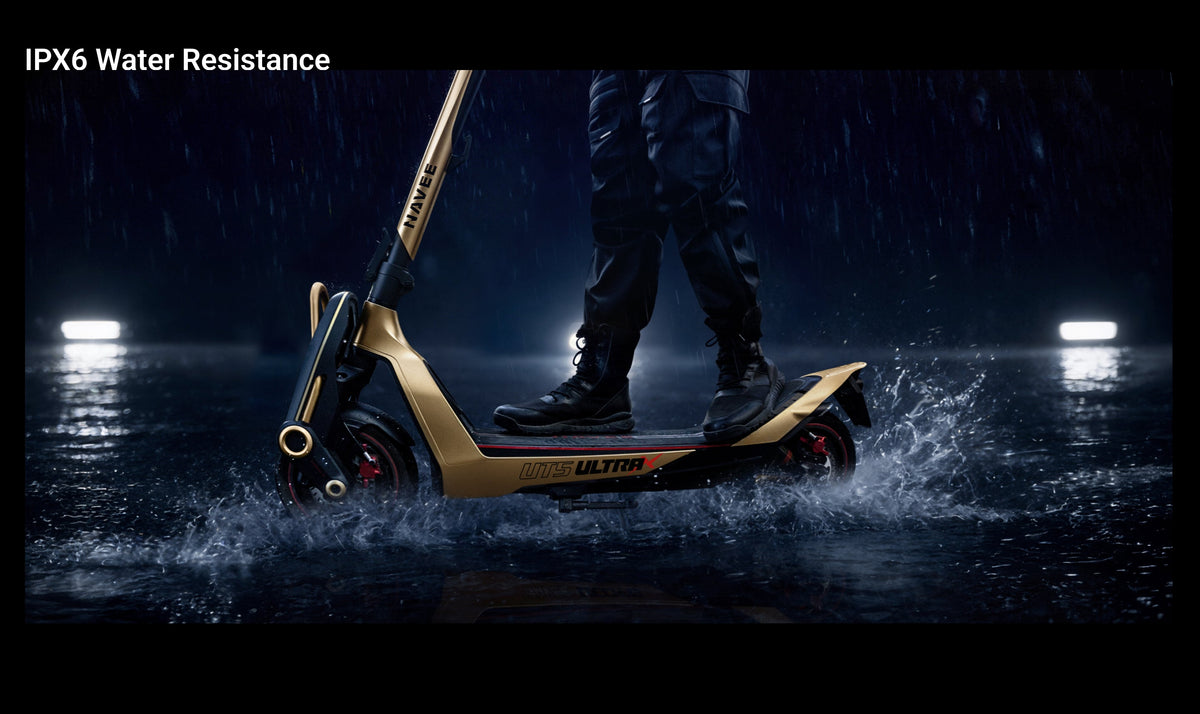
Electric scooter IP ratings describe the type of water exposure a scooter or component is designed to resist. IPX4 covers splashes, IPX5 covers water jets, IPX6 covers powerful water jets, and IPX7 covers temporary immersion under specified conditions. Understanding those differences helps you compare models and recognize the limits of their water protection.
What Is an IP Rating?
IP stands for ingress protection. The classification system is defined in IEC 60529, the international standard for IP codes. It describes protection against access to hazardous parts, solid objects and water ingress.
For scooter shoppers, the water rating indicates resistance to harmful water ingress under controlled test conditions.
What the Numbers and X Mean
An IP code has two main positions after the letters:
- The first position describes protection against solid objects, including dust.
- The second position describes protection against water ingress.
- An X means a protection level is not specified for that position.
In IPX5, the 5 identifies the water-protection level. The X means solids protection is unspecified, not that the scooter has no dust protection.
Water-Resistant vs. Waterproof
Water resistance has limits. Even when a description uses “waterproof,” the IP rating and operating instructions define the protection you can reasonably expect.
For more detail on the terminology and the effects of moisture, read about water-resistant vs. waterproof electric scooters.
IPX4 vs. IPX5 vs. IPX6 vs. IPX7
These ratings describe water-exposure tests. They do not correspond to specific rainfall intensities or a guaranteed number of minutes you can ride in the rain.
The tests use fresh water. An IP rating alone does not establish protection against saltwater, road-salt slush or cleaning chemicals.

IPX4: Splash Protection
IPX4 covers splashing water from different directions without harmful effects. It provides a basic point of comparison for accidental splashes, but the exposure must remain within the rated conditions.
Water splashing onto an enclosure and water surrounding it are different exposures. Splash protection does not establish suitability for riding through standing water.
IPX5: Water Jet Protection
IPX5 covers water jets directed at an enclosure from different directions, a more demanding exposure than IPX4.
The NAVEE ST3 Pro combines IPX5 water resistance with a front drum brake, rear disc brake and EABS electronic braking.
IPX6: Powerful Water Jet Protection
IPX6 covers powerful water jets, providing a higher jet-protection classification than IPX5.
The NAVEE UT5 Ultra X provides IPX6 main-body protection against powerful water jets under specified test conditions.
The step from IPX5 to IPX6 concerns test conditions, not a universal distinction between light and heavy rain.
IPX7: Temporary Immersion Protection
IPX7 addresses temporary immersion for 30 minutes under specified test conditions. It is commonly summarized as immersion in approximately 3.3 feet, or 1 meter, of water, although the exact setup depends on the enclosure’s size.
This classification does not authorize underwater operation or riding through floodwater.
Does IPX7 Include IPX6?
No. IPX7 does not automatically include IPX6. Immersion and powerful water jets are separate test categories.
Within water-protection levels 1 through 6, higher classifications include the lower-level requirements. That progression changes at level 7.
An enclosure that meets both classifications may carry a combined designation such as IPX6/IPX7. Both ratings must apply to the same enclosure for that designation to describe its jet and immersion protection.
Whole-Scooter vs. Battery Ratings
A component’s rating does not transfer to the rest of the scooter. An IPX7 battery enclosure, for example, does not establish immersion protection for the display, motor or connectors.
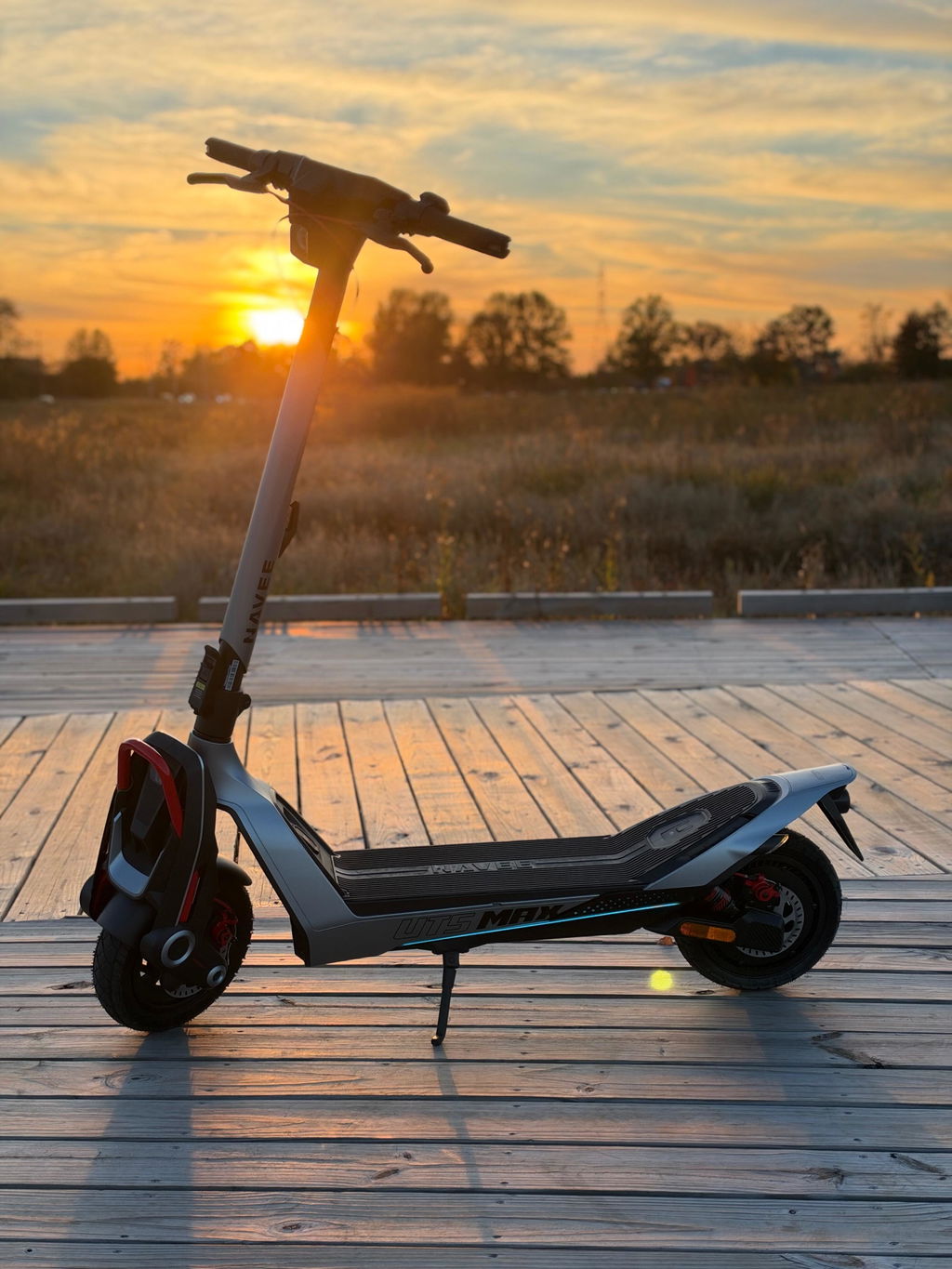
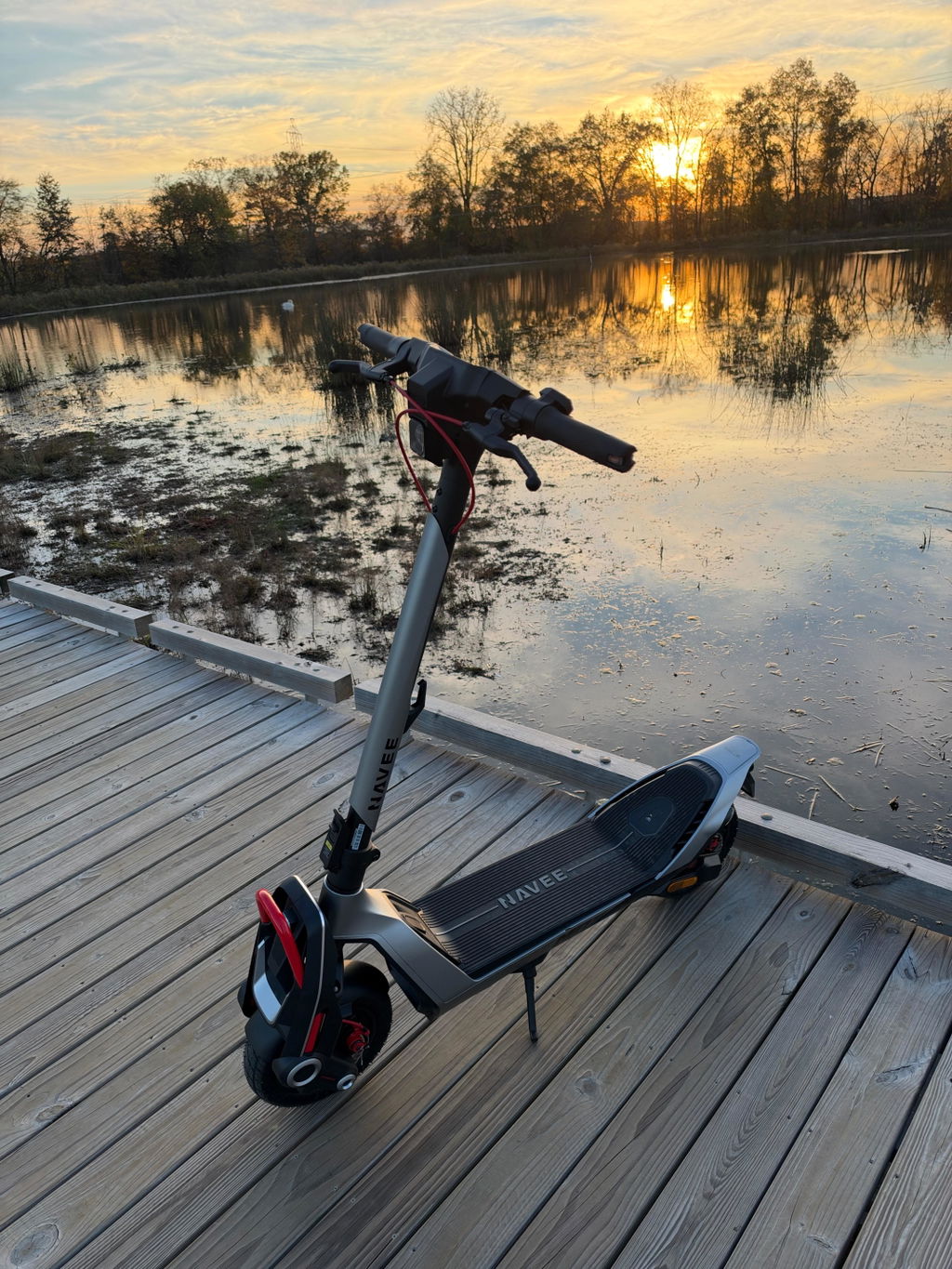
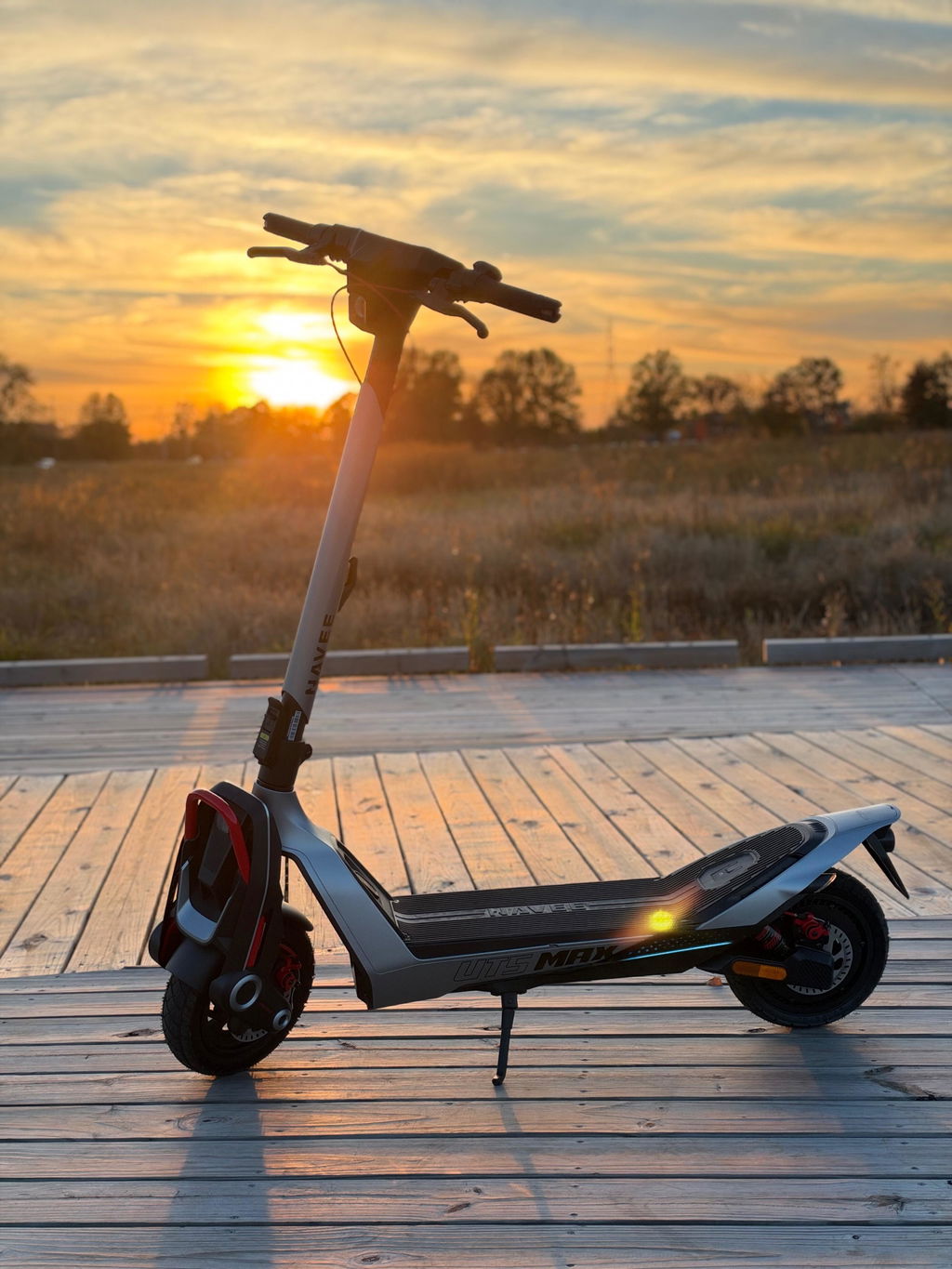
The NAVEE UT5 Ultra X and UT5 Max feature IPX6 main-body protection and IPX7 battery protection. These ratings apply to separate enclosures and do not make the entire scooter IPX7.
Before relying on a claim, identify the rated enclosure and check any required conditions, such as secured charging-port covers.
What IP Ratings Mean for Rain Riding
Water Resistance vs. Riding Safety
An IP rating does not measure tire grip, wet-weather braking or visibility. Painted road markings, metal covers and fallen leaves can become slippery, while puddles can hide potholes and unexpected depth.
Rain exposure also varies with duration, wind and riding speed. Consider both the operating instructions and the route conditions. Stop in a sheltered location when visibility or traction makes the ride unsafe.
Follow Your Scooter’s Manual
Read the instructions for your exact model. A water-resistance rating does not override a restriction on rain riding.
Follow the specified steps for securing port covers, cleaning and drying. Wear or damage can reduce seal effectiveness, so the original rating is not a lifetime guarantee regardless of condition.
Never charge a wet scooter or connect a charger to a wet port. Suspected water entry into the battery enclosure or electronics requires stopping use and contacting support; a dry exterior does not confirm that internal components are dry.

FAQ
Is IP54 the Same as IPX4?
Both specify water-protection level 4, for splashing water. IP54 also specifies dust protection, while IPX4 leaves solids protection unspecified. Matching water ratings do not mean two scooters have identical operating instructions.
Can You Pressure-Wash an IPX6 Scooter?
Do not pressure-wash a scooter unless the manufacturer explicitly permits it. IPX6 describes a defined jet test, not unrestricted exposure to a pressure washer. Concentrated spray at close range can expose seals and connectors to different conditions.
Follow the model’s cleaning instructions. A lightly damp cloth is generally a more appropriate starting point than spraying the scooter.
Compartir:
What Can a 750W Electric Scooter Actually Handle?
NAVEE NT5 Max vs. NT5 Ultra X: How to Choose?