


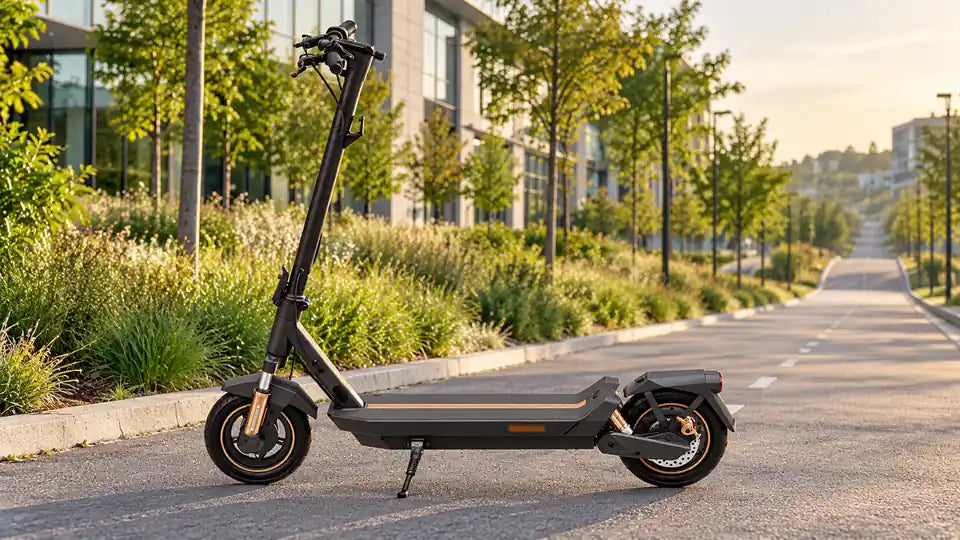
A 750W electric scooter can handle paved commutes, everyday errands, and some hills, provided its rated output, load capacity, and battery suit the route. Long climbs, heavier loads, and rough terrain require a closer look at the complete scooter.
Start by checking whether 750W means rated or peak power. That distinction changes what you can reasonably expect from the ride.
What Does 750W Mean?
Rated vs. Peak Power
Rated power, often called nominal power, describes the motor’s power rating under specified operating conditions. Peak power is a higher output available for a limited time, such as during acceleration.
For example, a scooter advertised as “750W peak” might have a 350W or 500W rated motor. That is a different proposition from a model rated at 750W with additional peak output.
Before comparing scooters, confirm:
- The rating type: Is 750W rated power or peak power?
- The motor configuration: Is that figure for one motor or the combined output?
- The measurement basis: Does the manufacturer explain how power is measured?
Compare equivalent ratings, then use riding tests to assess actual performance.
Why Watts Alone Aren’t Enough
Electric scooter motor power indicates part of the system’s capability. The controller regulates power delivery, while the battery must supply the required current. Motor torque, wheel size, traction, and total weight also affect acceleration and climbing.
Here is how to approach common riding situations when evaluating a scooter with a 750W rated motor:

Is 750W Enough for Daily Commuting?
Flat Roads and Frequent Stops
For a mostly flat commute, 750W rated power is generally enough for everyday riding in a properly designed scooter. A lower-powered model may also meet your needs if the trip is short and the load is light.
In stop-and-go traffic, smooth throttle response matters as much as acceleration. Predictable power delivery makes it easier to pull away from intersections and adjust your pace around other people.
For a mostly paved route that does not require a 750W rated motor, consider the NAVEE ST3 city commuter scooter. Its 500W rated motor, 1000W peak output, front and rear Damping Arm suspension, and 10-inch tubeless tires make it a relevant lower-power option to compare for everyday road use. Its 265-pound load limit includes rider and cargo. At 54.7 pounds, it also deserves a careful carrying-weight check if your commute involves stairs.
Headwinds and Extra Load
A headwind increases aerodynamic resistance, which can reduce speed and range. Additional weight makes acceleration and climbing more demanding.
Include everything you carry when checking the maximum load. A 220-pound rider with a 15-pound work bag places a 235-pound load on the scooter. The scooter’s own weight also affects performance, although it is normally excluded from the advertised rider-and-cargo limit.
Can a 750W Scooter Climb Hills?
Short Hills vs. Long Climbs
750W can be enough for some hills, but no wattage guarantees a particular climbing speed or grade. A brief neighborhood incline is a different challenge from a long, steep ascent.
On a short hill, available peak output may help the scooter maintain momentum. A sustained climb places longer demands on the motor, controller, and battery. Depending on the design and conditions, speed may fall or temperature protection may reduce output.
When assessing electric scooter hill climbing, check the conditions behind the claim:
- Rider weight and cargo
- Hill grade and length
- Starting speed
- Battery charge
- Speed maintained during the climb
Also distinguish percent grade from degrees. A 20% grade means a 20-foot rise over 100 horizontal feet, equivalent to about 11.3 degrees. It is much less steep than a 20-degree slope.
Battery Charge and Sustained Climbing
Battery charge can also affect available performance. As charge falls, battery voltage generally decreases, and the controller may limit output. The extent depends on the model.
For a hill near the end of your commute, look for tests performed after some riding, rather than only on a full battery.

How Fast and Far Can It Go?
What Determines Top Speed?
There is no universal speed for a 750W electric scooter. Battery voltage, motor design, controller settings, electronic limits, and riding resistance all influence top speed.
More power can help a scooter sustain speed under demanding conditions, but it does not produce a proportional increase in maximum speed. Two models with the same power rating can have different speed limits and acceleration.
Battery Capacity and Real-World Range
Watts measure power. Watt-hours measure energy. A 750W motor rating therefore cannot tell you how many miles a scooter will travel.
Compare battery capacity alongside the test speed, rider weight, terrain, and temperature behind each range claim. Faster riding, repeated climbs, headwinds, and cold weather can shorten the distance between charges.
For a near-750W commuter comparison, consider the NAVEE GT5 Max long-range commuter scooter. It combines 700W rated power and 1638W peak power with a 596.7Wh battery, front and rear suspension, and a 286-pound load limit. Its published maximum range of 55.9 miles is measured at 9.3 mph, so it should not be treated as a faster commuting-range promise.
The GT5 Max is a 700W model, not a 750W scooter. It provides a useful comparison when evaluating a similar power level, battery capacity, and load allowance. Its approximately 54.7-pound weight also matters for trips involving frequent lifting. Choose enough range for the round trip with a reserve.
Is 750W Enough for Heavier Riders?
Load Limits vs. Riding Performance
A 750W electric scooter for adults may work well for a heavier rider, but motor power does not establish its safe load capacity. The frame, folding mechanism, wheels, tires, and other components must support the intended load.
Staying within the maximum load is essential, yet it does not guarantee brisk acceleration or strong hill performance. Riders around 200 to 250 pounds should look for tests conducted at a similar weight, especially for hilly routes.
When More Power Helps
More sustained power or a suitable dual-motor design may help when heavier loads and steep hills occur together. Look for evidence that the scooter can maintain a usable climbing pace on your route.
Can It Handle Rough Terrain?
Uneven Pavement and Gravel
Cracks, patched asphalt, and rough pavement put tires, suspension, and wheel size to work. A stronger motor cannot compensate for inadequate traction or prevent a small wheel from catching a sharp edge.
Packed gravel may be suitable for a model designed for that surface. Loose gravel is less predictable because it can shift beneath the tires, affecting steering and braking. Follow the manufacturer’s surface restrictions and reduce speed as conditions require.
Why Off-Road Riding Requires More Than Power
Trail riding requires a suitable combination of tires, suspension travel, ground clearance, frame construction, and braking. A 750W label does not confirm any of these features.
For routes that extend beyond pavement, compare off-road electric scooters by their intended surfaces and terrain-specific features. Distinguish occasional packed-dirt paths from rocky trails, deep sand, or mud, which present very different demands.

How to Choose a Reliable 750W Commuter Scooter
Match Power and Range to Your Route
Start with four requirements: round-trip distance, hardest hill, total rider-and-cargo weight, and carrying needs. Then confirm the motor rating and look for relevant riding tests.
Check Fit, Brakes, Tires, and Build Quality
Before buying, review these everyday essentials:
- Fit: Enough deck space and a comfortable handlebar position.
- Brakes: Predictable control, supported by credible braking tests where available.
- Folding mechanism: Secure locking and clear inspection instructions.
- Tires: Appropriate construction for the route and accessible replacements.
- Maintenance: Available wear parts, repair guidance, and service options.
For pneumatic tires, follow the model’s recommended pressure. Underinflation can increase rolling resistance and affect handling, making the scooter feel less responsive.
Verify Battery Safety, Warranty, and Service
Look for verifiable certification of the complete electrical system to UL 2272, which addresses electrical and fire hazards involving the drivetrain, battery, and charger system. Certification of an individual component does not establish certification of the complete scooter. This electrical safety standard also does not establish road performance or overall durability.
Confirm that the certification applies to the exact model. Read the warranty for battery coverage, exclusions, shipping costs, and the repair process. Accessible support and replacement parts help keep a daily commuter usable after the initial purchase.
FAQ
Is 750W Peak the Same as 750W Rated?
No. Peak power is available briefly; rated power describes output under specified operating conditions. Check both figures before comparing scooters.
Why Does My Scooter Slow Down Uphill?
The motor needs to move your combined weight uphill against gravity. Speed drops when available power and torque cannot maintain the same pace. Low battery charge, underinflated tires, or temperature-related power limits may contribute.
Can a 750W Scooter Reach 30 MPH?
The rating alone cannot establish that. Look for verified results for the exact model and configuration rather than assuming 750W translates to 30 mph.
Compartir:
Las mejores patinetes eléctricos NAVEE con doble motor para cuestas y trayectos largos