


Electric scooter range at 25 mph is usually lower than the advertised maximum because faster riding consumes more energy per mile. Many maximum-range figures are measured at much lower speeds, so they do not describe how far you can travel while cruising at 25 mph.
To plan a ride realistically, start with range measured near your cruising speed, then allow for hills, wind, rider load, and stops.
How Far Can You Ride at 25 MPH?
Battery capacity and energy consumption both affect mileage. These published NAVEE figures show how range changes between low-speed riding and approximately 25 mph:
Manufacturer-published figures under the applicable test conditions. Actual riding range varies.
Compare NT series electric scooters using the range figure closest to your intended pace. A longer low-speed range does not translate into an identical advantage at higher speeds.
Also distinguish a ride that briefly reaches 25 mph from one that maintains it. Maximum speed alone tells you little about consumption across an entire trip.
Why Range Drops at 25 MPH
Greater Air Resistance
As speed increases, pushing the rider and scooter through the air takes more energy. With the same riding position and air conditions, aerodynamic drag increases approximately with the square of airspeed, as explained by NASA’s drag equation.
For example, increasing speed from 15 to 25 mph in still air produces roughly 2.8 times as much aerodynamic drag, assuming the same drag coefficient and frontal area.
That is a comparison of drag force, not total battery consumption. Rolling resistance and drivetrain losses also affect energy use, so it cannot be converted directly into a range-loss percentage.
A headwind increases your speed relative to the air, adding resistance even when the speedometer reading stays the same.

Higher Energy Use per Mile
Three measurements help explain the relationship:
- Watts (W): Power, or the rate at which energy is used or delivered.
- Watt-hours (Wh): Energy, including the battery’s stated energy capacity.
- Watt-hours per mile (Wh/mile): Battery energy consumed for each mile traveled.
Range depends on available battery energy divided by consumption per mile. At higher speeds, increased resistance generally raises consumption, leaving fewer miles available from the same charge.
Peak motor wattage describes a maximum output capability, not constant battery consumption.
Repeated Acceleration
Maintaining 25 mph and repeatedly accelerating to 25 mph place different demands on the battery.
Each acceleration uses energy to bring the rider and scooter up to speed. Frequent intersections and hard launches add to consumption, even if the trip’s average speed is relatively low.
Regenerative braking can recover some energy on equipped scooters, but it does not recover everything used to accelerate.
Advertised vs. Real-World Range
Check the Test Speed
Maximum range and maximum speed describe separate capabilities. They should not be assumed to occur together.
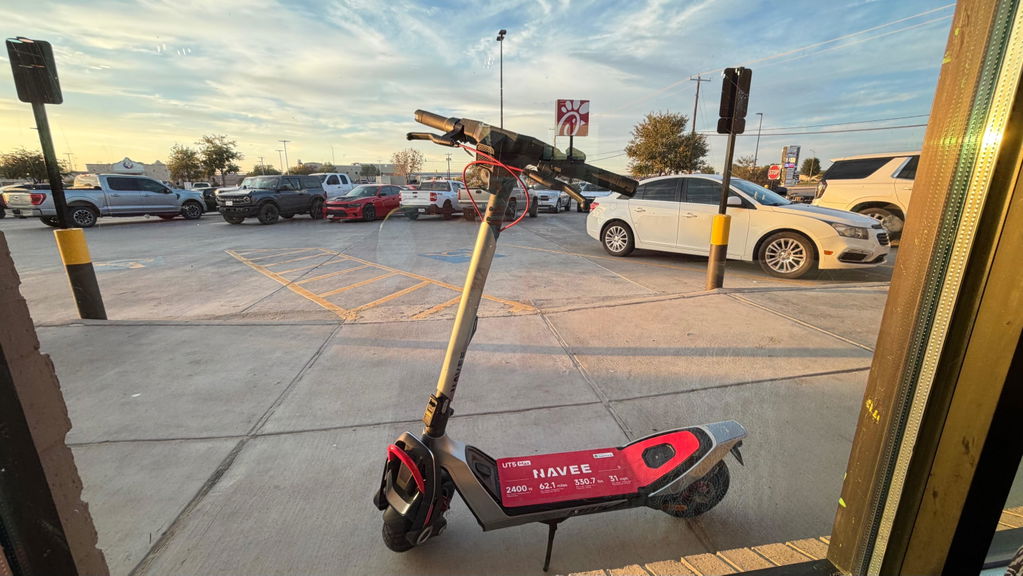
For example, the NAVEE NT5 Max has a published maximum range of 51.6 miles at 9.3 mph and a maximum speed of 31 mph. The low-speed range figure does not tell you how far it will travel at 25 or 31 mph.
Before using a mileage claim to plan a commute, check:
- Test speed: Was the scooter ridden at a steady low speed or near your intended pace?
- Test load: How closely does it match your weight plus any gear?
- Route: Was it flat and smooth, or did it include hills and stops?
- Weather: Were temperature and wind comparable to your usual conditions?
Account for Your Route
A heavier load requires more energy for acceleration and climbing. Hills increase demand, while descending does not necessarily recover the energy used uphill. Low tire pressure and rough surfaces can increase rolling losses.
Cold weather can reduce the energy a battery delivers during a ride, and aging can reduce available capacity over time.
Compare rides under similar conditions to avoid attributing every change in range to speed alone.
How to Estimate Range at 25 MPH
Use Measured Consumption
The basic calculation is:
Estimated range = usable battery energy (Wh) ÷ consumption (Wh/mile)
Use consumption measured near 25 mph on a representative route. Applying a low-speed consumption figure will make the estimate too optimistic.
Usable battery energy is not necessarily identical to nominal capacity. Temperature, battery condition, and discharge limits affect how much energy is available during a ride.

Calculate a Practical Estimate
For a hypothetical scooter with 800 Wh of usable energy and consumption of 32 Wh/mile, the calculation is:
800 Wh ÷ 32 Wh/mile = 25 miles
At 40 Wh/mile, the same usable energy would provide 20 miles. These are illustrative assumptions, not NAVEE test results or a typical consumption range for all scooters.
When Wh/mile data is unavailable, record distance, speed pattern, weather, and remaining charge over repeated rides on a familiar route. Use those observations to plan progressively longer trips without deliberately riding to empty. Battery percentages are approximate and should not be treated as fixed units of remaining distance.
Leave a reserve for the return trip instead of planning to use the entire calculated range. Wind, climbs, and detours can make the second half of a ride more demanding.
Match Battery Capacity to Your Ride
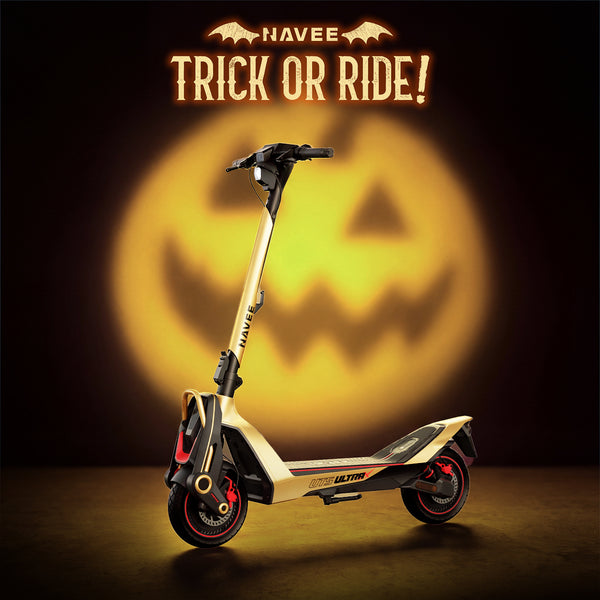
For longer rides near 25 mph, compare both battery energy and speed-specific range. The NAVEE NT5 Ultra X pairs a published 898.56 Wh battery capacity with a 28-mile range figure at 24.9 mph. The NAVEE UT5 Ultra X has a published 1,284 Wh capacity and a 37.3-mile range figure at the same speed.
That makes the UT5 Ultra X a stronger candidate when additional distance between charges is the priority. The NT5 Ultra X remains relevant when its speed-specific range provides adequate margin for the planned trip. Neither figure guarantees the same result on a different route, and the range difference should not be attributed to battery capacity alone.
How to Extend Your Range
Reducing cruising speed where practical directly addresses aerodynamic energy use. Slowing down for part of a trip can help stretch a charge when distance matters.
Other useful habits include:
- Accelerate progressively. Avoid maximum acceleration after every stop.
- Check pneumatic tire pressure. Follow the recommended pressure for the model and load.
- Choose flatter routes. Avoid demanding climbs when a practical alternative exists.
- Anticipate stops. Ease off the throttle early when appropriate while maintaining safe control.
- Allow for weather. Plan a larger reserve in cold or windy conditions.
For additional riding and maintenance advice, follow these tips to extend electric scooter range.

FAQ
How much range do you lose at 25 mph?
There is no fixed percentage. In the published examples above, range at approximately 25 mph is about 42% to 50% of the corresponding 9.3 mph figure. That represents roughly a 50% to 58% reduction for those specific comparisons, not a rule for every scooter or rider.
Can you get the advertised range at top speed?
Only if the advertised figure was measured at that speed under comparable conditions. A maximum-range claim measured at a low cruising speed should not be used as a top-speed range estimate.
Will slowing from 25 to 20 mph improve range?
Generally, yes. Lower speed reduces aerodynamic drag and usually lowers energy consumption per mile under comparable conditions. The actual improvement depends on the scooter, rider load, terrain, wind, and frequency of stops.
Compartir:
Las mejores patinetes eléctricos NAVEE con doble motor para cuestas y trayectos largos
What Can a 750W Electric Scooter Actually Handle?