


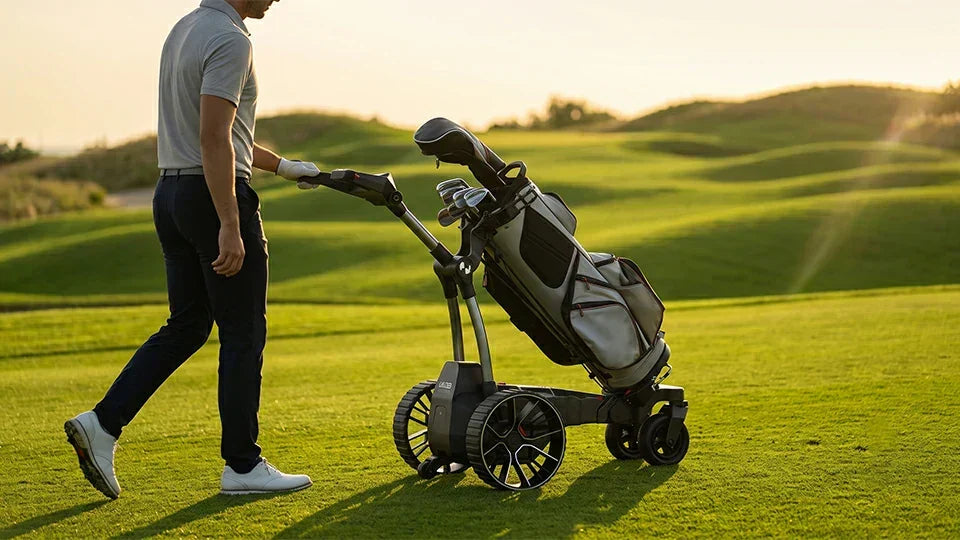
En 2026, los datos de las ciencias del deporte, las finanzas personales y la logística de los campos de golf muestran un cambio evidente hacia los carros eléctricos de empuje. Las investigaciones en fisiología del ejercicio indican que recorrer un campo de 18 hoyos con un carro eléctrico de empuje quema un promedio de 1.226 calorías, en comparación con 822 calorías al usar un carro motorizado para montar, sin la compresión espinal asociada a cargar una bolsa de golf pesada. El seguimiento del rendimiento muestra que, al reducir la fatiga muscular, los jugadores que usan carros eléctricos ahorran, en promedio, de 1,5 a 3 golpes por ronda, principalmente durante los últimos cuatro hoyos. Las opciones disponibles, como el NAVEE Birdie 3 con control remoto y el NAVEE Birdie 3X con seguimiento automático, permiten a los golfistas evitar los pagos recurrentes por el uso de carros motorizados para montar, alcanzando el punto de equilibrio financiero en un plazo de 12 a 18 meses, según la frecuencia con la que jueguen.
Las opciones disponibles para transportar los palos de golf por el campo han ido más allá de alquilar un carro motorizado de gasolina o eléctrico, llevar una bolsa de golf con soporte o tirar manualmente de un carro de tres ruedas.
Los datos recopilados en los campos de golf en 2026 muestran que un número cada vez mayor de golfistas opta por los carros eléctricos de empuje. Este cambio responde al deseo de combinar el ejercicio físico de caminar con la asistencia mecánica que soporta el peso real del equipo.
Esta guía ofrece una visión objetiva de los datos fisiológicos, los cálculos financieros y los pasos operativos prácticos necesarios para evaluar si un carro eléctrico de empuje se adapta a sus necesidades específicas. Se centra en los principales modelos actualmente disponibles en la plataforma NAVEE: el Birdie 3 y el Birdie 3X.
Los principales inconvenientes que impulsan la tendencia de caminar en el golf
Los golfistas se enfrentan a desafíos físicos específicos y a costes recurrentes según la forma en que elijan transportar sus palos durante una ronda.
El impacto fisiológico del levantamiento asimétrico y el transporte tradicional
Una bolsa de golf estándar llena con 14 palos, pelotas, zapatos y ropa de abrigo pesa entre 25 y 35 libras. Llevar este peso a lo largo de un campo de 4 a 5 millas requiere levantar y bajar la bolsa aproximadamente entre 60 y 80 veces por ronda.
Esta acción repetitiva genera una carga asimétrica en los hombros, la columna vertebral y las caderas del golfista. A lo largo de 18 hoyos, esta carga provoca fatiga muscular localizada, lo que a menudo altera la postura y la posición de preparación del jugador.
Los carros manuales de empuje estándar eliminan el peso de los hombros, pero siguen requiriendo un esfuerzo físico considerable. Empujar un carro manual de 35 libras a través de un rough espeso o cuesta arriba por pendientes mojadas sobrecarga las muñecas, los antebrazos y los músculos de la zona lumbar, consumiendo energía antes de que el golfista comience su swing.
El gasto financiero de los pagos continuos por el alquiler de carros motorizados para montar
Los carros motorizados para montar eliminan la fatiga física, pero suponen un gasto continuo. Los pagos medios por el alquiler de estos carros en la mayoría de los campos oscilan entre 30 y 45 dólares por jugador y ronda. Para un golfista que juega varias veces al mes, estos pagos representan un coste acumulado considerable a lo largo de una sola temporada.
Además, en días de lluvia intensa o de alta humedad del suelo, los campos aplican la norma de «Solo por el camino del carro». Esto obliga a los jugadores que usan carros motorizados a caminar de un lado a otro por el fairway con varios palos en la mano, lo que aumenta el tiempo de juego y reduce la comodidad que ofrece el carro motorizado.

Separar el rendimiento en el campo de la fatiga: lo que demuestran los datos de las ciencias del deporte
La decisión de usar un carro eléctrico de empuje puede analizarse mediante datos sobre el gasto calórico, el esfuerzo físico y la constancia en la puntuación.
Gasto calórico frente a métricas de seguridad ortopédica
Los datos clínicos de las organizaciones de medicina deportiva registran las diferencias energéticas exactas entre los principales métodos de desplazamiento por un campo de golf. Según un estudio fundamental realizado por el Colorado Center for Health and Sports Science, en el que se monitorizó a los jugadores mediante analizadores metabólicos portátiles, las métricas fisiológicas se desglosan claramente:
- Recorrer el campo en un carro de la flota: Equivale a un gasto medio de 822 calorías por 18 hoyos. El golfista permanece sentado durante la mayor parte de la ronda, lo que limita los beneficios cardiovasculares.
- Llevar una bolsa de golf con soporte: Quema aproximadamente 1.438 calorías por ronda, pero el peso continuo provoca compresión espinal y aumenta el riesgo de sobrecarga de la zona lumbar.
- Caminar con un carro eléctrico de empuje: Quema un promedio de 1.226 calorías por 18 hoyos.
Además, los datos publicados en el Journal of Sports Science confirman que, si bien caminar con asistencia de motor iguala las principales ventajas cardiovasculares de caminar, reduce significativamente la percepción del esfuerzo (RPE) del jugador. Como el chasis motorizado soporta el peso de los palos, el golfista camina en una zona de frecuencia cardíaca aeróbica constante y de bajo impacto. Este nivel de esfuerzo evita las elevadas frecuencias respiratorias y los temblores musculares que pueden interferir con el control motor fino durante un swing de golf.
La variación de la puntuación en los últimos nueve hoyos y la preservación de la resistencia
Los datos recopilados de plataformas digitales de seguimiento de puntuaciones de golf muestran que los golfistas que cambian el transporte de palos a pie o el empuje manual por un carro eléctrico de empuje reducen su puntuación en un promedio de de 1,5 a 3 golpes por ronda.
Esta diferencia es muy visible en los hoyos 15 al 18. Los golfistas que llevan bolsas a menudo experimentan fatiga muscular en los hombros y el core durante los últimos cuatro hoyos, lo que puede limitar la rotación de los hombros y reducir la distancia de los golpes de salida. Los golfistas que utilizan asistencia motorizada muestran una distancia de salida constante y un rendimiento más estable en el juego corto desde el principio hasta el final de la ronda.
Lectura recomendada: Para un desglose detallado de los cambios de rendimiento a lo largo de una ronda de 18 hoyos, consulte nuestra guía analítica sobre cómo un carro eléctrico de empuje para golf ayuda a conseguir mejores puntuaciones.
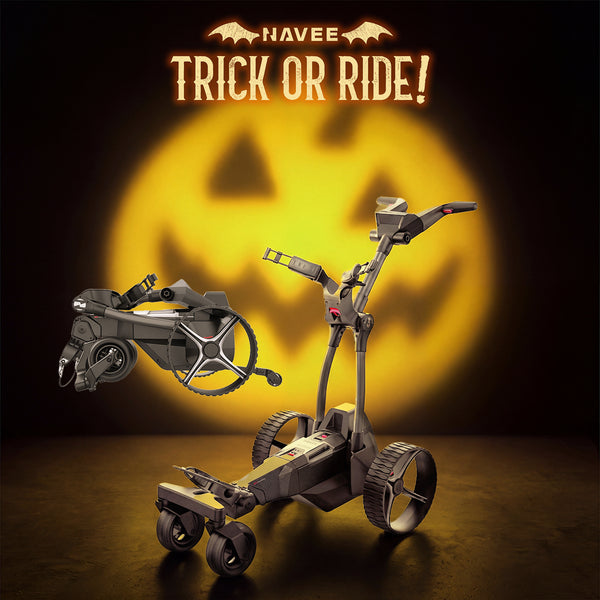
Marco paso a paso: elegir entre un carro eléctrico con control remoto o con seguimiento automático
La elección del carro adecuado depende de adaptar sus condiciones habituales de juego al modelo apropiado. Puede evaluar sus necesidades mediante este proceso de tres pasos:
Paso 1: Evalúe la topografía de su campo habitual y las exigencias de inclinación
Examine el terreno del campo donde juega con más frecuencia. Los campos planos no requieren un par elevado, pero si su campo cuenta con colinas empinadas, fairways irregulares o caminos largos entre greens y tees, las especificaciones del motor son fundamentales.
Tanto el NAVEE Birdie 3 como el NAVEE Birdie 3X utilizan dos motores traseros sin escobillas de 120 W, que ofrecen una potencia máxima combinada de 480 W. Esta configuración de motor proporciona suficiente par para subir pendientes del 25 % (una inclinación de 14 grados) sin requerir que el golfista lo empuje manualmente.
Paso 2: Calcule el retorno de inversión matemático para alcanzar el punto de equilibrio
Utilice esta fórmula estándar para determinar el plazo exacto en el que su inversión en hardware se amortizará:
Rondas anuales jugadas * Pago medio por el alquiler de un carro motorizado para montar = Coste anual acumulado por el uso de carros de la flota
Considere a un golfista que juega 40 rondas de golf al año con un pago estándar de 35 dólares por el alquiler de un carro motorizado para montar. El coste anual de alquiler equivale a 1.400 dólares.
- Comprar el NAVEE Birdie 3 con control remoto (1.299,99 dólares) permite al comprador alcanzar el punto de equilibrio financiero en aproximadamente 37 rondas (menos de una temporada completa).
- Comprar el NAVEE Birdie 3X autónomo (1.699,99 dólares) desplaza el punto de equilibrio a aproximadamente 48 rondas (a principios de la segunda temporada). A partir de este punto, la ausencia de pagos por el uso de carros representa un ahorro financiero directo.
Paso 3: Verifique las dimensiones del maletero de su vehículo y la portabilidad
Mida el espacio de carga de su vehículo antes de elegir un carro. Los carros eléctricos de empuje contienen baterías internas y cajas de engranajes, por lo que su tamaño plegado es un factor importante para el transporte.
La serie NAVEE Birdie está fabricada con un mecanismo de plegado que funciona en menos de tres segundos. Cuando está completamente plegado, sus dimensiones son de 62 x 43 x 36 cm, lo que equivale a un volumen de 0,15 metros cúbicos. Este tamaño permite que el carro quepa en el maletero de un sedán o SUV estándar junto a una bolsa de golf tradicional.
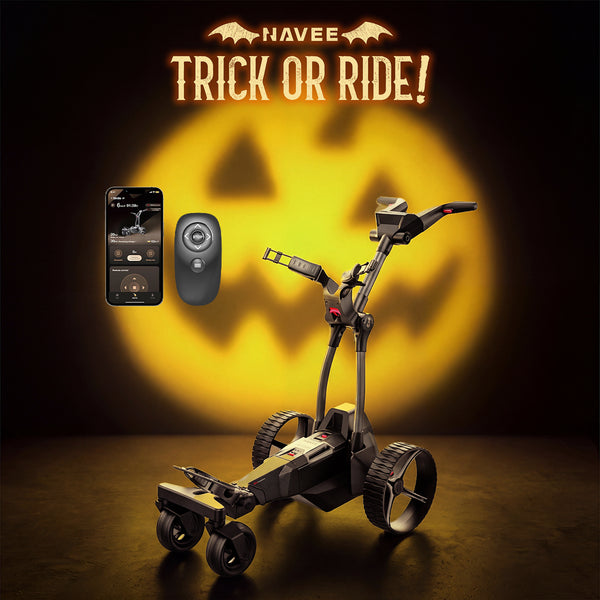
Superar los desafíos mecánicos del mundo real y la curva de aprendizaje
Usar un carro eléctrico de empuje requiere adaptarse al manejo de un equipo nuevo. A continuación se presentan soluciones a los desafíos operativos más comunes del mundo real.
Dominar la curva de confianza de la navegación con sensores de seguimiento automático
- El problema: Al usar los modos de seguimiento autónomo, los usuarios pueden experimentar un ligero retraso o errores de seguimiento si caminan demasiado cerca de bunkers de arena profundos, peligros de agua empinados o puentes estrechos.
- La solución práctica: El NAVEE Birdie 3X utiliza sensores de seguimiento de banda ultralarga (UWB) en lugar de Bluetooth estándar, lo que proporciona un seguimiento de proximidad con precisión centimétrica. Para mantener el rendimiento de la señal, no coloque el control remoto en el fondo de un bolsillo que contenga monedas, llaves o teléfonos inteligentes. Sujete el control remoto al cinturón o a la cintura. Al cruzar puentes estrechos o caminar cerca de greens, presione el botón principal para salir del modo de seguimiento automático y use el mango manual o el control remoto para dirigirlo directamente.
Mantener la estabilidad del terreno en pendientes laterales pronunciadas
- El problema: La hierba mojada o las pendientes laterales pronunciadas pueden hacer que los carros menos estables se deslicen lateralmente o se vuelquen hacia atrás si el centro de gravedad se desplaza.
- La solución práctica: Asegúrese de que su carro utilice una configuración de ruedas estable. El Birdie 3 y el 3X utilizan una configuración de 4+1 ruedas: dos ruedas delanteras omnidireccionales, dos ruedas traseras motrices todoterreno de 11 pulgadas con banda de rodadura profunda y una rueda trasera antivuelco desmontable. Al descender por colinas empinadas, confíe en el sistema electrónico de frenado de descenso integrado, que mantiene automáticamente una velocidad de caminata preestablecida, en lugar de tirar manualmente del carro hacia atrás.
Gestionar la logística del sistema y el cuidado posterior a la ronda
- El problema: Con el tiempo, la acumulación de hierba cortada, barro y arena puede entrar en los bujes y ejes de las ruedas, lo que puede reducir la eficiencia mecánica.
- La solución práctica: Tanto el Birdie 3 como el Birdie 3X están fabricados con una clasificación de resistencia al agua IPX5, lo que significa que los compartimentos de las baterías, las carcasas de los motores y las consolas de pantalla digital están sellados contra la humedad. Después de jugar en condiciones húmedas o embarradas, limpie los ejes con un paño o enjuague las ruedas con una manguera de baja presión. El peso total del chasis es de 21 kg (46,3 libras); retirar el bloque de batería de litio desmontable antes de levantar el carro en su vehículo reduce el peso de elevación y facilita el transporte.
Preguntas frecuentes: respuestas prácticas para el golfista moderno
1. ¿Realmente vale la pena invertir en un carro eléctrico de empuje para golf en lugar de uno manual?
Respuesta: Sí. Un carro manual de empuje elimina el peso de sus hombros, pero aún debe empujarlo o tirarlo manualmente por las pendientes, lo que aumenta su frecuencia cardíaca y provoca fatiga en los brazos. Un carro eléctrico de empuje utiliza su sistema de transmisión interno para gestionar el 100 % del peso, permitiéndole caminar con una postura normal y reservar su energía para los golpes que vienen.
2. ¿Cuánto dura la batería de litio con una sola carga?
Respuesta: El paquete de baterías de iones de litio de 21,6 V y 2,25 Ah (220 Wh) está diseñado para proporcionar hasta 36 hoyos de funcionamiento con una sola carga en condiciones planas. En condiciones reales sobre césped estándar de campo con colinas moderadas, recorre aproximadamente 11,2 millas, lo que le permite completar dos rondas completas antes de necesitar conectarlo al ciclo de recarga estándar de 7 horas.
3. ¿Pueden los componentes electrónicos soportar lluvias intensas durante la ronda?
Respuesta: Sí. La serie NAVEE Birdie cuenta con una clasificación oficial de resistencia al agua IPX5. Todos los componentes críticos, incluidos las cajas de engranajes de los dos motores, la placa base interna y la pantalla del mango, están protegidos contra la lluvia intensa y las condiciones húmedas del campo. Sin embargo, evite sumergirlo en agua.

La lista de verificación del comprador inteligente de 2026: características esenciales que debe exigir
Al elegir un carro eléctrico de empuje, verifique que el modelo incluya estas características técnicas específicas para garantizar fiabilidad y valor:
- [ ] Transmisión trasera doble sin escobillas: Proporciona potencia constante en subidas y control de tracción independiente sin los problemas de desgaste de los motores con escobillas más antiguos.
- [ ] Paquete de alimentación de litio de alta capacidad: Cuenta con una batería de iones de litio ligera y extraíble con una capacidad operativa mínima de 36 hoyos.
- [ ] Arquitectura de seguridad integral: Incluye una rueda trasera antivuelco dedicada y desmontable junto con neumáticos traseros todoterreno anchos.
- [ ] Opciones de control versátiles: Ofrece la funcionalidad de un mango con asistencia de potencia manual junto con una clara capacidad de control remoto multidireccional.
- [ ] Utilidad de dispositivo integrada: Cuenta con un puerto de carga USB-C integrado en el centro de la consola principal para mantener cargados los medidores de distancia o los teléfonos inteligentes durante la ronda.
- [ ] Garantía y soporte local sólidos: Viene respaldado por una garantía clara del fabricante (NAVEE ofrece una garantía del fabricante de 2 años con soporte local dedicado).
El veredicto: eleve su forma de caminar y su juego
Los datos recopilados a lo largo de 2026 confirman que la transición a un ecosistema de caminata motorizado influye directamente en su resistencia estructural, la precisión de su puntuación y sus gastos a largo plazo en el campo. Al transferir el peso de su equipo a un sistema de transmisión independiente y de alto par, evita los riesgos ortopédicos de cargar una bolsa y elimina los costes acumulativos de los pagos recurrentes por el alquiler de carros motorizados para montar. Ya sea que prefiera el control directo de un carro guiado por control remoto o la comodidad de manos libres del seguimiento autónomo, actualizar su desplazamiento por el campo proporciona un enfoque sostenible para el juego.
Si está listo para evaluar cómo se adapta esta tecnología a su rutina habitual de juego, puede ver las especificaciones detalladas de la serie NAVEE Birdie para comprender las diferencias técnicas entre ellas.
Compartir:
¿Es segura la batería de tu scooter eléctrico? Lo que significa la propuesta de norma de 2026 de la CPSC antes de comprar
Cómo desplazarse en patinete eléctrico: transporte público, carga y planificación de rutas