


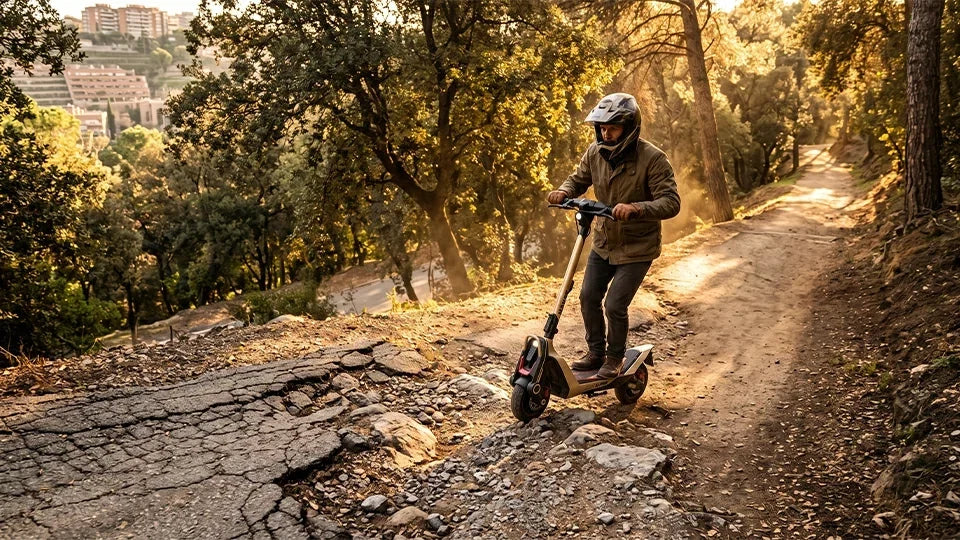
Un patinete eléctrico todoterreno para adultos tiene sentido cuando el pavimento en mal estado, los tramos de unión irregulares y los trayectos más largos son parte habitual de tu semana, no simplemente porque un patinete parezca más robusto. La pregunta clave es si estas condiciones afectan a tu comodidad, control o confianza en la ruta con la frecuencia suficiente como para justificar un modelo más grande y menos portátil.

Empieza por la superficie por la que sueles circular
Ten en cuenta las condiciones que se repiten cada semana: pavimento deteriorado, descensos prolongados, tramos de unión irregulares, la distancia entre oportunidades de carga y si alguna vez hay que levantar el patinete. Los impactos repetidos pueden hacer que un patinete urbano básico resulte agotador e inestable; un descenso recurrente hace que frenar parezca más exigente. Si estos momentos ocurren de vez en cuando, un modelo todoterreno más especializado puede requerir más esfuerzo de uso del que ahorra. Si condicionan la mayoría de tus trayectos, deben estar cerca de la parte superior de tu lista de opciones.
| Pregunta sobre la conducción | Qué cambia la respuesta | Qué hacer |
|---|---|---|
| Pavimento en mal estado cada semana | Impactos repetidos y superficies cambiantes | Compara la suspensión, los neumáticos y los frenos antes que la velocidad máxima. |
| Trayectos más largos por superficies mixtas | Margen de energía para el trayecto de vuelta | Lee la autonomía junto con la velocidad de prueba y tu ruta. |
| Escaleras frecuentes o levantarlo en el maletero | Esfuerzo de uso antes y después de circular | Prueba primero el peso real y la rutina de almacenamiento. |
¿Qué hace que el equipamiento sea útil en una ruta real?
La suspensión se justifica cuando el pavimento en mal estado convierte repetidamente los baches en fatiga o te obliga a reducir la velocidad más de lo que requiere la ruta. Los neumáticos ayudan al patinete a absorber las pequeñas irregularidades de la superficie, pero no hacen que cualquier camino sea adecuado ni eliminan la necesidad de reducir la velocidad en terrenos sueltos, mojados o dañados. En una ruta con descensos, el frenado no es solo una característica de la lista: necesitas espacio suficiente para frenar suavemente antes del tráfico, las curvas o un cambio de superficie.
La autonomía es una herramienta para planificar el trayecto de vuelta, no una promesa para cada trayecto. La velocidad, las cuestas, el peso del usuario, el clima y la superficie cambian el consumo de energía. Compara la velocidad de prueba indicada con el ritmo y el terreno que esperas; si el margen parece estrecho antes de salir de casa, elige una ruta más corta o un patinete con más reserva.
Cuándo el UT5 Max merece estar en la lista de opciones
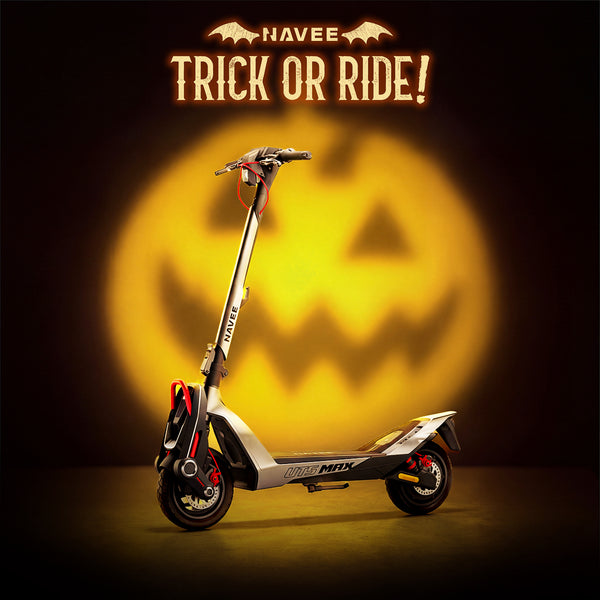
El UT5 Max es adecuado para un adulto experimentado cuya ruta habitual incluye superficies permitidas más irregulares y distancias más largas, y que no suele llevar el patinete consigo. Su suspensión hidráulica doble y sus neumáticos tubeless autocurativos de 12 pulgadas son relevantes porque abordan la irregularidad repetida en lugar de un atajo puntual. Los frenos de disco delanteros y traseros con EABS permiten circular por rutas donde los cambios de superficie o los descensos exigen un control de la velocidad más suave y anticipado.
Para planificar la distancia, el UT5 Max alcanza hasta 62,1 millas a una velocidad de prueba de 9,3 mph, o 40,4 millas a 15,5 mph. Estas dos condiciones muestran por qué un trayecto más rápido por superficies mixtas necesita más reserva que una prueba lenta y controlada. Su peso de 75,0 lb es la limitación decisiva: no es una opción para subir escaleras de forma ocasional, para el transporte público o para levantarlo con frecuencia.
Cuándo un modelo todoterreno avanzado cambia la respuesta
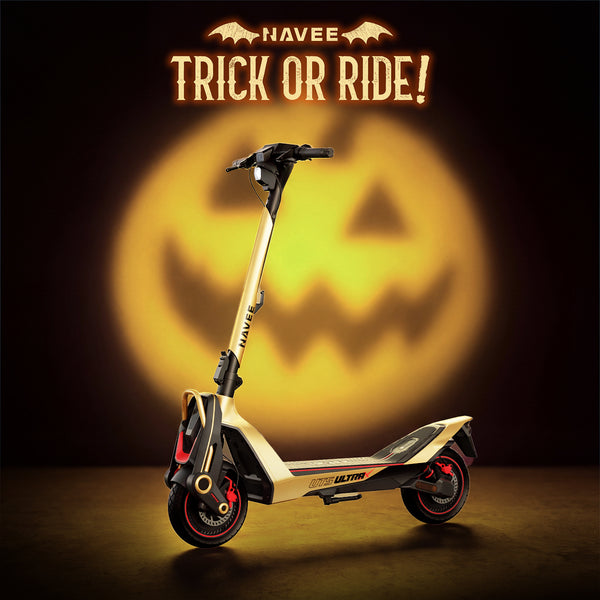
El UT5 Ultra X es para una situación más específica: un usuario adulto avanzado con una necesidad real de mayor rendimiento, trayectos más largos por todo tipo de carreteras y un almacenamiento que no implique levantarlo habitualmente. La suspensión hidráulica doble, los neumáticos tubeless autocurativos de 12 pulgadas, los frenos de disco hidráulicos delanteros y traseros con EABS y una batería de 1284 Wh son importantes cuando la ruta combina repetidamente distancia, superficies irregulares y cambios de ritmo.
Sus cifras de autonomía —hasta 74,6 millas a 9,3 mph y 37,3 millas a 24,9 mph— expresan el mismo punto con mayor claridad que una sola cifra destacada: la velocidad y las condiciones de conducción cambian la distancia utilizable. Con 90,4 lb, no es adecuado para un principiante, para una rutina de almacenamiento compacto o para un problema ocasional de ruta irregular. Más capacidad no sustituye al criterio de ruta, el equipo de protección, las normas locales ni la conducción prudente.
Usa este filtro final
- Elige una opción todoterreno solo cuando las rutas más irregulares sean recurrentes y estén permitidas.
- Planifica un trayecto de ida y vuelta con una autonomía basada en la velocidad de prueba que más se aproxime a tu forma de circular, dejando margen para cuestas y condiciones cambiantes.
- Comprueba el almacenamiento, el levantamiento y la carga antes de decidir si la capacidad compensa la masa adicional.
- Reduce la velocidad ante cambios de superficie, descensos, tráfico y visibilidad limitada.
Si las rutas irregulares recurrentes son el factor decisivo, compara los patinetes eléctricos todoterreno para adultos con el levantamiento, el almacenamiento y la reserva de autonomía que realmente requiere tu rutina.
Lectura recomendada
- Guía de suspensión para patinetes eléctricos — útil si el pavimento en mal estado es la razón por la que un modelo todoterreno está en tu lista de opciones.
- Comparación de neumáticos para patinetes eléctricos — útil para combinar el tipo y el estado de los neumáticos con las superficies por las que circulas.

Preguntas frecuentes sobre patinetes eléctricos todoterreno para adultos
¿Los patinetes todoterreno son buenos para cualquier sendero?
No. El permiso para circular por la superficie, las normas locales, el clima, la experiencia del usuario y la configuración exacta del patinete siguen siendo importantes. Un modelo capaz no es una autorización universal para cualquier ruta.
¿El UT5 Ultra X es automáticamente mejor que el UT5 Max?
No. El UT5 Ultra X es una opción más especializada para usuarios avanzados. El UT5 Max es la opción más adecuada cuando importan la irregularidad recurrente y los trayectos más largos, pero el usuario no necesita la versión de mayor rendimiento.
Si las superficies mixtas recurrentes y las rutas más largas describen tu forma habitual de circular, compara los patinetes eléctricos NAVEE teniendo en cuenta tu rutina de almacenamiento y conducción.
Compartir:
Patinetes eléctricos con un motor frente a patinetes eléctricos con dos motores
¿Cómo elegir entre las series NAVEE UT, NT, ST y GT?