


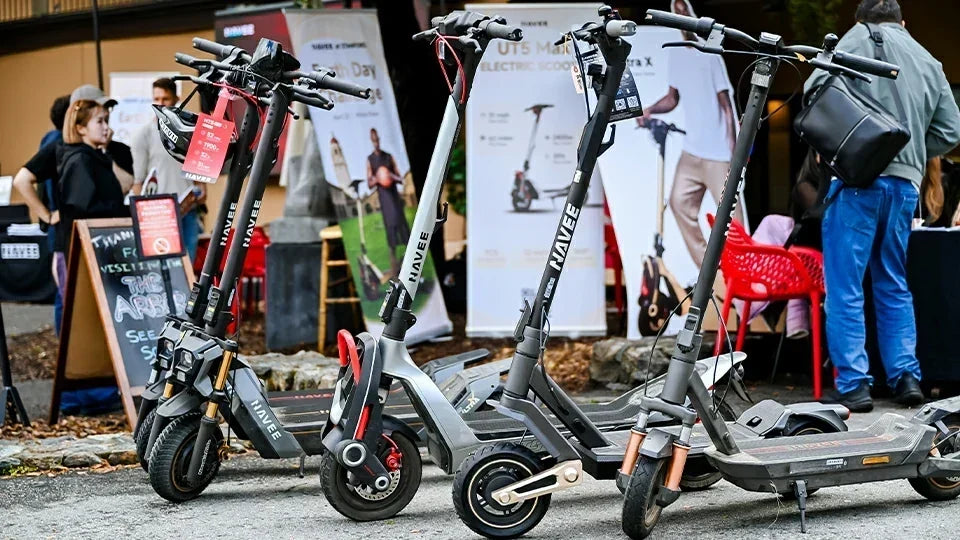
Las series ST, GT, UT y NT de NAVEE son más fáciles de diferenciar por el hardware que cambia la experiencia de conducción que por las letras en la plataforma. Los modelos ST y GT utilizan neumáticos de 10 pulgadas y configuraciones de suspensión orientadas al pavimento urbano diario; los modelos UT dan un paso adelante con neumáticos de 12 pulgadas y suspensión hidráulica doble; los modelos NT combinan neumáticos más grandes de 10,5 pulgadas, frenos de doble disco y opciones de motor más potentes. Empieza por la ruta que repites: calles urbanas irregulares, un trayecto más largo, superficies más accidentadas o un recorrido más rápido y con más cuestas.
Empieza por el problema de la ruta y luego compara las piezas que lo resuelven
La comodidad en las juntas del pavimento, la energía suficiente para un trayecto de ida y vuelta más largo, el control en carreteras más accidentadas y una aceleración más potente son problemas diferentes. El número de motores o la cifra de autonomía máxima por sí solos no los resolverán. Anota el tipo de superficie habitual, la subida más empinada que hagas con frecuencia, si llevas el patinete contigo y la velocidad a la que esperas circular. Esas respuestas te ayudarán a determinar si la suspensión, el tamaño de los neumáticos, los frenos, la capacidad de la batería o el peso merecen más atención.
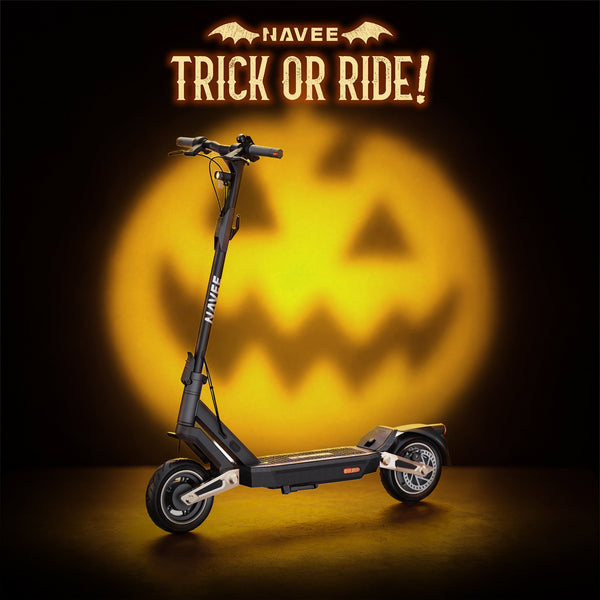
¿En qué se diferencian en la práctica los modelos ST, GT, UT y NT?
Utiliza esto como un punto de partida rápido basado en evidencias. Las especificaciones exactas varían según el modelo, así que considera cada fila como una razón para comparar una familia, no como una promesa de que todos los modelos de ella sean idénticos.
| Serie | Mejor para | Por qué | Principal compromiso |
|---|---|---|---|
| ST | Desplazamientos urbanos con prioridad en la comodidad | Los modelos ST3 y ST3 Pro combinan suspensión Damping Arm, neumáticos tubeless de 10 pulgadas y frenos en capas. | Unos 54,7–55,8 lb antes de subirlo por las escaleras. |
| GT | Rutas urbanas diarias | Los modelos GT3 combinan neumáticos tubeless de 10 pulgadas con suspensión de horquilla delantera y cilindro de amortiguación trasero; la autonomía y el peso aumentan según el modelo. | Más autonomía en la familia también significa más peso. |
| UT | Vías habituales más accidentadas y rutas más largas | Los modelos UT5 Max y UT5 Ultra X utilizan suspensión hidráulica doble, neumáticos de 12 pulgadas, frenos de disco y opciones de batería más grandes. | Los límites de 75,0–90,4 lb restringen la portabilidad. |
| NT | Usuarios experimentados con necesidades de rendimiento recurrentes | Los modelos NT5 comparten neumáticos de 10,5 pulgadas, frenos de doble disco y suspensiones Front Dual Telescopic y Rear Damping Arm; las configuraciones de motor varían según el modelo. | 72,1–80,5 lb, además de requisitos más exigentes de ruta y usuario. |
Serie ST: soporte de comodidad para el pavimento urbano repetido
Para un usuario urbano que nota grietas, juntas y parches en el pavimento en casi todos sus trayectos, la Serie NAVEE ST es una familia sensata para examinar. El ST3 utiliza suspensión Damping Arm delantera y trasera, mientras que el ST3 Pro utiliza suspensión Dual Damping Arm. Ambos modelos tienen neumáticos tubeless de 10 pulgadas y un freno de tambor delantero, freno de disco trasero y EABS. La suspensión puede suavizar la dureza de los impactos rutinarios del pavimento, mientras que la configuración de neumáticos y frenos importa cuando la conducción de arrancar y parar incluye calles imperfectas y frenadas frecuentes.
Las cifras también marcan un límite práctico. El ST3 figura con 54,7 lb y el ST3 Pro con 55,8 lb, por lo que no es una opción de llevarlo primero para subirlo a diario. La autonomía condicionada del ST3 Pro es de 46,6 millas a 9 mph o 28 millas a 20 mph; esas velocidades de prueba importan al planificar un trayecto más largo. Elige ST cuando la comodidad urbana sea el problema recurrente. Si las superficies más accidentadas son una parte habitual de la ruta, o si el peso que debes llevar es la restricción decisiva, compara en su lugar el UT o un modelo exacto más ligero.

Serie GT: una familia de desplazamientos urbanos con opciones de autonomía y peso
La Serie NAVEE GT se gana su papel de desplazamientos urbanos por la configuración compartida entre GT3, GT3 Pro y GT3 Max: neumáticos tubeless de 10 pulgadas, horquilla delantera y cilindro de amortiguación trasero, y frenos de tambor delanteros con EABS trasero. Esa combinación es relevante para los usuarios urbanos porque aborda la textura ordinaria del pavimento y las paradas repetidas sin requerir el tamaño y peso de un patinete más grande para carreteras accidentadas.
La elección dentro de la familia es más específica. El GT3 figura con 46,3 lb, el GT3 Pro con 48,5 lb y el GT3 Max con 50,7 lb. Sus cifras de autonomía condicionada aumentan de 31 millas a 9 mph / 19 millas a 20 mph para el GT3, a 37 millas a 9 mph / 22 millas a 20 mph para el GT3 Pro, y 46,6 millas a 9 mph / 25 millas a 20 mph para el GT3 Max. Más energía almacenada puede dar a una ruta planificada más larga más margen, pero también añade peso a escaleras, maleteros y almacenamiento. El GT merece ser comparado cuando el recorrido es principalmente pavimento urbano y quieres elegir entre demandas de autonomía y carga moderadamente diferentes. No es la primera parada natural cuando las superficies accidentadas repetidas o una ruta de alto rendimiento son el principal desafío.
Serie UT: puntos de contacto más grandes y suspensión hidráulica para rutas habituales más accidentadas
La Serie NAVEE UT tiene un caso más claro cuando las carreteras irregulares son rutinarias en lugar de ocasionales. Tanto el UT5 Max como el UT5 Ultra X utilizan suspensión hidráulica doble y neumáticos tubeless autorreparables de 12 pulgadas. Los neumáticos más grandes pueden rodar sobre las juntas del pavimento y pequeños obstáculos con menos brusquedad que una rueda más pequeña, mientras que la suspensión puede reducir la dureza con la que los parches accidentados repetidos llegan al usuario. Ambos modelos también utilizan frenos de disco delanteros y traseros con EABS, lo que da a los usuarios una configuración de frenado más sustancial para evaluar junto con la superficie de la ruta y los descensos.
Las cifras de autonomía y peso explican la otra mitad de la elección. El UT5 Max figura con 75,0 lb, con 62,1 millas a 9,3 mph o 40,4 millas a 15,5 mph. El UT5 Ultra X pesa 90,4 lb, con 74,6 millas a 9,3 mph o 37,3 millas a 24,9 mph. Esos son resultados de pruebas condicionadas, no garantías de distancia para el uso diario, pero muestran por qué esta familia puede ser relevante para los usuarios que planifican rutas más largas. El costo de portabilidad es sustancial: ninguno de los modelos es una elección natural para levantar con frecuencia. Compara el UT cuando el pavimento más accidentado y los recorridos más largos ocurren a menudo; si la ruta es lisa y el almacenamiento requiere llevarlo, el GT o el ST pueden ser más sencillos de manejar.

Serie NT: hardware de control compartido, con diferentes opciones de motor dentro de la familia
La Serie NAVEE NT se evalúa mejor separando el equipo compartido relacionado con el chasis de la diferencia del motor. Tanto el NT5 Max como el NT5 Ultra X tienen neumáticos tubeless de 10,5 pulgadas, suspensión telescópica doble delantera y Damping Arm trasera, frenos de doble disco con EABS y una capacidad de carga de 330 lb. Esos componentes importan para un usuario que enfrenta pavimento exigente, descensos recurrentes o una ruta habitual más rápida: el contacto del neumático, la respuesta de la suspensión y los frenos son parte del control, no una consideración secundaria a la potencia del motor.
Los motores no son iguales. El NT5 Max tiene un motor con potencia nominal de 800 W / pico de 1900 W y una velocidad máxima listada de 31 mph. El NT5 Ultra X utiliza dos motores con potencia nominal de 800 W con una salida pico de 1200 W x2 y una velocidad máxima listada de 40 mph. Por lo tanto, el Ultra X es el ejemplo representativo de doble motor, no una prueba de que toda la Serie NT sea de doble motor. Ambos son pesados para llevarlos con frecuencia: 72,1 lb para el NT5 Max y 80,5 lb para el NT5 Ultra X. Compara el NT cuando una ruta más empinada o de mayor exigencia recurrente justifique ese peso y tengas la experiencia de conducción y el espacio para manejar un patinete más capaz. Para viajes cortos y planos con levantamientos frecuentes, el hardware compartido puede ser más de lo que las necesidades rutinarias requieren.
¿Cómo hacer la lista corta final?
- Pon la comodidad en contexto. Si el pavimento urbano accidentado es la queja, compara las configuraciones Damping Arm del ST con el peso de 54,7–55,8 lb del modelo exacto.
- Combina la autonomía con tu velocidad real. Las cifras de autonomía de GT, UT y NT son más útiles junto con su velocidad de prueba indicada; las cuestas, la conducción más rápida, la carga y el clima pueden cambiar la distancia que ves. Lee la guía de autonomía de patinete eléctrico antes de tratar una cifra máxima como una promesa de trayecto.
- Deja que la superficie cambie la lista corta. Las carreteras regularmente accidentadas hacen que los neumáticos de 12 pulgadas y la suspensión hidráulica del UT merezcan ser comparados. La conducción urbana lisa puede no justificar el peso de 75,0–90,4 lb.
- Mantén los frenos y la experiencia juntos. Al mirar el NT, inspecciona el estado de los neumáticos y los frenos con tanto cuidado como la configuración del motor. La guía de frenos de patinete eléctrico puede ayudar con esa revisión.
Preguntas frecuentes sobre las series de patinetes NAVEE
¿Qué serie de NAVEE es el mejor punto de partida para desplazamientos urbanos?
Para el pavimento urbano, ST y GT son puntos de partida útiles por razones diferentes. El ST3 y el ST3 Pro combinan suspensión Damping Arm, neumáticos de 10 pulgadas y frenos en capas, lo que puede importar cuando la comodidad de conducción es la preocupación recurrente. Los modelos GT3 utilizan neumáticos tubeless de 10 pulgadas y también suspensión delantera/trasera, con una gama más amplia de autonomía y peso listados. Elige entre ellos por si la comodidad del pavimento o el equilibrio exacto de autonomía y carga es más importante.
¿El UT es solo para conducción todoterreno?
No. La comparación respaldada es más estrecha: el UT5 Max y el UT5 Ultra X tienen suspensión hidráulica doble, neumáticos de 12 pulgadas y frenos de disco, lo que puede hacerlos relevantes cuando las carreteras más accidentadas son una parte regular de un recorrido más largo. Esas características por sí solas no establecen una afirmación todoterreno universal. Su peso de 75,0–90,4 lb es la razón para descartarlos cuando levantar con frecuencia importa.
¿Todos los patinetes NT son de doble motor?
No. El NT5 Max tiene un motor con potencia nominal de 800 W, mientras que el NT5 Ultra X tiene dos motores con potencia nominal de 800 W. Ambos comparten neumáticos de 10,5 pulgadas, suspensión delantera/trasera y frenos de doble disco, así que compara la configuración del motor junto con el hardware de control compartido y el requisito de carga más pesado.
¿Aún decides qué ruta requiere qué configuración? Explora patinetes eléctricos NAVEE para comparar los modelos exactos, sus condiciones de prueba de autonomía y su peso antes de reducir tu lista corta.
Compartir:
¿Cómo elegir patinetes eléctricos todoterreno para adultos?
NAVEE en Outdoor Retailer 2026: Presentando el futuro de la movilidad eléctrica al aire libre