


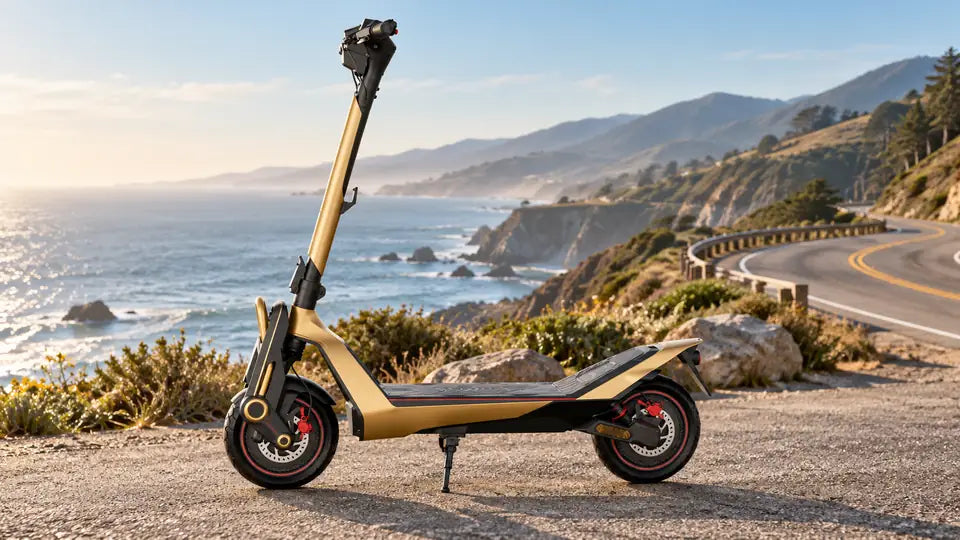
Steep hills and long distances put every scooter to the test. A single small motor handles a flat bike path easily, then struggles once the road starts to climb. Dual-motor power fixes that, and it pays off on long rides too.
This guide explains how dual motors work, compares the two dual-motor NAVEE models sold in the US, and shows which one fits your terrain, weight, and riding style.
Why Choose Dual-Motor
How Dual Motors Climb Hills
A dual-motor scooter has a motor in each wheel, so two motors share the work of pushing against gravity. Each motor carries a lighter load, which helps the scooter hold a steadier speed on an incline instead of bogging down at the steepest point.
Driving both wheels also improves traction. With the front wheel pulling and the rear wheel pushing, the scooter is less likely to lose grip on loose gravel or wet pavement.
Dual-Motor Benefits for Long Rides
Long routes are rarely flat. Overpasses, ramps, and rolling stretches add up, and extra motor power lets you take them without slowing down or holding the throttle wide open. The result is a smoother, less tiring ride.
Dual-motor models also pair strong motors with large batteries, which suits all-day riding.
Who Needs a Dual-Motor Scooter
A dual-motor scooter makes the most sense for riders who:
- Live or commute in a hilly area
- Regularly ride more than 20 miles
- Weigh more than average or carry gear
- Ride on mixed surfaces such as gravel paths, packed dirt, or cracked pavement
For short, flat, smooth routes, a lighter single-motor scooter may be enough. Once hills and distance enter the picture, dual motors earn their place.
Dual-Motor NAVEE Electric Scooters
Two dual-motor models cover different budgets and riding needs. Both deliver serious hill power, and the right pick depends on how much range, weight, and refinement you want.
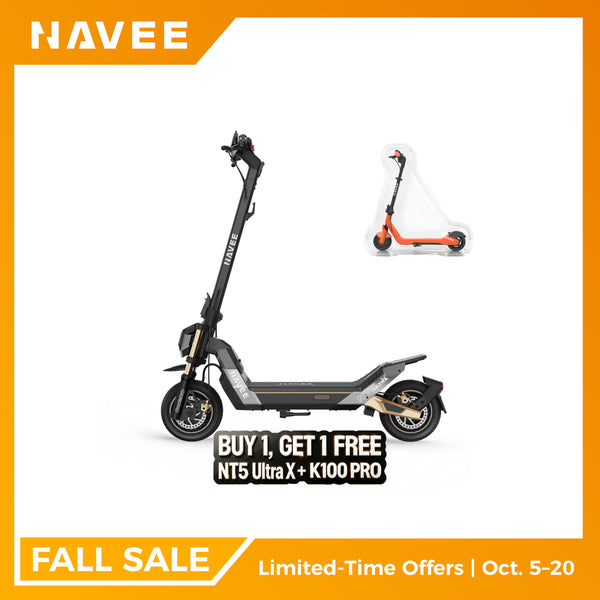
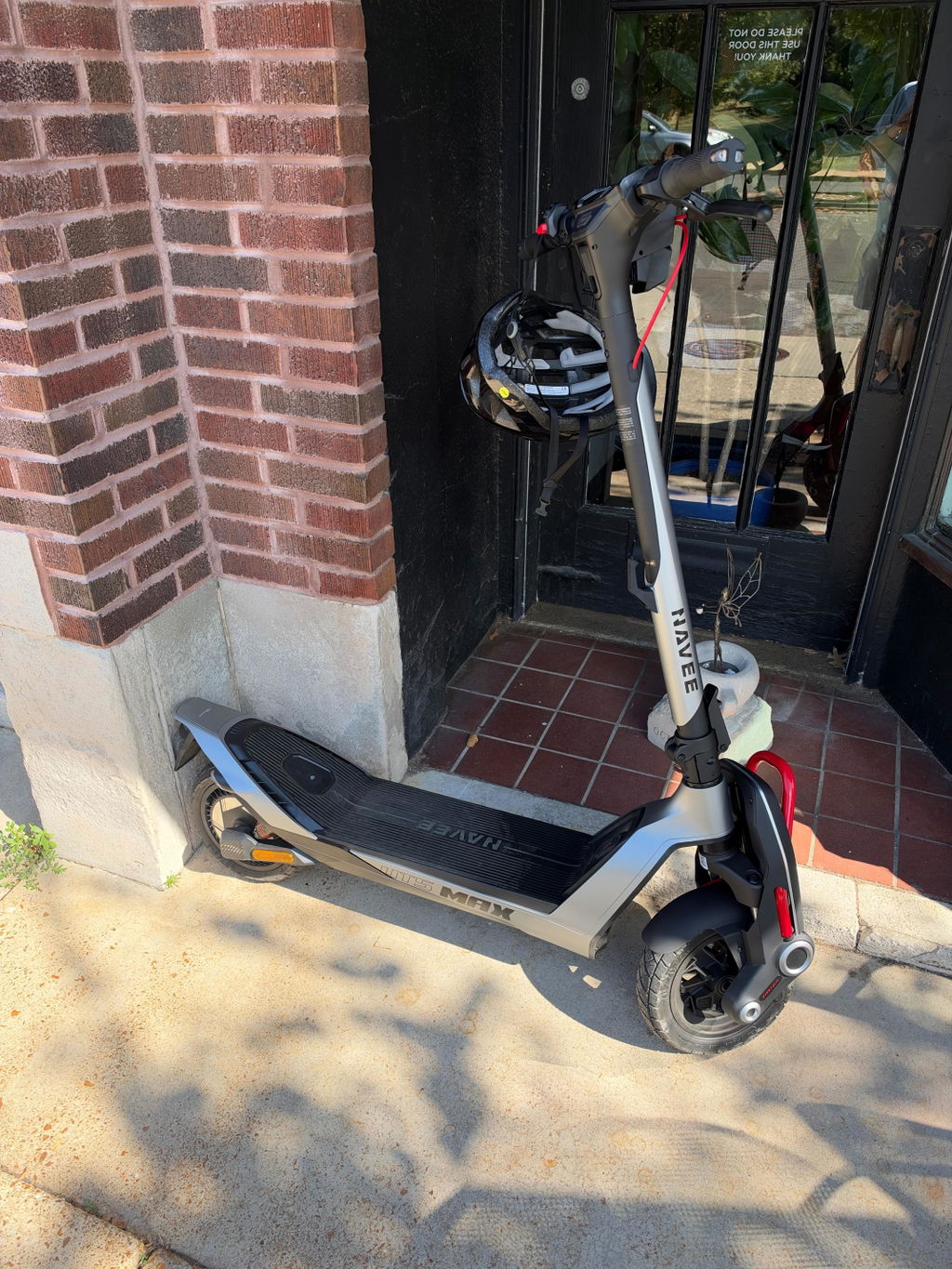
NAVEE NT5 Ultra X
The Navee NT5 Ultra X is the lighter and more approachable choice. Its two motors are rated at 800W each with 1200W peak, which supports a 45% climbing slope and a 40 mph top speed. The 898.56Wh battery delivers up to 55.9 miles of rated range.
Front dual telescopic suspension, a rear Damping Arm suspension, and 10.5-inch tubeless tires keep rough pavement manageable. At 80.5 lbs net, it is also the easier of the two to move around.
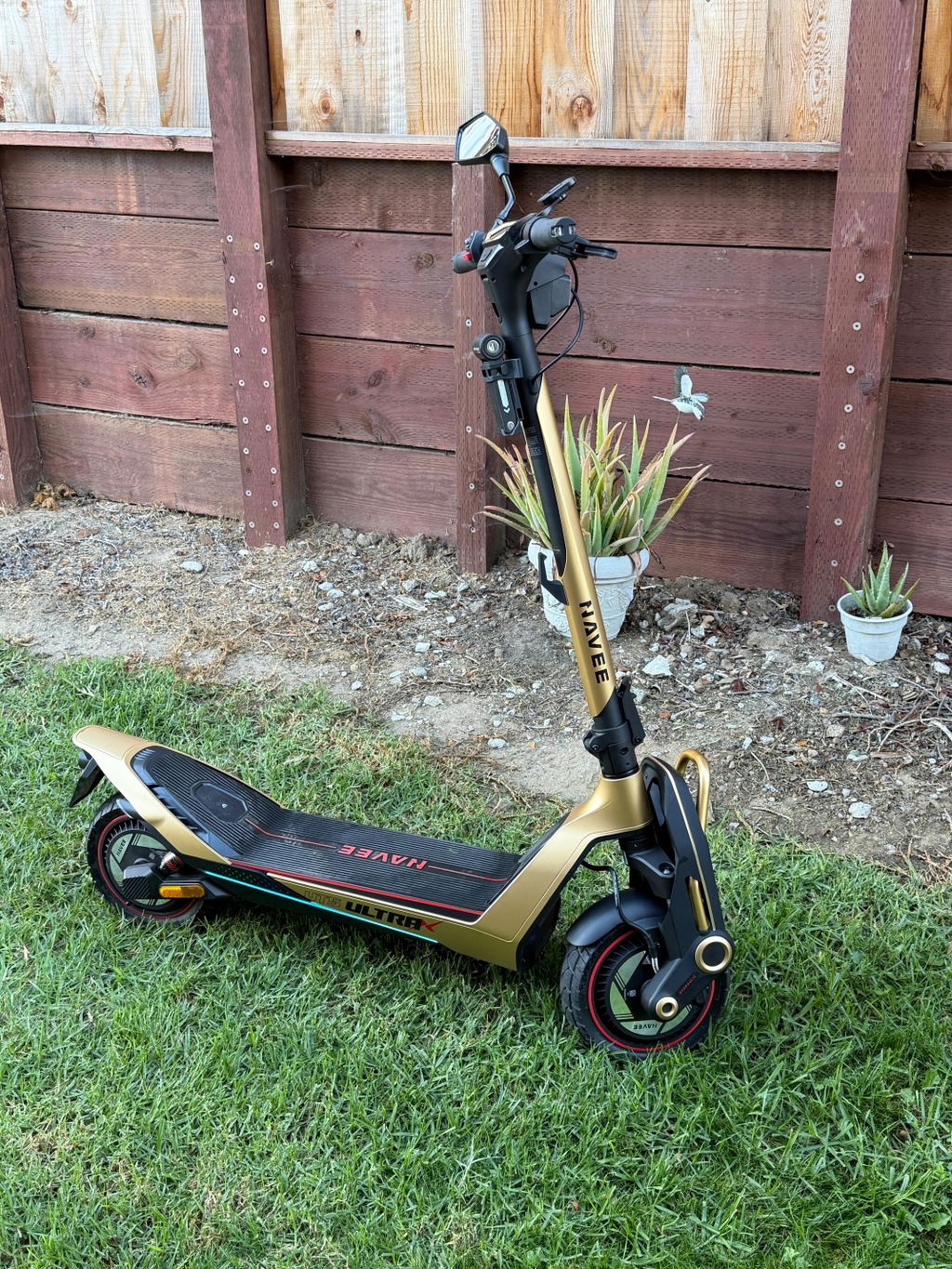
NAVEE UT5 Ultra X
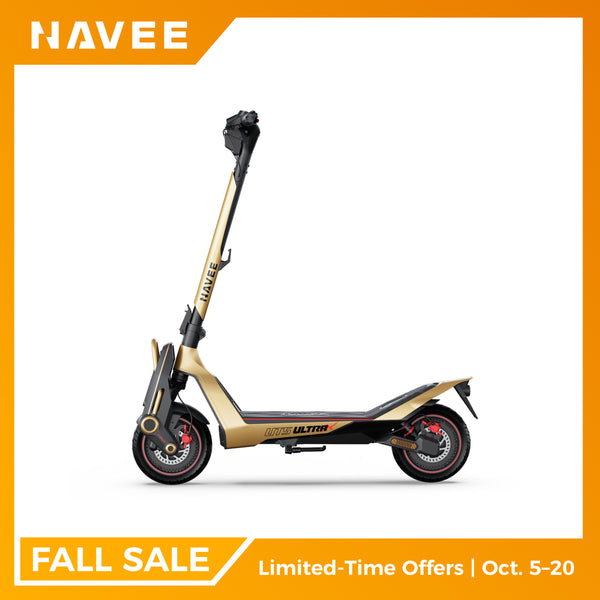
The UT5 Ultra X is the flagship. Its two motors are rated at 1200W each with 2400W peak, which supports a 46% climbing slope, a 43 mph top speed, and a 0 to 12 mph sprint in 1.78 seconds. The 1,284Wh battery stretches rated range to 74.6 miles.
Dual hydraulic suspension with an adjustable rear damper, 12-inch self-healing tubeless tires, front and rear hydraulic disc brakes, and an adjustable steering damper make it the most capable option for steep, rough, or fast routes.
Quick Spec Comparison

Best NAVEE Scooter by Need
Best for Steep Hills
The UT5 Ultra X is the strongest climber. Its 2400W peak power per motor and 46% climbing rating give it the most margin on long, steep grades, and the 1,284Wh battery keeps that power available deep into a ride. The hydraulic disc brakes matter just as much on the way down, when steady stopping power keeps descents controlled.
The NT5 Ultra X is only one point behind at 45% and handles most neighborhood hills with ease.
Best for Long Range
The UT5 Ultra X leads with 74.6 miles of rated range, or 37.3 miles at 24.9 mph. For riders covering 30 miles or more in a day, that is a comfortable buffer. Fast charging also helps on long days: NAVEE states it can add about 5 miles of range in 8 minutes.
The NT5 Ultra X remains a strong long-distance option at 55.9 miles, with a 2-hour flash charge.
Best for Heavy Riders
Both models support up to 330 lbs. The UT5 Ultra X offers more headroom, since its higher peak power and bigger battery help when rider weight and a steep grade combine. Its 12-inch tires and hydraulic suspension also absorb more of the load on rough pavement.
Best for Daily Commuting
Both scooters handle commuting well, but weight is the deciding factor. At 80.5 lbs net, the NT5 Ultra X is easier to carry up stairs or lift into a trunk than the 90.4 lb UT5 Ultra X, and its range still covers most commutes.
For a short, flat commute, a lighter single-motor commuter scooter may be a better fit. The dual-motor pair shines when the daily route includes real hills.

Key Features to Compare
Motor Power and Torque
Check both rated and peak power. Rated power is what the motors can sustain, while peak power is the short burst available for acceleration and steep climbs. Sustained power is what counts on a long hill, and the UT5 Ultra X offers 50% more of it per motor (1200W versus 800W).
Both scooters also include traction control, which helps keep the wheels planted when power is high and grip is low.
Battery Capacity and Range
Battery capacity, measured in watt-hours (Wh), is the most reliable predictor of distance. Rated range is measured at a gentle 9.3 mph, so real rides land lower. Speed makes a big difference: riding at 24.9 mph cuts rated range roughly in half.
Mixed riding with hills and higher speeds typically lands around 30 to 45 miles on the NT5 Ultra X and 40 to 55 miles on the UT5 Ultra X.
Suspension and Tires
Suspension and tires decide how your hands, feet, and back feel after an hour on the road. The NT5 Ultra X suits city streets and light trails. The UT5 Ultra X adds a rear damper that adjusts from stiff for smooth pavement to soft for rugged trails, and its larger 12-inch self-healing tires roll over bumps more easily and help with small punctures far from home.
Braking System
More power calls for stronger braking. The NT5 Ultra X uses dual disc brakes with electronic braking (EABS). The UT5 Ultra X upgrades to front and rear hydraulic disc brakes with EABS, which gives more consistent stopping power on long downhill runs.
Weight and Portability
Both scooters are heavy, and both fold to a similar footprint of roughly 1250 x 625 x 650 mm. Measure your trunk or storage space before buying. If you will lift your scooter often, the lighter NT5 Ultra X is the friendlier choice.

Hill Climbing Specs Explained
Watts, Volts, and Amp Hours
Watts describe how much power the motors can deliver. Volts and amp hours describe the battery, and multiplying them gives watt-hours, the total energy stored. On the NT5 Ultra X, 46.8V multiplied by 19.2Ah equals 898.56Wh.
Think of watts as the strength of your legs and watt-hours as the fuel in the tank. A long climb needs both.
Climb Angle Ratings
Climbing ratings are given as a percent grade, which is rise divided by run. A 45% grade means 45 feet of height gained for every 100 feet traveled forward, or about 24 degrees. The UT5 Ultra X's 46% rating is about 25 degrees. For context, some of the steepest public streets in the US reach roughly 30% grade.
A rated climb comes from controlled testing. Real hills involve longer distances, imperfect pavement, and heavier riders, so treat the rating as a measure of capability rather than a guarantee.
Rider Weight and Hill Performance
Rider weight has the biggest effect on climbing. A heavier rider, a loaded backpack, or both will slow the ascent and drain the battery faster, and starting with a full battery gives the most consistent power.
Dual-motor power provides a cushion that single-motor scooters lack. For riders near the 330 lb limit facing long, steep hills, the UT5 Ultra X offers the most margin.
Long Ride Tips
Riding Comfort and Deck Space
Small comfort details add up on a long ride. The NT5 Ultra X has a 220 mm pedal width, and the UT5 Ultra X has a 220 x 545 mm deck. Shifting your foot position every few miles keeps your legs fresh.
On the UT5 Ultra X, tuning the suspension and steering damper to match the road makes a noticeable difference after the first hour.
Battery Care for Longer Range
A few habits protect battery health and range over time:
- Charge with the supplied charger, and let the battery cool after a hard ride before plugging in.
- Avoid leaving the scooter fully drained or sitting at 100% for weeks.
- Store it indoors, away from extreme heat and freezing temperatures.
- Check tire pressure before big rides, since underinflated tires add drag and cut range. Follow the guidance in the user manual.
Both scooters carry an IPX6 rating, which comes from the IP code system defined in IEC 60529. It means protection against powerful water jets, so rain and splashes are fine, but deep standing water is not.
Know Your Local Riding Rules
In the US, rules for riding electric scooters on public roads are set mostly at the state and city level. Speed caps, helmet and age requirements, and where scooters may ride (streets, bike lanes, or sidewalks) differ from place to place, and many areas set limits well below the 40 mph and 43 mph top speeds of these two models.
Both scooters offer speed modes in the NAVEE app, so the top speed can be set to match local limits. For general safety practices such as charging, weight limits, and riding with one person per scooter, see the CPSC micromobility safety guidance.
Final Verdict
Top NAVEE Pick
For the most climbing power, range, and braking confidence, the UT5 Ultra X is the top pick. For dual-motor hill power in a lighter package, the NT5 Ultra X is an excellent alternative, since its 45% rated climb is only a point behind.
Buying Checklist
Match your answers to the specs:
- Hill steepness: Both models are rated for 45% to 46%. For long, steep climbs, favor the UT5 Ultra X's higher peak power.
- Daily distance: Plan around the speed-adjusted range. Riders covering 30 or more miles daily should lean toward the 1,284Wh battery.
- Total weight: Stay well under the 330 lb limit if your hills are steep.
- Lifting and storage: Check the 80.5 and 90.4 lb net weights against your stairs and trunk.
- Surface: Mostly pavement suits either model. Rough trails favor the UT5 Ultra X's 12-inch tires and adjustable suspension.
- Local rules: Confirm the speed limits and riding locations that apply in your state and city.
FAQ
Which NAVEE scooter is best for steep hills?
The UT5 Ultra X is the strongest hill climber, with 2400W peak power per motor and a 46% rated climbing slope. The NT5 Ultra X is a close second at 45% and suits riders who prefer a lighter scooter.
How steep a hill can a NAVEE dual-motor scooter climb?
The NT5 Ultra X is rated for a 45% grade and the UT5 Ultra X for 46%, roughly 24 to 25 degrees. Real-world results depend on rider weight, battery level, and hill length, so expect a bit less on long climbs with a heavy load.
How far can a NAVEE dual-motor scooter travel per charge?
Rated range is up to 55.9 miles for the NT5 Ultra X and 74.6 miles for the UT5 Ultra X at 9.3 mph. At about 24.9 mph, those figures drop to roughly 28 and 37.3 miles.
Are NAVEE dual-motor scooters worth the extra cost?
They are worth it for steep hills, long distances, or heavier loads, since dual motors provide stronger climbing, better traction, and more power in reserve. For short, flat routes, a lighter single-motor scooter may be all you need.
Can heavy riders use NAVEE dual-motor scooters?
Yes. Both models support a maximum load of 330 lbs. Heavier riders will see somewhat lower range and slower climbs, and the UT5 Ultra X offers the most headroom.
Do dual motors drain the battery faster?
Not automatically. Battery use depends mostly on speed, terrain, and throttle use. Dual-motor scooters can draw more power on demand, but they carry larger batteries and the two motors share the workload on climbs. Moderate speeds stretch range the most.
Can NAVEE dual-motor scooters be ridden on public roads in the US?
It depends on the state and city. Many places limit scooter speeds and restrict where they can ride, and these scooters can exceed those limits at full speed. Setting a lower speed mode in the NAVEE app and checking local rules before riding keeps every trip compliant.
Share:
Electric Scooter Battery Upgrade vs. OEM Replacement: What Must Match?