


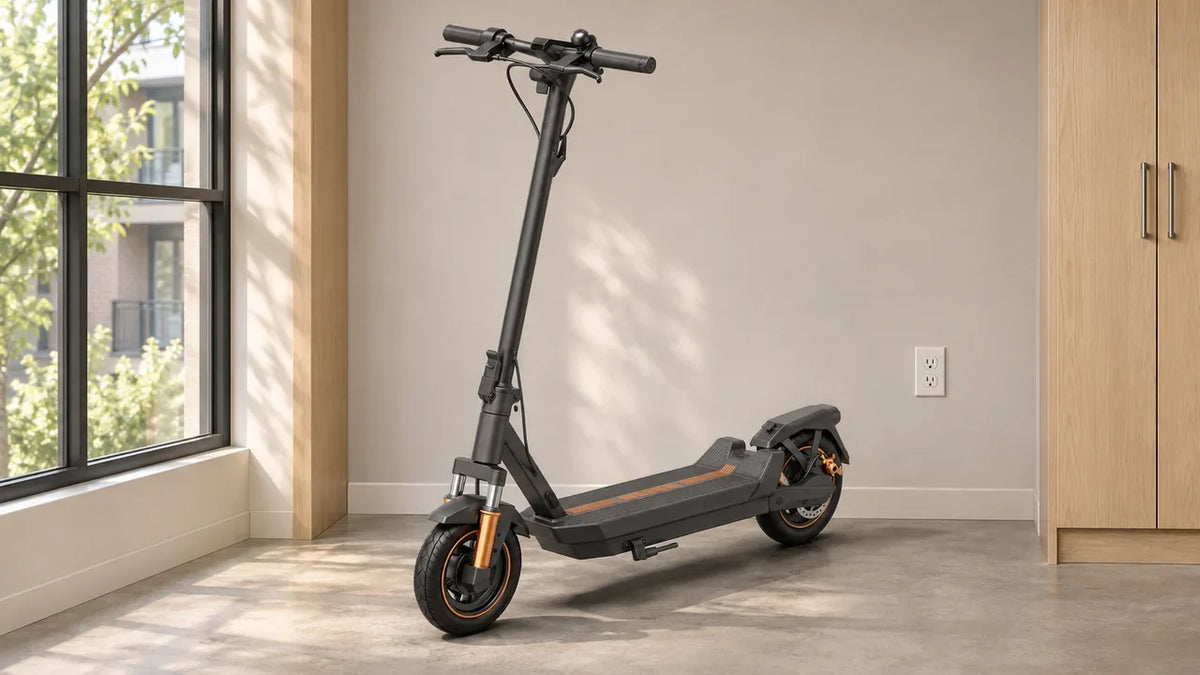
An electric scooter with a removable battery can make charging easier when the scooter needs to stay downstairs or away from an outlet. But that convenience only matters when it fits your routine.
Prioritize a removable battery when you need to charge separately from the scooter or use a compatible spare between charging stops. When you can charge where you park and one battery comfortably covers your daily travel, a built-in battery may meet your needs.
Start with your charging location, then consider carrying weight and range.
What Does “Removable” Mean?
Removable vs. Built-In Batteries
A removable battery is designed for the rider to take out using a key, latch, or another manufacturer-specified mechanism.
A built-in battery stays inside the scooter during normal use. Removal generally requires opening part of the scooter and disconnecting components, making it a service procedure rather than an everyday task.
“Replaceable” does not necessarily mean “removable.” A technician may be able to replace a battery that is not designed for riders to take out for charging.
Separate Charging vs. Battery Swapping
These features serve different purposes:
Do not assume a removable battery supports all three functions. Check the instructions for the exact model.
When a Removable Battery Makes Sense
No Outlet Where You Park
Charging access is the strongest reason to prioritize a removable battery.
You might store your scooter in an apartment building’s bike room while the nearest permitted charging location is inside your apartment. A battery designed for off-scooter charging lets you leave the scooter parked and carry the pack upstairs.
A similar arrangement may work at an office with separate scooter parking. Confirm that charging is permitted at your intended location before relying on it.

Carrying the Scooter Upstairs Is Difficult
Carrying only the battery may be easier when you have a secure, permitted place to leave the scooter downstairs.
Check the pack’s weight, grip, and removal process. A heavy battery in an awkward compartment can be difficult to handle.
A removable battery does not solve every carrying problem, though. When the entire scooter must come upstairs for storage, total weight, folded size, and lifting comfort still matter.
You Need More Range Between Charges
A charged spare can help when your riding day exceeds one battery’s usable range and you cannot recharge between trips.
Account for the cost and weight of the spare, along with a suitable way to carry it. The scooter must also support routine swapping with that battery.
Calculate your full day’s mileage first, including the return trip and errands. A scooter with enough range from one battery may cover the same routine without a second pack.
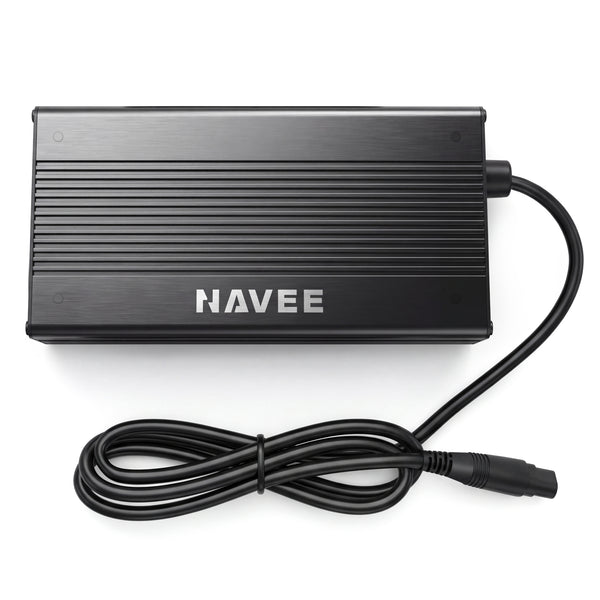
Access to an outlet during a break creates another option: faster charging. The NAVEE 10A Fast Charger provides up to 546W output for select compatible scooters, including the UT5 Max and NT5 Max US. It can help when charging time is limited, but it cannot solve a lack of outlet access. The GT5 Max is not included in the current compatibility list.
When a Built-In Battery Is Enough
You Can Charge Where You Store It
A suitable storage space near an outlet can make charging straightforward without removing the battery.
Allow enough time to complete charging while you are present and follow the manufacturer’s instructions. The U.S. Consumer Product Safety Commission’s charging guidance recommends using the supplied charger, staying present during charging, never charging while sleeping, and unplugging the device when charging is complete. These precautions apply to both battery designs.
One Charge Covers Your Round Trip
When one charge comfortably covers your commute and errands, battery swapping may add little value.
For an eight-mile round trip, prioritize enough usable range for those eight miles plus a buffer. Removability alone does not make a scooter better suited to that journey.
The NAVEE GT5 Max combines a 596.7Wh battery with a maximum tested range of 55.9 miles at 9.3 mph and an approximately five- to six-hour charging time. This range-focused setup can suit riders who want to cover their daily travel without a battery swap and have enough time and suitable space to recharge between rides.
The maximum range reflects specified test conditions, not a guaranteed commuting distance. Faster riding, hills, rider load, and temperature can reduce range, so leave a margin beyond your planned mileage.
A larger battery also cannot solve a lack of charging access. Confirm where and when you will recharge before choosing primarily by range.

What to Check Before Buying
Off-Scooter Charging Support
Look for explicit instructions covering charging outside the scooter. Confirm the approved charger, any required adapter or dock, and charging temperature limits.
Product photos and a “removable battery” description are not enough to establish how separate charging works.
Battery Weight and Removal
Consider the complete handling process, especially when carrying a backpack or groceries.
Can you reach the release mechanism, lift the battery comfortably, and reinstall it securely? A removable pack should make your routine easier rather than introduce a task you find difficult.
Spare Battery Cost and U.S. Availability
Confirm the price and current U.S. availability of an approved spare for your exact model and version. Include any additional charging equipment in the cost.
Distinguish a service replacement battery from a spare intended for regular swapping. A part available through a repair process may not support everyday battery changes.
U.S. Warranty and Replacement Support
Both designs need a practical replacement path.
For a removable model, confirm how to purchase an approved battery. For a built-in model, check where replacement service takes place and whether the scooter needs to be shipped.
Review battery warranty coverage for covered defects, exclusions, and claim requirements. Separately, confirm parts, labor, and shipping costs outside warranty coverage.
Easy removal does not guarantee an inexpensive or readily available replacement.

Is a Removable Battery Essential for You?
Use your charging setup to narrow the choice:
Check apartment or workplace storage and charging requirements before purchasing. A convenient charging plan only works when the intended space is available to you.
When a removable battery is optional, compare electric scooters for city commuting by the features that affect every ride: usable range, handling, suspension comfort, braking, and portability.

FAQ
Does a Removable Battery Allow Apartment Charging?
Only when the model supports off-scooter charging and your building permits it. Removing the battery does not automatically make indoor charging allowed or suitable.
Can a Built-In Battery Be Replaced?
Often, yes. Replacement may require a service procedure rather than routine user removal. Availability, cost, and repair arrangements depend on the model.
Does a Removable Battery Extend Range?
Removability does not increase range per charge. A compatible charged spare can extend the distance traveled between charging stops when the scooter supports battery swapping.
Share:
Segway Electric Scooter Alternatives: Best NAVEE Options for 2026