


Choosing a Segway electric scooter alternative means balancing range, riding performance, price, and carrying weight. NAVEE offers 4 options for different priorities: the GT5 Max for daily commuting, NT5 Max for urban performance, NT5 Ultra X for dual-motor drive, and UT5 Ultra X for larger tires and hydraulic suspension. The right fit depends on your route and how you store, charge, and transport the scooter.
Top NAVEE Alternatives Compared
Prices, configurations, and availability may change. Specifications apply to U.S. models. GT5 Max weight is converted from 24.8 kg.
Range figures are test results at the stated speed, not guaranteed daily mileage. Rider weight, terrain, temperature, tire pressure, and frequent stops affect distance per charge. Maximum speed and maximum range describe separate measurements.

Best NAVEE Options for 2026
GT5 Max: Daily Commuting
For a mostly paved commute, start with the NAVEE GT5 Max. Its 596.7 Wh battery, front fork suspension, and rear damping cylinder provide a practical combination for daily travel. The braking system combines a front drum brake, rear disc brake, and electronic braking, paired with 10-inch tubeless tires.
At roughly 55 pounds, the GT5 Max has the lowest weight and price among these four models. It suits daily trips where keeping weight and cost down matters more than dual-motor performance. Frequent carrying still requires effort, especially on stairs.
NT5 Max: Urban Performance
Choose the NAVEE NT5 Max when a higher speed ceiling and dual disc brakes matter more than portability. It reaches up to 31 mph, with a single motor producing 800 watts of rated power and up to 1,900 watts of peak power. Front dual telescopic suspension, a rear damping arm, and 10.5-inch tubeless tires complete the setup.
The 596.7 Wh battery matches the GT5 Max's capacity. Range reaches up to 21.8 miles under test conditions at 24.9 mph. The NT5 Max suits riders who prioritize single-motor performance and can accommodate its 72.1-pound weight, ideally with ground-level storage.
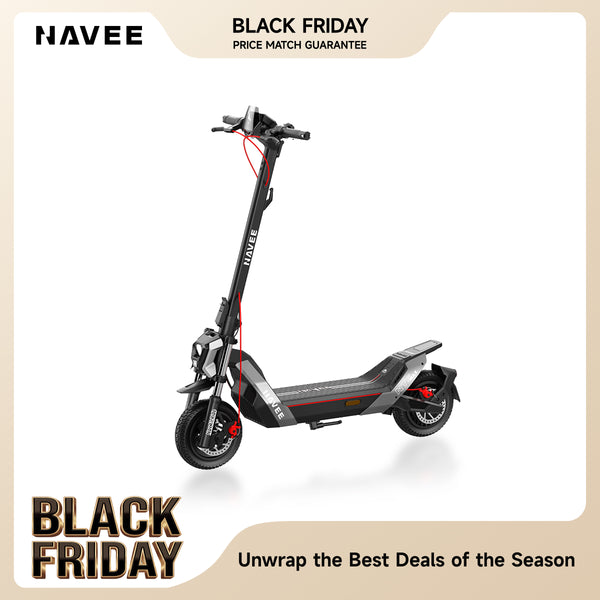
NT5 Ultra X: Dual-Motor Power
The NAVEE NT5 Ultra X combines a top speed of up to 40 mph with dual-motor drive and an 898.56 Wh battery. Each motor delivers 800 watts of rated power and up to 1,200 watts of peak power. It retains the NT5 Max's suspension layout, 10.5-inch tubeless tires, and dual disc brakes with electronic braking.
The larger battery provides up to 28 miles of range under test conditions at 24.9 mph. Choose the NT5 Ultra X when dual-motor drive and additional battery capacity fit your route. At 80.5 pounds, it requires accessible storage and careful planning for vehicle loading.
UT5 Ultra X: Demanding Routes
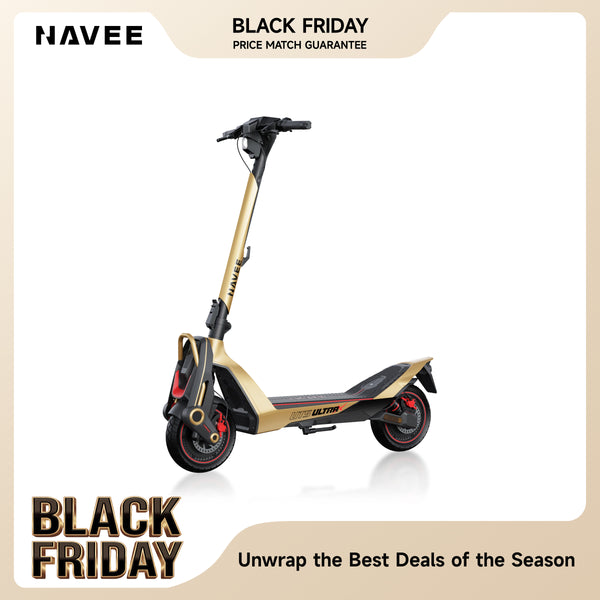
The NAVEE UT5 Ultra X combines dual motors with front and rear hydraulic suspension, hydraulic disc brakes, and 12-inch self-healing tubeless tires. This setup suits riders who prioritize larger wheels and hydraulic components for uneven routes.
The 1,284 Wh battery provides up to 37.3 miles of range under test conditions at 24.9 mph, supporting longer outings where battery capacity is a priority.
At 90.4 pounds, it is the heaviest and most expensive of these four models. It suits riders who regularly use its additional capacity and hydraulic hardware, with suitable storage and minimal lifting.
NAVEE vs. Segway: Key Differences
For daily commuting, compare the GT5 Max with the Segway F3 and MAX G3 on speed, range, suspension, and carrying weight. The NT5 Max, NT5 Ultra X, and UT5 Ultra X offer higher speed ceilings but add substantial weight. Match those differences to your route rather than treating every model as a direct equivalent.
Specifications apply to U.S. models. Different range-test speeds prevent a direct comparison of maximum mileage alone.
Speed and Range
Match the scooter to your usual riding pace and round-trip distance. Battery capacity helps put range figures in context: the GT5 Max and MAX G3 both have approximately 597 Wh, despite their different maximum range figures and test speeds.
If you expect to ride near 25 mph, use the NT5 and UT5 range figures measured at 24.9 mph when planning your trips. Leave a charging reserve for detours and changing conditions rather than planning around the full test distance.
Suspension and Brakes
The MAX G3 pairs front and rear hydraulic suspension with dual disc brakes. The GT5 Max uses a front fork and rear damping cylinder, with a front drum brake and rear disc brake. The UT5 Ultra X adds hydraulic suspension and hydraulic disc brakes, alongside larger 12-inch tires.
These are equipment differences, not proof of shorter stopping distances or greater comfort. Those comparisons require testing under comparable conditions.

Weight and Portability
The MAX G3 weighs about 54.2 pounds, close to the GT5 Max. The NT5 Max, NT5 Ultra X, and UT5 Ultra X are substantially heavier, which matters if a ride also involves stairs, transit, or loading into a car.
Check folded dimensions against your trunk or storage area. A folding design saves space but leaves the full weight to lift.
Price and Value
Compare the current price of the exact configuration you plan to buy. A sale can bring a performance scooter close to a commuter's price, but the larger model may still be less convenient for your routine.
Alongside purchase price, check replacement tire and brake-part availability, warranty coverage, and repair arrangements. Value comes from choosing equipment you will use regularly and can maintain over time.
Which NAVEE Scooter Fits Your Needs?
Start with your round-trip distance and usual riding pace, then narrow the choice:
- Set a carrying limit. Frequent stairs or vehicle loading can outweigh the benefits of additional power and battery capacity.
- Match equipment to the route. Consider suspension, tires, and brakes together, especially on uneven surfaces.
- Leave a range reserve. Use test results at a speed close to your intended pace and allow for load, terrain, and detours.
For hilly routes, assess rider and cargo weight alongside motor specifications. Peak wattage alone does not establish sustained climbing performance. Choose the model that meets your regular needs at a manageable price and weight.
Share:
Balloon-Tire Beach Cart vs. Electric Wagon: Which to Choose?