


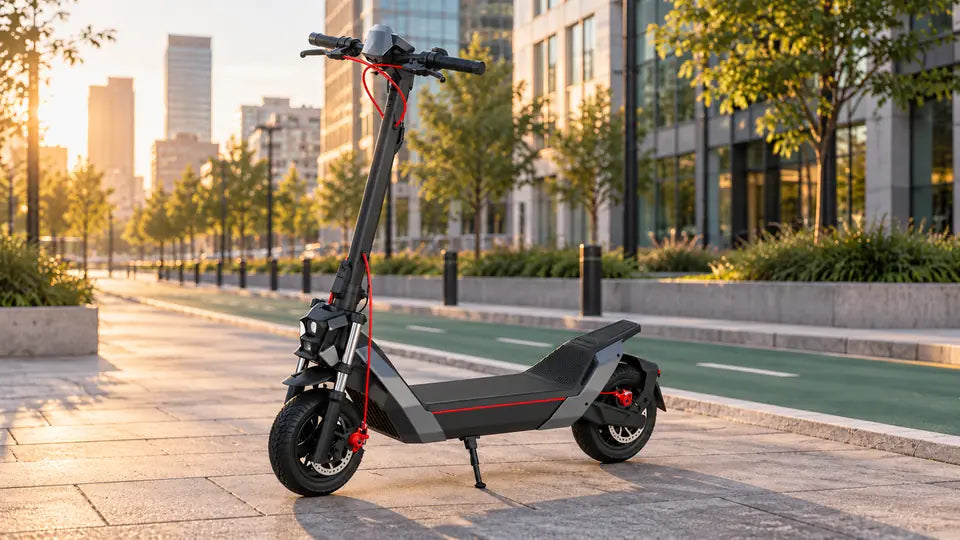
A 48V electric scooter is a popular middle ground for daily commuters. It delivers more power and consistency than most entry-level models without the weight and price of performance machines. Voltage is only one line on a spec sheet, though. Battery capacity, motor ratings, safety features, local laws, and warranty terms all shape how a scooter performs on a real commute.
This guide covers what to check before buying, from battery and motor basics to safety, regulations, and fit for your route.
Why Choose 48V for Commuting
48V vs 36V and 52V
Voltage is the electrical pressure the battery sends to the motor. A scooter database notes that 36V to 48V systems often suffice for city commuters on flat roads, while heavier riders or off-road use may call for 60V or more. The table below shows where 48V fits.
Does 48V Mean Faster?
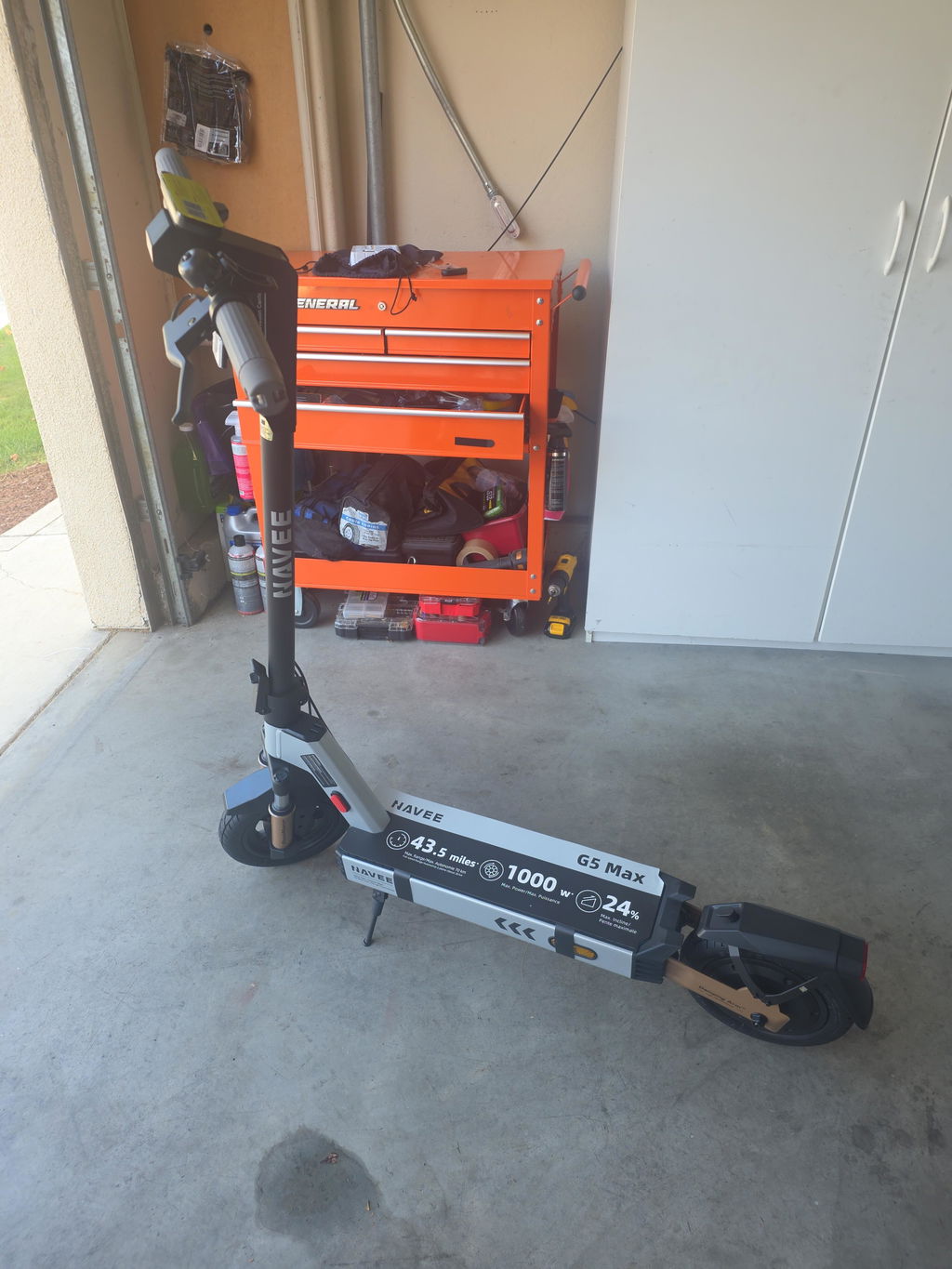
Not by itself. Top speed depends on the motor design, controller settings, wheel size, and any programmed speed limit. Two scooters in the same voltage class can behave very differently. The NAVEE G5 Max has a 48V battery and a 20 mph top speed, while the NAVEE NT5 Max pairs a 46.8V battery (often listed as 48V) with a 1900W peak motor and a 31 mph top speed. Voltage gives a scooter room to perform, and the motor and controller decide how much of that room gets used.
Who Needs 48V
A 48V system is worth the extra cost for riders who:
- Climb hills on their route
- Weigh more than average or carry a heavy backpack
- Ride year-round, since cold weather reduces battery output
- Commute more than a few miles each way
For a short, flat trip of two miles or less, a lower-voltage scooter can work. For anything longer or hillier, 48V provides a more comfortable margin.

Speed and Acceleration
Voltage, Power, and Top Speed
Power in watts equals volts multiplied by amps. At higher voltage, a scooter reaches the same power with less current, which reduces heat and keeps performance steadier as the battery drains. One reviewer found that the NAVEE ST3 Pro kept full acceleration and top speed even at 20 percent battery, something lower-voltage scooters often struggle to do.
Real Commuting Speeds
Most city riding happens between 12 and 18 mph because of traffic, intersections, and shared lanes. A scooter that tops out at 20 mph is usually enough. Many models also offer selectable modes. The NT5 Max, for example, includes Eco, Standard, and Sport modes in the NAVEE app. Lower modes stretch range and keep speeds calm around pedestrians.
Local Speed Limits
Speed limits for e-scooters vary by city and state, and some places cap speeds on shared paths. Treat advertised top speed as a ceiling, not a target. Figures can also differ between sources. The ST3 Pro is rated at 20 MPH on the US product page, yet one reviewer measured 24.8 mph in testing. Confirm the speed on the product page for your market.
Battery and Real Range
Ah, Wh, and Voltage Explained
Battery energy is measured in watt-hours (Wh), which equals volts multiplied by amp-hours (Ah). On the ST3 Pro, 46.8V times 12.75Ah gives 596.7Wh. That is why both "48V" and "46.8V" appear for similar packs. Manufacturers use a nominal figure, and retailers round it differently. The NT5 Max is rated at 46.8V, yet one retailer shows it as 48V. When comparing scooters, look at watt-hours first.
Does Voltage Affect Range?
Not directly. Range depends mostly on total energy (Wh), riding speed, rider weight, terrain, and temperature. Voltage affects how consistently that energy reaches the motor. A larger Wh rating gives more distance, and a stable 48V system helps the scooter hold performance as the pack empties.
48 Volt Scooter Range by Battery Size
Battery size sets the baseline for distance, but claimed ranges come from gentle test conditions. The US figures below are measured at roughly 9 mph. The GT3 Max long-range commuter is a strong example of the 48V class, with a 48V 12.75Ah pack rated at 596.7Wh and a claimed range of 46.6 miles.
The GT5 Max and NT5 Max use a 46.8V nominal pack, which retailers often round up to 48V. Four of these scooters share a 596.7Wh battery yet claim different ranges. Motor efficiency, weight, and test conditions all change the number, so compare claims only when they use the same test speed.
Real vs Advertised Range
Real-world range is almost always lower than the headline figure. The ST3 Pro is rated at 46.6 miles, but in independent testing it delivered 19.2 miles in speed priority, 24.9 miles in regular mode, and 29.7 miles in range priority. Hills, cold weather, heavier riders, and frequent stops reduce range further. As a rule of thumb, choose a scooter whose real-world range covers your round trip with at least 30 percent to spare.
Charging Time and Lifespan
A 596.7Wh pack takes a long time to recharge. The ST3 Pro needs about 10 hours for a full charge, which suits overnight charging but not a quick midday top-up. To protect the battery and your home, follow CPSC guidance:
- Stay present while charging and never charge while sleeping.
- Use only the charger that came with the device.
Motor Power
Rated vs Peak Power
Rated power is what the motor sustains, and peak power is a short burst. The ST3 Pro, for example, has a 600W motor with a 1350W peak. Peak numbers affect acceleration and brief climbs, while the rated figure says more about how the scooter handles a long hill.
Hill Climbing
Maximum grade ratings come from test conditions, so expect less on real streets with a heavier rider. Listed grades for several models:
- G5 Max: 24 percent
- GT3 Max: 22 percent
- GT5 Max: 28 percent
- ST3 Pro: 28 percent
- NT5 Max: 32 percent
If your route has a sustained climb, choose a scooter rated well above the steepest grade you ride.
Single vs Dual Motor
Most commuters do well with a single rear hub motor, which keeps weight and cost down. Dual-motor scooters add traction and acceleration but are heavier and pricier. The NAVEE NT5 Ultra X, for example, uses two 1200W motors and reaches a 45 percent maximum incline, which exceeds what most city commutes require.
48V Scooters for Adults
Rider Weight and Load Capacity
Check the maximum load, then leave headroom. Riders near the limit see lower range and weaker climbing. Listed capacities:
- G5 Max: 265 lb
- ST3 Pro: 265 lb
- GT5 Max: 286 lb
- NT5 Max: 330 lb
Deck Size and Handlebar Height
Fit matters more than most buyers expect. A wide deck lets you stagger your feet, and tall handlebars reduce back strain. The ST3 Pro earned praise for its tall handlebars and spacious deck. If possible, stand on the scooter before buying. Your elbows should bend slightly, and your stance should not feel cramped.
Frame Strength and Durability
Rock the handlebars to check for wobble at the stem, and confirm that the folding latch locks firmly in both positions. A solid frame also protects the wiring and connectors, which age faster when exposed to rain.
City Commuting Features
Brake Types
Look for at least two independent braking systems. Common setups on these models:
- G5 Max: front drum brake and rear electronic braking
- GT5 Max: front drum brake, rear disc brake, and electronic braking
- NT5 Max: dual disc brakes
Disc brakes offer strong stopping power and need periodic pad checks. Drum brakes are sealed and low maintenance. Electronic braking adds regeneration and extra stopping force.

Lights and Reflectors
Visibility is one of the biggest safety factors for urban riders. A bright headlight, a rear light with brake indication, side reflectors, and turn signals all help drivers see you. For placement tips and requirements, read this guide to electric scooter lights and reflectors.
Tires and Water Resistance
Ten-inch pneumatic tires absorb bumps better than small solid tires, and self-sealing versions reduce flat risk. Water resistance is rated with IP codes defined in IEC 60529. The GT5 Max and ST3 Pro carry IPX5, and the NT5 Max carries IPX6. A product FAQ describes the NT5 Max rating as a meaningful step up in all-weather confidence for year-round commuters. IPX5 covers water jets, and IPX6 covers more powerful jets. Neither rating means the scooter can be submerged or pressure washed.
Suspension and Ride Comfort
Rough pavement wears on both the rider and the scooter, and dual suspension helps. Reviewers ranked the ST3 Pro second among the most comfortable scooters under $1K, thanks to dual suspension and 10 inch self-healing tires. The GT5 Max uses a front fork and a rear damping cylinder.
Portability for Commuters
Weight and Folding
If you carry your scooter up stairs or onto a train, weight can decide the purchase. At 49.8 lb with a 48V pack and a 43.5 mile claimed range, the G5 Max lightweight commuter scooter is the lightest of these models and a practical fit for short to mid-length commutes with stairs. The others weigh more:
- GT5 Max: 54.7 lb
- ST3 Pro: 55.8 lb
- NT5 Max: 72.1 lb
Anything above 50 lb feels heavy over more than a few steps. Test the folding mechanism and carry handle in person if possible.
Carrying on Public Transport
Transit agencies and building managers set their own rules on scooters and batteries. Some limit battery size, and others restrict rush-hour access. Check the policy for every system you use, and compare the folded dimensions against luggage racks and storage spaces.
Choosing by Commute Type
Short Urban Trips
For trips under about 10 miles with frequent stops, comfort and control matter more than peak speed. The ST3 Pro city scooter pairs a 48V 596.7Wh pack with a 600W motor (1350W peak), dual suspension, 10-inch tires, and a 28 percent rated climb. Tested real-world range of about 25 miles in regular mode covers a typical urban round trip with room to spare.
Long-Distance Commutes
For rides of 10 miles or more each way, prioritize battery size and smart features. The GT5 Max smart commuter scooter combines a 596.7Wh battery (46.8V nominal, often listed as 48V), a 55.9 mile claimed range, a 1638W peak motor, a 286 lb load rating, and Apple Find My support through the NAVEE app. Real-world range will be lower than the claim, so plan around that.
Hilly Routes
Steep streets and faster roads call for more power. The NT5 Max urban performance scooter offers a 1900W peak motor, a 32 percent rated climb, a 31 mph top speed, a 330 lb load rating, and IPX6 water resistance. The trade-off is weight at 72.1 lb, and local speed limits will keep most riders well below its top speed.
Legal Rules
Licensing and Insurance
Rules differ widely. In many places a driver's license is not required for a standard e-scooter, but age limits, registration, and insurance rules vary by state and city. Confirm with your local DMV or city ordinance.
Some cities also regulate product certification. New York City requires e-scooters sold there to be certified to UL 2272. That standard evaluates the electrical drive train, battery, and charger, but does not evaluate physical hazards of use. See UL 2272 certification for scope details.
Riding Areas and Local Laws
Where you can ride, whether bike lanes, roads, or sidewalks, depends on local law, and helmet requirements vary too. For state and city specifics, read this guide to electric scooter laws in the U.S.
Battery safety is also under federal review. In June 2026 the CPSC proposed a mandatory standard for lithium-ion batteries in micromobility products, including e-scooters. As of October 2026 it remains a proposed rule that is not in force, and the agency scheduled an oral comment meeting for October 21, 2026. The full proposed battery safety rule is published in the Federal Register.
Price and Warranty
Budget Ranges
Commuter models in this guide currently range from about $400 to $800, though prices change often. Compare current prices on electric scooters for commuting before deciding.
Battery and Motor Warranty
The battery and motor are the costliest parts, so warranty terms deserve a close read. Coverage runs up to 2 years on eligible products. Review the warranty policy to confirm what is covered, for how long, and what proof of purchase is required.
Spare Parts and Service
A scooter that can be repaired outlasts one that cannot. Check whether replacement tires, brake pads, chargers, and fenders are easy to find, and whether service is available in your area. Keep your order receipt, since warranty claims often depend on it.
Pre-Purchase Checklist
Key Specs to Compare
- Battery size in watt-hours, not just voltage
- Rated motor power and peak power
- Maximum rider weight, with a safety margin
- Claimed range and the speed at which it was measured
- Brake type, lighting, and IP water rating
- Scooter weight and folded size
- Warranty length and what it covers
Red Flags to Avoid
- Vague or missing battery capacity in watt-hours
- No information on electrical safety certification. CPSC urges shoppers to look for products certified by independent laboratories to voluntary safety standards, including chargers and extra batteries.
- Range claims with no stated test speed or rider weight
- Sellers who cannot explain warranty terms or return policy
- Chargers or batteries from unknown third parties

FAQ
Is a 48V electric scooter good for daily commuting?
Yes, for most riders. A 48V system balances power, weight, and price, and it handles moderate hills and heavier loads better than many 36V scooters. Match the battery size and motor to your route.
Does 48V mean a scooter is faster?
Not necessarily. Top speed depends on the motor, controller, wheel size, and programmed limits. The G5 Max and NT5 Max both sit in the 48V class, yet one tops out at 20 mph and the other at 31 mph.
Does battery voltage affect scooter range?
Not directly. Range depends mainly on battery energy in watt-hours, along with speed, rider weight, terrain, and temperature. Voltage helps the scooter deliver power steadily as the battery drains.
How far can a 48 volt scooter travel on one charge?
It depends on battery size and conditions. Claimed ranges for the scooters above run from 43.5 to 55.9 miles, while independent testing of the ST3 Pro showed about 19 to 30 miles depending on mode. Plan around real-world figures, not the headline number.
Is a 48V electric scooter suitable for adults?
Yes. Many 48V commuter scooters are built for adults, with load ratings from 265 lb to 330 lb on the models covered here. Check the maximum load, deck size, and handlebar height for your build.
Do I need a license for a 48V electric scooter?
Requirements vary by state and city, and voltage alone does not decide the rule. Local laws usually focus on top speed, motor power, age, and where you ride. Confirm the rules with your local DMV or city ordinance before riding.
Share:
What Can a 750W Electric Scooter Actually Handle?