


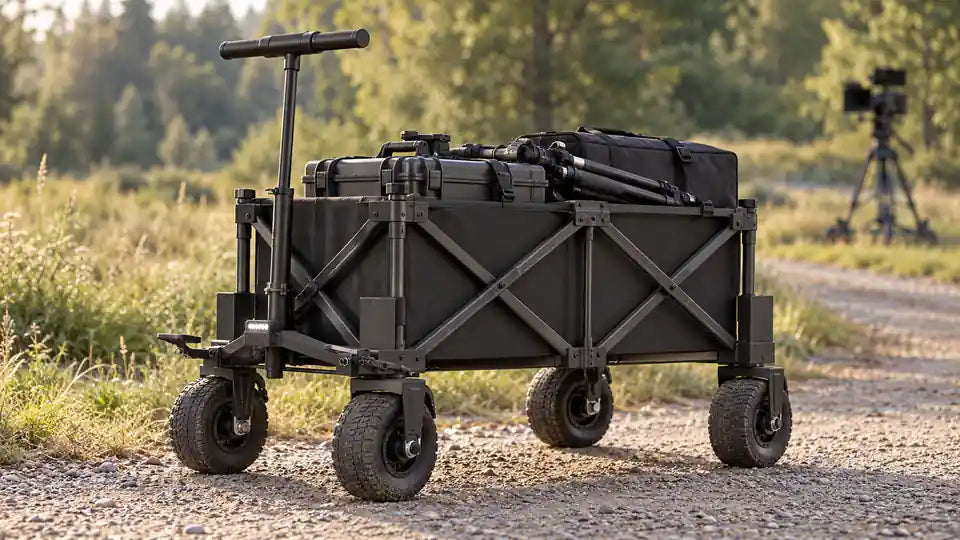
Moving camera cases, lights, stands, and batteries from the parking lot to an outdoor set can take several trips before the shoot even begins. An electric cargo cart reduces manual pulling effort and keeps packed equipment together, especially when the location is reached by grass, gravel, or sand.
The right cart needs to fit your kit, handle the access route, and travel comfortably in your vehicle. This guide explains what to check, how to protect sensitive equipment, and how the NAVEE E-Wagon 4X can fit into a location-shoot workflow.
Why Use an Electric Gear Cart?
Moving Heavy Camera and Lighting Kits
Lighting equipment often creates the biggest transport challenge. A two-light portrait setup may require stands, modifiers, batteries, and sandbags alongside the camera kit.
Electric power wagons use motorized hauling assistance to help move that combined load. You still load, steer, and unload the cart, but less pulling effort is required from the crew.
A powered cart makes the most sense for a substantial kit and a continuous outdoor route. A short walk with one camera bag rarely calls for the same setup.
Transporting Gear Between Locations
Outdoor sessions often move between several shooting spots. Keeping cases and accessories together makes it easier to relocate and check that nothing has been left behind.
Pack spare batteries, cables, and the next lighting kit where they are easy to reach. Check access first, though: stairs, narrow entrances, and steep banks may require carrying equipment separately.
Choosing a Cart for Outdoor Shoots
Match electric cargo wagons to the complete equipment load and the route from vehicle to set. Capacity, traction, controls, and transport size all affect how useful a cart will be.
Payload Capacity and Case Fit
Weigh the full kit, including cases, sandbags, cables, and accessories. Compare that total with the permitted moving payload under the expected operating conditions.
Where separate ratings are provided:
- Dynamic capacity applies while the cart is moving.
- Static capacity applies while it is stationary.
A static rating does not establish how much equipment can be transported over rough ground. Follow the conditions attached to each rating.
Measure the largest cases and longest folded stands as well. Leave room for secure attachment and unloading rather than relying on cargo volume alone.
Traction on Sand, Grass, and Gravel
Firm gravel, wet grass, and deep sand place different demands on a loaded cart. Four-wheel drive can help with traction, while tires, ground clearance, cargo weight, and surface conditions also influence performance.
Scout the most difficult parts of the route, including ruts, roots, curbs, and tight turns. More motor power cannot make an obstructed or excessively rough path accessible.

Braking and Speed Control
Smooth handling matters more than maximum speed when carrying sensitive equipment. Look for gentle starts, slow maneuvering, and predictable stopping.
Confirm the limits for slopes and loaded operation. Practice turning and stopping with a representative load in a controlled area before using the cart on an assignment.
Battery Life and Vehicle Storage
Plan for the entire day, including location changes and the return trip. Heavy cargo, inclines, and soft ground can increase battery use, so keep a reserve rather than relying on best-case range.
A removable battery simplifies charging away from the cart. Confirm compatibility and availability before planning around a spare.
Check folded dimensions and empty weight, too. The cart must fit beside the gear and be manageable to load into the vehicle with the crew or ramp available.
Packing and Protecting Your Gear
Cushion Cameras and Lenses
Use protective cases with fitted padding or dividers, close all latches, and keep loose accessories from contacting cameras and lenses.
Padding helps with routine bumps but cannot eliminate every shock. Slow down on uneven ground. Carry sensitive cases separately through sections that cannot be crossed smoothly.
Balance Heavy Cases and Secure Stands
Use a consistent loading routine:
- Place heavier cases low and distribute weight evenly.
- Avoid tall stacks that can shift during turns.
- Secure cases, tripods, and folded stands at suitable attachment points.
- Keep straps, cords, and protruding equipment clear of wheels and controls.
Account for any overhang when passing people or turning through gates. Arrange the load so the first setup can be unloaded without rearranging everything.
Protect Gear from Dust and Weather
Protect the equipment independently of the wagon. The cart’s weather resistance does not make camera bags, lights, or audio recorders weatherproof.
Secure covers against wind and keep them clear of moving parts. On sandy locations, brush debris off cases before opening them. Dry wet cases and covers before storing the equipment after the shoot.

Outdoor Film and Photography Uses
Beach and Park Photography
The traction and loading considerations for electric beach wagons also apply to transporting photography equipment across sand. Choose the firmest practical route; deep, dry sand may call for a lighter load and more battery reserve.
In parks, check access to each shooting spot. Reaching the main path does not guarantee the cart can reach a setup beyond steps or a narrow trail.
Outdoor Weddings and Events
A cart can transfer camera backups, lighting kits, and batteries between parking areas and event locations. Coordinate the route with venue staff and choose a staging spot away from guests and active walkways.
Unload the equipment needed for the next part of the event so the cart does not have to follow every camera move.
Film Shoots with Uneven Access Routes
For location filming, use a cargo cart to transfer packed equipment to a staging area. Several smaller trips may be easier to control than one large load on a route with slopes or tight turns.
Complete moves between takes where possible, then park away from microphones and working areas. Keep cases accessible so the crew can retrieve equipment without repositioning the wagon.

NAVEE E-Wagon 4X for Gear Transport
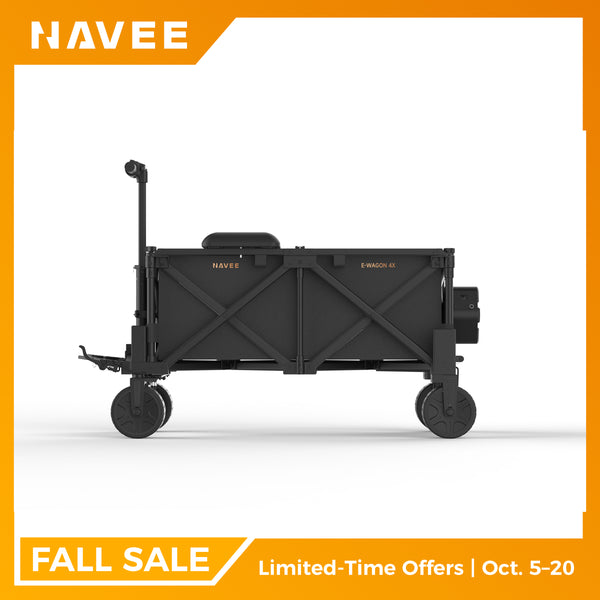
Consider the NAVEE E-Wagon 4X electric utility wagon for powered equipment transport across outdoor locations. The following specifications connect directly to gear-hauling needs.
| Feature | Relevance to Outdoor Shoots |
|---|---|
| Independent four-wheel drive and 3,000W maximum power | Powered hauling and traction support on uneven access routes; performance depends on load and terrain |
| 183-liter cargo capacity | Space to organize equipment cases; measure the usable area against the actual kit |
| Detachable 36V, 12Ah battery with 432Wh capacity | Charging separately from the wagon; runtime depends on the day’s load and route |
| Folding design | Storage alongside production equipment; confirm folded dimensions and lifting requirements |
| 2.4-inch color TFT display | Battery and operating information to check before location changes and the return trip |
This is a cargo-hauling option for packed equipment. Confirm the moving payload for the chosen configuration, then test the loaded wagon on representative terrain. For work that requires shelves, monitor mounts, or a stable setup surface, pair transport with a dedicated production cart.
FAQ
Can electric carts carry camera and lighting gear?
Yes, provided the packed equipment fits securely and stays within the permitted moving payload for the route and conditions.
What load capacity do I need?
Calculate the weight of the complete kit, including cases and support equipment, then allow for the additional gear regularly brought to assignments.
Can electric gear carts handle sand and gravel?
Some models can, but tire design, drivetrain, cargo weight, and ground conditions determine performance. Test the most demanding section before shoot day.
How do I protect cameras during transport?
Use fitted protective cases, secure them against movement, and cross rough surfaces slowly. Carry sensitive equipment separately where necessary.
Can a cargo wagon replace a production cart?
It can handle hauling, but a production cart may also serve as a workstation with shelves and equipment mounts. Choose based on the tasks needed at the set.
Compartir:
How to Choose an Electric Scooter for Tall Riders?