


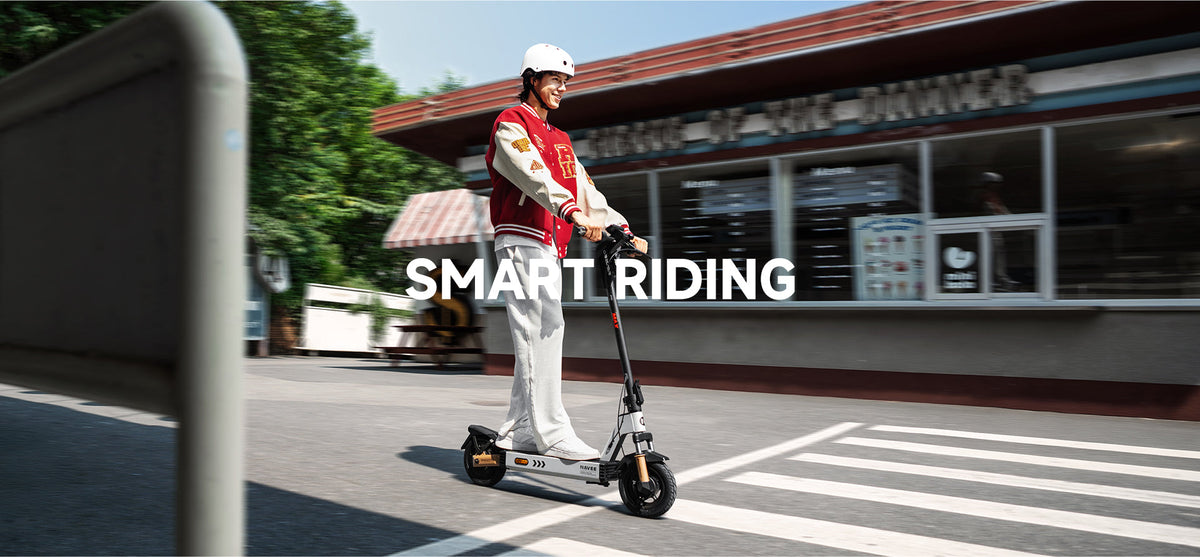
A 10-inch foldable electric scooter offers a useful balance of ride comfort, stability, and storage convenience. The larger wheels handle common road imperfections more smoothly than smaller wheels, while the folding frame reduces the space needed at home, at work, or inside a vehicle.
However, a folding mechanism does not automatically make a scooter lightweight. Batteries, suspension components, motors, and reinforced frames all add weight. Choosing the right model requires comparing ride quality, folded dimensions, lifting weight, range, and daily storage needs.
What Is a 10-Inch Foldable Electric Scooter?
A 10-inch foldable electric scooter has tires with a nominal outside diameter of approximately 10 inches and a stem that folds toward the deck.
The wheel measurement does not describe tire width, motor size, deck dimensions, or folded size. Two scooters with 10-inch tires can differ significantly in weight, comfort, power, and storage requirements.
Ten-inch wheels are common on adult commuter scooters because they sit between small portable wheels and the oversized tires used on heavier performance models. They provide better obstacle clearance than smaller wheels without creating the bulk associated with many 11-inch or 12-inch scooters.
How Folding Systems Work
Most folding scooters use a latch near the base of the stem. Releasing the safety lock allows the stem to lower toward the deck. A hook or catch may then secure the handlebars to the rear section of the scooter.
A reliable folding system should have:
- A clearly defined locked position
- A secondary safety lock
- Minimal stem movement when open
- A secure connection when folded
- An accessible latch that stays clear of cables
Before lifting the scooter, confirm that the stem is secured. This guide explains how to fold an electric scooter safely and check the latch before carrying it.

How 10-Inch Wheels Affect Comfort
Wheel diameter affects how easily a scooter rolls over cracks, joints, stones, and uneven pavement. A larger wheel meets an obstacle at a shallower angle than a smaller wheel, helping it maintain forward movement with less disruption.
Stability on Uneven Roads
Ten-inch wheels generally feel more stable than smaller wheels on cracked asphalt, patched roads, and uneven bike lanes. They are less likely to be abruptly slowed by shallow gaps or raised pavement edges.
They do not make potholes or curbs safe to ignore. Riders should still reduce speed and avoid severe obstacles. The benefit is most noticeable on ordinary urban surfaces that would feel harsh on smaller wheels.
A detailed explanation of rollover behavior is available in this guide to electric scooter wheel size and ride quality.
Tire Construction
Air-filled scooter tires may use an inner tube or a tubeless design. Both use air pressure to absorb vibration and soften smaller impacts.
Tubeless tires eliminate inner-tube pinch flats and may support puncture sealant, depending on the tire and manufacturer. They still require regular pressure checks, tread inspection, and timely repair.
Solid tires reduce puncture concerns but usually transmit more vibration through the frame. For riders prioritizing comfort, air-filled tires are generally the better option.
Suspension Matters Too
Wheel size is only one part of ride comfort. Air-filled tires absorb smaller vibrations, while suspension manages larger impacts and repeated movement.
Common suspension designs include:
- Front suspension forks
- Rear damping cylinders
- Swing arms
- Front and rear damping arms
A scooter combining 10-inch tubeless tires with front and rear suspension will usually feel smoother than one relying on tire cushioning alone. Rider weight, tire pressure, deck size, and suspension tuning also influence the result.
Storage and Transport
A folded scooter requires less vertical space, but its wheelbase usually remains unchanged. Folded length, width, height, and total weight must all be considered.
Measure the Storage Space
Compare the scooter’s folded dimensions with the intended storage area.
Measure:
- Available floor length
- Available width
- Clearance under shelves or furniture
- Doorway and hallway width
- Car trunk opening
- Trunk interior dimensions
The trunk opening deserves separate attention. A scooter may fit inside the cargo area but still be difficult to load through a narrow opening.
Store It Safely
Choose a dry location with a stable floor and enough room to fold or unfold the scooter without hitting walls or furniture. Avoid blocking doors, stairs, hallways, or exits.
After riding in wet conditions, wipe down the scooter and allow moisture around the tires, deck, and folding joint to dry.
During car transport, secure the scooter so it cannot slide or strike the trunk interior. Do not place heavy luggage on the display, brake levers, cables, rear fender, or folding latch.
Consider Lifting Weight
Turn off the scooter before lifting it. Lock the stem in its folded position and lift from a strong section of the frame.
A scooter weighing around 50 pounds may be manageable for occasional trunk loading but impractical for daily stair carrying. When frequent carrying is unavoidable, net weight should take priority over range, motor output, and suspension.

Buying Tips
The right scooter should match the rider, route, storage space, and carrying requirements.
Match Range to the Commute
Calculate the normal round-trip distance, then allow extra battery capacity for:
- Hills
- Stop-and-go traffic
- Higher riding speeds
- Cold weather
- Heavier loads
- Battery aging
Maximum advertised range is usually measured under controlled conditions. Actual range varies with terrain, temperature, tire pressure, speed, and rider weight.
Compare Motor Performance
A more powerful motor can improve acceleration and hill climbing, but it may also increase weight and energy consumption.
Compare rated power, peak power, and gradeability. A flat urban route may not require the same output as a commute with frequent hills.
Check Rider Fit
The maximum load rating should exceed the combined weight of the rider, clothing, backpack, and cargo.
Also review:
- Deck length and width
- Handlebar height
- Riding position
- Suspension response
- Tire pressure requirements
A scooter can support a rider’s weight while still feeling cramped if the deck is too small or the handlebars are poorly positioned.
Review Brakes and the Folding Joint
Look for a braking system that combines mechanical braking with electronic assistance. Tire grip and suspension stability also affect braking control.
The folding latch should close firmly, include a safety lock, and show no obvious movement when secured. Do not ride if the stem feels loose or the latch does not fully engage.
Evaluate Smart Features
Depending on the model, an app may provide ride settings, battery information, energy recovery adjustments, locking functions, firmware updates, or trip data.
Location services such as Apple Find My can help locate a misplaced scooter. They should supplement, not replace, a strong physical lock.
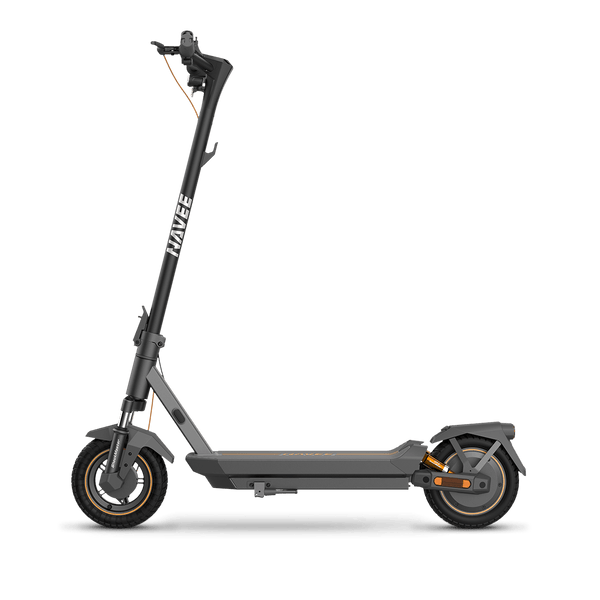
NAVEE 10-Inch Foldable Scooters
The following models combine 10-inch tubeless tires with folding frames. Their differences are most relevant in suspension, folded size, weight, range, and connected features.
Maximum range figures below come from controlled manufacturer testing and should not be treated as guaranteed real-world results.
| Model | Comfort setup | Storage specifications | Power and tested range | Best match |
|---|---|---|---|---|
| NAVEE GT3 Pro | 10-inch tubeless tires, front fork, rear damping cylinder | 48.5 lb; 1180 × 590 × 540 mm folded | 1000W peak; up to 37 miles at 9 mph or 22 miles at 20 mph | Balanced daily commuting |
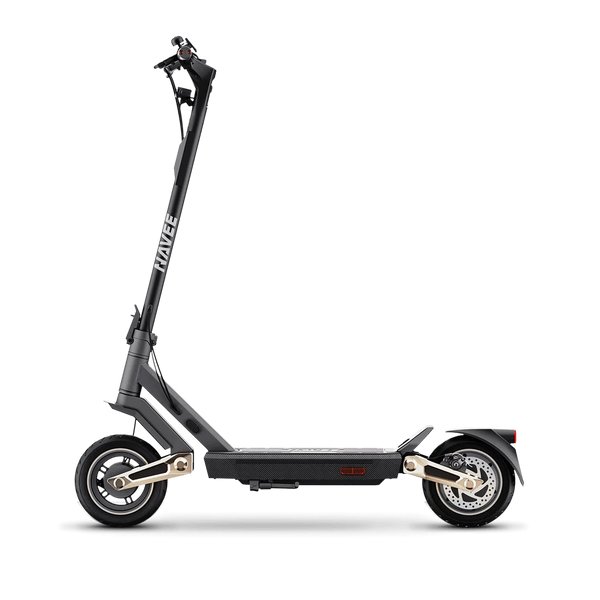
| NAVEE G5 Max | 10-inch tubeless tires, front fork, rear arm suspension | 49.8 lb; 1138 × 570 × 544 mm folded | 1000W peak; up to 43.5 miles at 9.3 mph | Longer rides and smart features |
| NAVEE ST3 | 10-inch tubeless tires, front and rear damping arms | 54.7 lb; 1200 × 600 × 596 mm folded | 1000W peak; up to 37 miles at 9 mph or 22 miles at 20 mph | Comfort-focused city riding |
GT3 Pro
The GT3 Pro is the lightest of the three models, although its 48.5-pound weight still places it outside the ultralight category.
Its 10-inch tubeless tires, front fork, and rear damping cylinder provide a balanced comfort setup for daily commuting. The folded dimensions suit home, office, and car storage, while the 1000W peak motor offers additional support for acceleration and moderate hills.
Choose the GT3 Pro when balanced weight, comfort, and everyday performance matter more than maximum tested range.
G5 Max
The G5 Max has the shortest folded length in this comparison and the highest stated maximum range. Its 10-inch tubeless tires, front fork, and rear arm suspension support comfort on typical urban roads.
NAVEE app support, Apple Find My, and traction control make it the strongest option for connected features. At 49.8 pounds, it remains better suited to trunk loading and indoor storage than frequent carrying.
Choose the G5 Max for longer commutes, smart features, and relatively compact folded dimensions.
ST3
The ST3 uses front and rear damping arms with 10-inch tubeless tires. This suspension layout makes it the most comfort-focused option among the three models.
The tradeoff is weight and size. At 54.7 pounds with the largest folded dimensions in the comparison, it is less suitable for stairs or frequent vehicle loading.
Choose the ST3 when ride comfort matters more than carrying convenience.
Which Scooter Fits Your Needs?
The GT3 Pro offers the best overall balance for routine commuting. It is the lightest model here and combines front and rear suspension with practical folded dimensions.
The G5 Max is better suited to longer rides and riders who value app controls, Apple Find My, and traction control. It also has the shortest folded length of the three.
The ST3 is the strongest comfort-oriented choice for rougher city roads, but its additional weight and larger folded size require more storage and lifting capacity.
None of these models should be described as ultralight. Riders who regularly carry a scooter upstairs or onto public transportation may need to prioritize a smaller model over suspension, range, or motor power.
FAQ
Are 10-inch wheels better on an electric scooter?
Ten-inch wheels generally provide better rollover ability, stability, and comfort than smaller wheels. They are particularly useful on cracked pavement and uneven urban roads. The tradeoff is a possible increase in scooter size and weight.
Is a foldable electric scooter easy to carry?
Not always. Folding reduces storage height, but carrying difficulty depends on net weight, folded dimensions, and lifting points. A scooter weighing around 50 pounds may fold easily but remain difficult to carry upstairs.
Can a foldable scooter fit in a car trunk?
Many foldable scooters fit in car trunks, but the folded dimensions must be compared with both the trunk opening and interior cargo space. Leave extra clearance for the wheels, handlebars, and folding latch.
Are tubeless tires better for electric scooters?
Tubeless tires provide air cushioning without a separate inner tube. This eliminates inner-tube pinch flats and may allow the use of puncture sealant. They still require regular pressure checks and tread inspection.
How should a folded electric scooter be stored?
Store it in a dry area with moderate temperatures and a stable floor. Keep the folding joint clean, avoid placing weight on the controls, and follow the manufacturer’s battery guidance during extended storage.
Which NAVEE 10-inch foldable scooter is best?
The GT3 Pro provides the best overall balance for commuting. The G5 Max is better for longer rides and connected features. The ST3 prioritizes suspension comfort but requires more storage and lifting capacity.
Compartir:
Best Lightweight Electric Scooters for City Commuting (2026)