


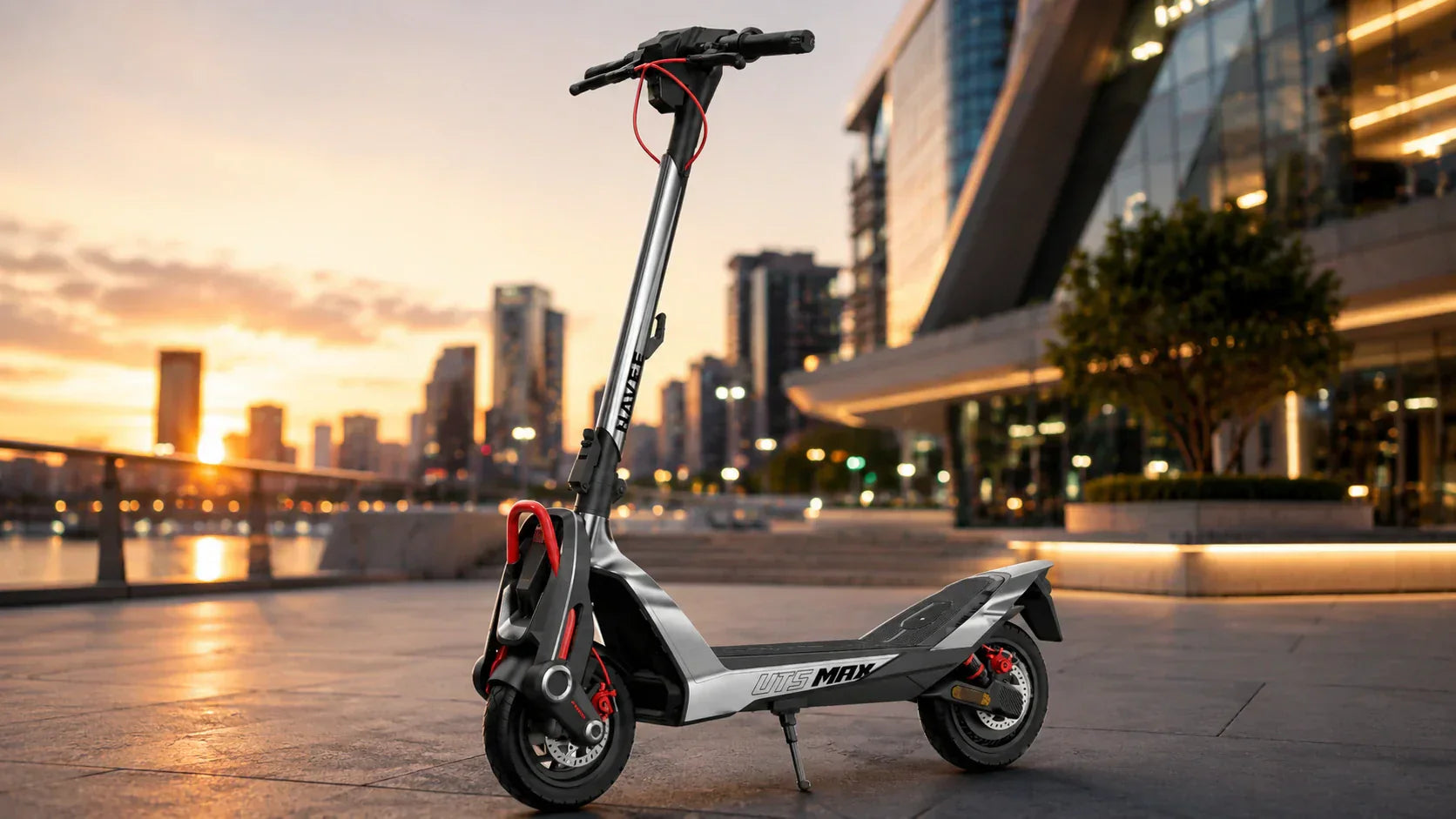
Yes. Many new connected electric scooters have built-in electronic locks and location tracking, and many high-end models also feature smart locks with functions such as alarms, fingerprint recognition, or app control.
However, a smart lock should not be treated as a complete theft-prevention system. An electronic lock can make a scooter harder to start or ride, but it does not physically attach the scooter to anything. The strongest approach is to combine the scooter’s built-in electronic lock with a quality physical lock.
This guide explains the main types of electric scooter smart locks, how they work, what they can and cannot prevent, and how to secure your scooter properly.
What Is an Electric Scooter Smart Lock and How Does It Work?
A smart lock for an electric scooter is a keyless security system that replaces traditional physical keys with digital technology like Bluetooth, NFC, GPS, or cellular networks. Managed typically through a companion smartphone app, these systems allow you to secure, monitor, and unlock your scooter wirelessly.
Instead of turning a physical key, the system relies on an encrypted digital handshake. When you prompt an action via your phone, an NFC card, or a proximity sensor, a secure signal is sent directly to the scooter’s internal Electronic Control Unit (ECU).
Once verified, the ECU instantly immobilizes the scooter by cutting power to the drivetrain, engaging an electronic motor lock, or disabling the throttle. Simultaneously, onboard sensors monitor for any unauthorized movement, keeping communication lines open with your phone to report suspicious activity in real time.

What Types of Smart Locks Are Available for Electric Scooters?
App-Controlled Motor Locks
Many app-connected electric scooters include a built-in electronic motor lock.
When activated through the scooter’s companion app, the system may disable the accelerator, restrict dashboard controls, add resistance to wheel movement, or trigger an alarm when someone pushes the scooter. The exact behavior depends on the model.
On supported NAVEE models, activating the lock in the NAVEE App places the scooter in a motor-lock state. If someone pushes the locked scooter, the dashboard can sound an alarm and the scooter’s button controls become unavailable.
This can discourage someone from immediately riding the scooter away. It does not stop a thief from lifting the scooter or loading it into a vehicle.
Bluetooth and Proximity Unlocking
Bluetooth proximity systems can recognize an authorized smartphone when the rider approaches.
Instead of opening an app and pressing an unlock button, the scooter can unlock automatically when the paired phone comes within range. It may lock again after the rider walks away.
Select NAVEE scooters support FlyLock Tech, which uses the NAVEE App to unlock the scooter automatically as the rider approaches.
Bluetooth unlocking is convenient, but riders should still check whether the model provides a backup method in case the phone is lost, uncharged, or unable to connect.
NFC Cards and Passcode Unlocking
Some electric scooters support NFC cards, key fobs, or display passcodes.
An NFC system lets the rider tap an authorized card or device against a reader. A passcode system allows the rider to enter a PIN through the scooter’s display or controls.
These methods can be useful when a smartphone is unavailable. However, support varies by model, and not every app-connected scooter includes NFC or a PIN backup.
Motion Alarms and Phone Alerts
A motion alarm detects movement, vibration, or changes in the scooter’s position.
When triggered, it may sound an audible warning. Some connected alarm systems can also send a notification to the rider’s phone.
An alarm can attract attention and discourage an opportunistic theft attempt. It is less effective in noisy or crowded areas, and it does not physically prevent the scooter from being moved.
Alarm sensitivity may also need adjustment. A setting that is too sensitive can be triggered by wind, accidental contact, or nearby pedestrians.
Smart Physical Locks
Smart physical locks combine a metal locking mechanism with electronic access features.
Examples include:
-
Fingerprint U-locks
-
Bluetooth chains
-
App-controlled cable locks
-
Alarm-equipped disc locks
-
Keyless folding locks
These locks provide physical restraint as well as keyless convenience. Their security still depends on the lock material, shackle thickness, locking mechanism, and how the scooter is attached.You can choose to purchase the configuration yourself if needed.
A weak cable lock does not become high-security simply because it includes Bluetooth or a fingerprint reader.
Smart Lock vs Physical Lock for Electric Scooters
Electronic and physical locks serve different purposes. One should not automatically replace the other.
| Feature | Smart Lock (Digital/Electronic) | Traditional Physical Lock (U-Lock/Chain) |
|---|---|---|
| Primary Mechanism | Electronic motor lock, firmware shutdown | Hardened steel, physical anchoring |
| Convenience | High (Keyless, automatic tracking) | Moderate (Must carry and manually lock) |
| Theft Deterrent | High against joyriders; Low against being lifted | High against physical removal |
| Tracking & Alerts | Yes (Real-time notifications & GPS) | No |
| Vulnerability | Battery drainage, software glitches, hacking | Angle grinders, bolt cutters |
A built-in electronic lock helps prevent unauthorized operation. A physical lock prevents the scooter from being moved freely when it is secured to a suitable fixed object.
For most riders, the best option is to use both.
How Should You Secure an Electric Scooter?
To guarantee your scooter stays right where you left it, always practice the Double-Locking Principle:
Always pair your scooter’s digital smart lock (to immobilize the motor and activate the motion alarm) with a heavy-duty physical lock (like a robust U-lock or chain) to securely anchor the frame to an immovable structure like a bike rack. If you want to dive deeper into the best locking strategies and placements, check out this complete guide on how to lock an electric scooter.

Which Smart Security Features Do NAVEE Scooters Offer?
Security features vary across the NAVEE product range, so riders should check the specifications of the individual model.
Depending on the model, available features may include:
-
An app-controlled electronic motor lock
-
An alarm when the locked scooter is pushed
-
FlyLock Tech proximity unlocking
-
Apple Find My compatibility
-
A frame-mounted physical locking point
-
NAVEE App connectivity
For example, the NAVEE UT5 supports FlyLock Tech, Apple Find My, the NAVEE App, and a frame-mounted security lock point.
These features provide several layers of convenience, deterrence, and location support. However, none of them removes the need for a suitable physical lock when the scooter is parked in a public area.
Common Electric Scooter Smart Lock Problems
While smart locks offer incredible convenience, they aren't without occasional hiccups:
-
Connectivity Drops: Bluetooth interference in crowded urban environments can sometimes delay unlocking.
-
Battery Dependency: If your smartphone dies, or if your scooter's battery drains completely to 0%, accessing or disabling the electronic lock can become a hassle.
-
False Alarms: Highly sensitive motion sensors might be triggered by a heavy gust of wind or someone parking their bike next to yours.
-
App Bugs: Occasional software updates can cause temporary glitches in app responsiveness.
Final Thought
Smart locks have completely transformed the ownership experience of electric scooters, trading the hassle of carrying physical keys for seamless tracking and keyless convenience. However, tech works best when backed up by brute force. By combining modern smart features—like those found on select NAVEE models—with a solid physical lock, you create an impenetrable defense that will make any thief think twice.
Frequently Asked Questions
Does Insurance Cover a Stolen Electric Scooter?
Coverage varies by insurer and policy. Some homeowners or renters policies may provide limited personal-property coverage, while others exclude motorized vehicles.
Check the policy’s motor-vehicle exclusions, off-premises theft limits, deductible, and replacement-value terms. A separate scooter or personal-transporter policy may be required.
Should I Register My Electric Scooter?
Registration requirements depend on the state, city, campus, or property where the scooter is used.
Even when registration is not required, record the scooter’s serial number, model, purchase receipt, and clear photos. This information can help prove ownership when filing a police report or insurance claim.
Do Smart Locks Work in Rain or Freezing Weather?
It depends on the lock and scooter.
An IP rating indicates resistance to water or dust under defined test conditions. It does not confirm that the device will operate reliably in freezing temperatures.
Check the manufacturer’s operating and storage temperature limits. Cold weather can also reduce battery performance and shorten the time that connected security features remain active.
Can Someone Hack an App or Bluetooth Smart Lock?
App-based and Bluetooth locks can have digital security risks, although physical removal remains an important theft concern.
Keep the scooter app and firmware updated. Use a unique password, protect the connected phone with a screen lock, and enable two-factor authentication when the service supports it.
More reading:Why Does My Electric Scooter Turn On but Not Move? Troubleshooting and Solutions
Share:
Stand-Up Electric Scooter Buying Guide: What Makes It Better for City Rides?
Best Electric Golf Push Cart 2026: Battery Life, Features & Course Test