


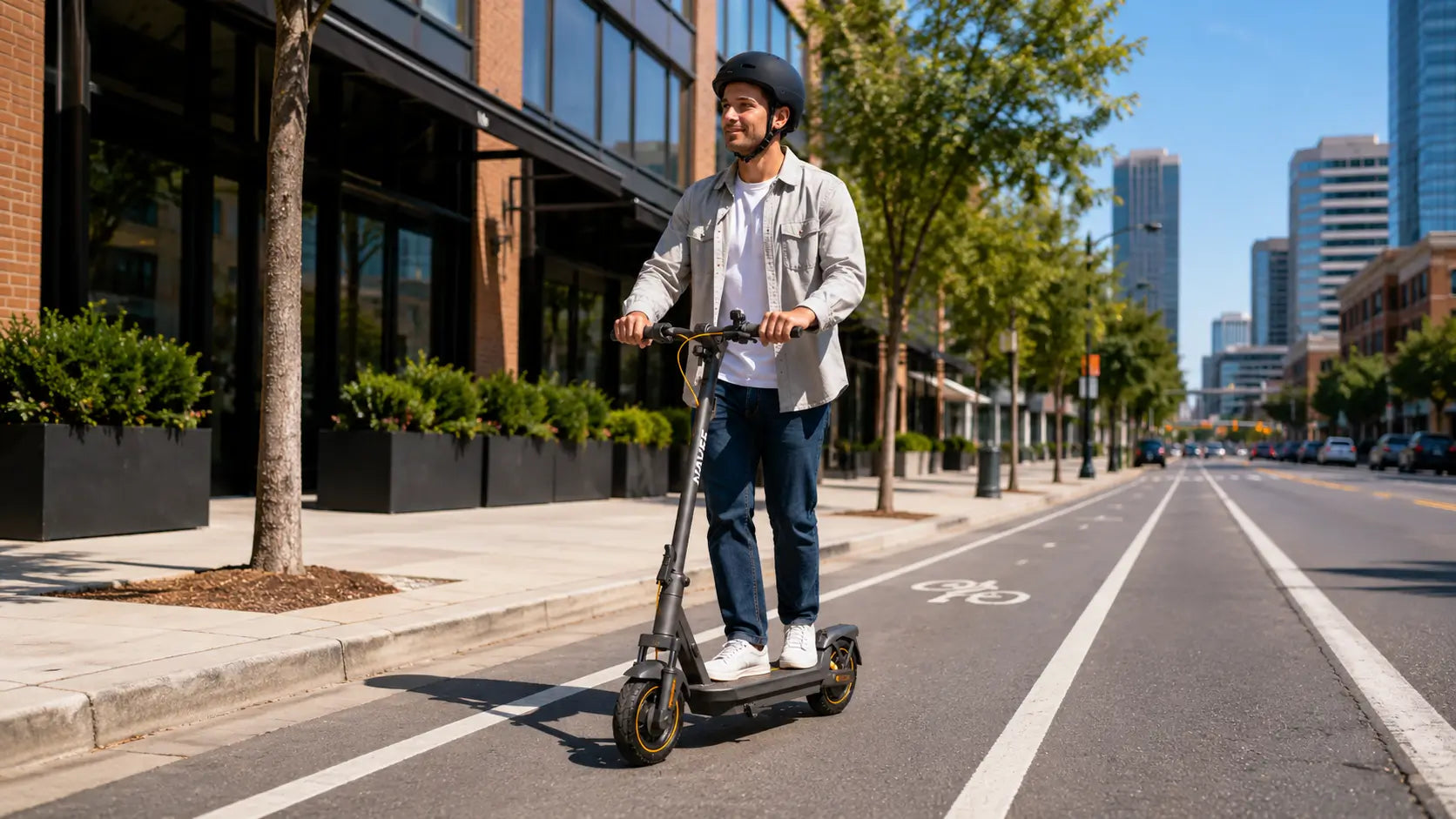
Electric scooters are legal in Texas, and the state keeps the rules simple. You don't need a license, registration, or insurance, and adults aren't required to wear a helmet. The one thing that trips riders up is that every city adds its own rules on top of the state's, so what's fine in Houston might get you a warning in San Antonio.
This guide walks you through who can ride, where you're allowed to go, and the safety gear you need. It also covers the fines for breaking the rules and how things change across Austin, Dallas, Houston, San Antonio, and Fort Worth.
Are Electric Scooters Legal in Texas?
Yes. Electric scooters are legal to ride in Texas, and you don't need to jump through many hoops to use one.
The state treats e-scooters a lot like bicycles. That means low barriers to get started. You don't need a driver's license, you don't have to register your scooter, and there's no statewide helmet rule for adults.
The catch is local rules. The state sets the basic framework, but cities and counties get the final say on things like sidewalk riding, speed zones, and where you can park. So a ride that's totally fine in Houston might get you a warning in San Antonio. Always check your city's rules before you ride.
What Counts as an Electric Scooter in Texas?
This part matters more than most people think. Texas law calls your scooter a "motor-assisted scooter," and only scooters that fit the legal description get the easy, bicycle-style rules.
Under the Texas Transportation Code, a motor-assisted scooter is a device that:
-
Has at least two wheels touching the ground while you ride
-
Has a braking system that can stop the scooter
-
Runs on a gas or electric motor that doesn't go over 40cc (or the electric equivalent)
-
Has a deck you can stand or sit on while riding
Why does this matter? If your scooter is too powerful and falls outside this description, the state can lump it in with mopeds or even motorcycles. That brings stricter rules, like needing a license, registration, and insurance. Most standard commuter scooters fit the legal definition just fine, but if you own a high powered electric scooter , it's worth checking the specs before you ride on public roads.
Do You Need a License, Insurance, or Registration?
No on all three. This is one of the best things about riding an e-scooter in Texas.
-
Driver's license: Not required. You don't need a license, permit, or ID to ride a qualifying scooter.
-
Registration: Not required. No plates, no DMV visit, no paperwork.
-
Insurance: Not required by the state. No mandatory liability coverage or annual safety inspection.
Just keep in mind that even though insurance isn't required, you're still personally responsible if you cause a crash. If you ride a lot, it's smart to look into a personal policy that covers you.

How old do you need to be to ride?
There's no statewide minimum age to ride an electric scooter in Texas. But that doesn't mean any age goes, because cities set their own limits.
Here's how it usually breaks down:
-
Most cities set the minimum age at 16 or 17 to ride on public streets.
-
Some cities allow riders aged 16 to 17 only with written parental consent.
-
Rental scooters (like Lime and Bird) almost always require riders to be at least 18, no exceptions.
If you're a parent buying an e-scooter for a younger rider, check your city's rule first. In places like Dallas, kids under 16 can't ride on public roads, sidewalks, or city property at all, even with a parent's okay. Riding underage can lead to fines and, in some cases, the scooter getting impounded until a parent picks it up.
Where You Can Ride in Texas?
This is the question riders ask most. The short version: streets, bike lanes, and some sidewalks, but always with limits. Here's the breakdown by spot.
On the Road
You can ride on streets with a posted speed limit of 35 mph or lower. Stay as far to the right as you safely can, just like a bicycle.
If you hit a road with a higher speed limit, you can't ride along it. You can only cross it at an intersection. So that busy 45 mph road near your place is off-limits for riding, but you can cross it at the light.
In Bike Lanes
Bike lanes and shared-use trails are generally open to e-scooters across Texas. This is often the safest and smoothest way to get around, especially in cities with good bike infrastructure like Austin. Always yield to cyclists and give a heads-up before you pass.
On Sidewalks
State law allows sidewalk riding unless a city decides to ban it for safety. And plenty of cities do, especially in busy downtown and business districts.
If you ride on a sidewalk, keep it slow. Going faster than 8 mph on a sidewalk can be treated as proof that you were riding too fast. Always yield to people on foot and give an audible signal before passing.
In Parks and on Trails
This one depends heavily on local rules. Many cities and parks restrict or ban scooters on park paths and trails. Don't assume you can ride through your local park or greenbelt. Check the posted signs or the park's website first, since rangers can ticket you.

Helmet, Lights, and Safety Gear
Texas does not require adult riders to wear a helmet. That said, plenty of cities require helmets for riders under 18, and wearing one is just smart no matter your age. Scooter injuries are on the rise, and a helmet is the cheapest insurance you can buy.
Beyond a helmet, you're not legally required to wear pads or other gear, but knee pads, elbow pads, and a bright or reflective top go a long way if you ride in traffic.
One more rule for everyone: scooters are built for one person. Carrying a passenger is against the rules in most cities, so skip the "hop on the back" idea.
City Rules You Should Know
Here's where Texas gets tricky. The state sets the baseline, but each big city adds its own twist. If you ride in or visit these cities, read the rules for your spot.
Austin
Austin only allows permitted rental operators like Lime and Bird, and it enforces geofenced no-ride zones downtown. Speed is capped at 15 mph in most areas and drops to 8 mph in crowded, high-foot-traffic spots. If you're riding during big events like SXSW or near the UT campus, expect extra restrictions and dismount zones.
Dallas
Dallas requires riders to be 18, or 16 to 17 with documented parental consent. Sidewalk riding is banned in busy areas like downtown and Deep Ellum, so stick to the street or bike lanes there. Carry proof of consent if you're a younger rider.
Houston
Houston has been one of the more relaxed cities, with speed limits around 20 mph and few extra rules. But that changed recently. The city added a curfew that bans riding personal and rental scooters between 8 p.m. and 4 a.m., with restricted zones in Downtown and Midtown. Sidewalk riding is also off-limits downtown except when you're starting or ending a trip.
San Antonio
San Antonio has some of the strictest rules in the state. Sidewalk riding is banned in spots like the River Walk, and breaking the e-scooter rules counts as a Class C misdemeanor with fines up to $500. First-time offenders usually get a warning, but don't count on it.
Fort Worth
Fort Worth mostly sticks to the state rules without piling on extra city ordinances. That makes it one of the simpler places to ride. Still, keep an eye out for posted signs and slow zones in busy areas.
Your Pre-Ride Checklist
Run through this quick list before every ride and you'll stay on the right side of the law:
-
Check your scooter specs. Make sure it fits the "motor-assisted scooter" rules so you get the easy bicycle-style treatment.
-
Know your city's rules. Look up age limits, sidewalk bans, speed caps, and curfews for where you'll ride.
-
Pick legal roads. Stick to streets with a 35 mph limit or lower, plus bike lanes.
-
Gear up. Wear a helmet, and put one on any rider under 18 if your city requires it.
-
Light it up. If you're riding at night, make sure your front and rear lights work.
-
Ride solo and sober. One rider per scooter, and never ride after drinking.
Final Thoughts
Texas makes it easy to enjoy an electric scooter. No license, no registration, no insurance, and no statewide helmet rule for adults. The main thing to watch is your local city rules, since that's where most of the fine print lives.
Get familiar with the rules in your city, ride on the right roads, light up at night, and keep it to one sober rider per scooter. Do that, and you'll have a smooth, ticket-free ride every time.
FAQs
Can You Leave an Electric Scooter Locked to a Bike Rack?
Often, but not everywhere. Some cities and properties allow personal scooters at bike racks, while others require designated scooter parking areas. Do not attach the scooter to trees, railings, traffic signs, wheelchair ramps, or anything that blocks pedestrian access. Check nearby signs before leaving it.
Can You Bring an Electric Scooter on a Bus?
It depends on the local transit provider. Some systems allow a folded electric scooter on board if it can be stored safely without blocking the aisle, doors, seats, or wheelchair areas. Larger scooters may not be accepted, and bus bike racks may not be designed for them. Check the transit agency’s rules before your trip.
Can You Bring an Electric Scooter Through TSA?
Most standard electric scooters cannot be taken on a passenger plane because their lithium batteries are too large. Batteries above 160 Wh are prohibited in both carry-on and checked baggage, while batteries between 101 and 160 Wh require airline approval. Check the battery’s watt-hour rating and contact the airline before traveling.
More reading:Electric Scooter Laws in the U.S.: What to Know for 2026
Share:
Electric Scooter Troubleshooting: Fix Battery, Brake, Tire, and Display Problems
Stand-Up Electric Scooter Buying Guide: What Makes It Better for City Rides?