


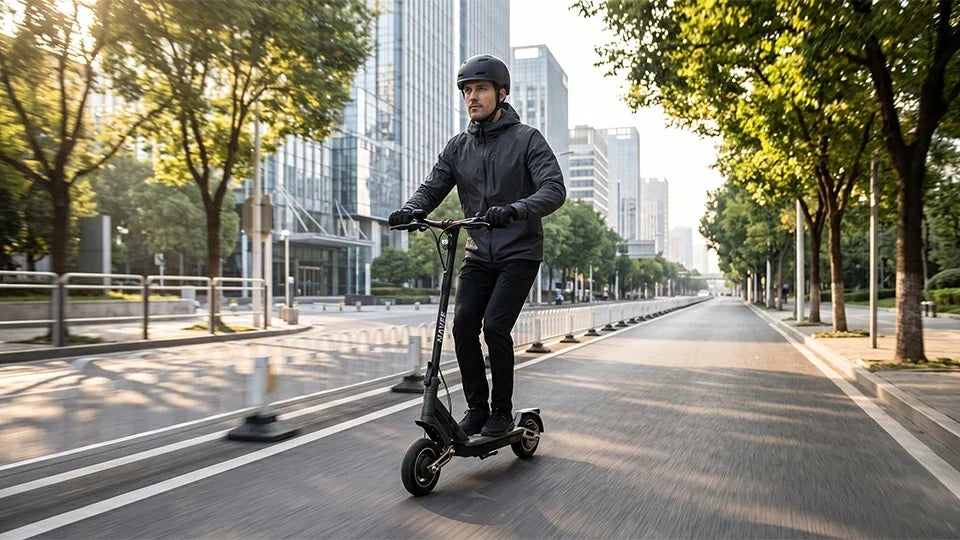
A mayor velocidad, un patinete eléctrico se siente estable cuando el usuario, los mandos, los neumáticos, los frenos y la carretera funcionan en conjunto, y cuando la velocidad aún deja tiempo para ver un problema y reaccionar con suavidad. La estabilidad no es una característica única ni una promesa de que un trayecto más rápido sea seguro.
Piensa en la estabilidad como un problema de tiempo y espacio
La velocidad cambia con qué rapidez una grieta, el borde de una entrada, un peatón o una racha de viento se convierten en un problema. A mayor velocidad, recorres más terreno mientras decides qué has visto y cómo reaccionar. Por eso una ruta puede resultar cómoda a una velocidad y exigente a otra, incluso en el mismo patinete.
Usa la visibilidad como comprobación práctica. Si no puedes ver claramente la superficie lo suficientemente lejos por delante para frenar suavemente antes de un peligro, reduce la velocidad. Haz lo mismo antes de una curva, un tramo cuesta abajo, una zona mojada, una zona de apertura de puertas de coches aparcados o una transición irregular. El objetivo no es demostrar que el patinete puede ir más rápido; es mantener un margen de tranquilidad para lo siguiente que presente la carretera.

Aprende a distinguir entre tambaleo, deriva e impacto
Estas sensaciones requieren respuestas diferentes. Un manillar flojo u oscilante, un tambaleo inusual al girar o un neumático que de repente se siente blando son señales para detenerse e inspeccionar. Seguir el trayecto intentando «mantenerlo recto» puede convertir un pequeño problema mecánico en una pérdida de control. Comprueba el neumático, los mandos y los elementos de sujeción visibles solo cuando estés detenido; si la causa no está clara, solicita una revisión profesional.
Un empujón lateral o una serie de pequeñas correcciones pueden deberse al viento cruzado, la inclinación de la carretera, las líneas pintadas, las ranuras o el pavimento irregular. Suelta el acelerador, mantén ambas manos en el manillar y evita un giro brusco en sentido contrario. Un fuerte sacudón indica un problema de la superficie o de la configuración de los neumáticos: reduce la velocidad, elige una trayectoria más suave e inspecciona el neumático después del trayecto si el impacto fue grave.
Haz que la comprobación previa al trayecto sea específica
La Comisión de Seguridad de Productos del Consumidor de EE. UU. aconseja a los usuarios comprobar el manillar, los frenos, el acelerador, las luces, los neumáticos, los cables y el chasis, y luego probar los frenos antes de salir. Convierte esa lista en una breve rutina: asegúrate de que el manillar no se mueva inesperadamente, busca daños o pérdida de presión en los neumáticos, aprieta cada freno estando detenido y avanza lentamente por una zona despejada para comprobar si los frenos y la dirección responden con normalidad.
Cualquier cambio en la sensación habitual del patinete importa más que marcar una casilla de una lista. Un freno que actúa de forma diferente, un conjunto de dirección ruidoso, un mando flojo o un neumático dañado significan que la cuestión de la alta velocidad se acaba para ese trayecto. Repara o inspecciona el problema antes de volver al uso normal.
Prepara al usuario y la carga antes de aumentar la velocidad
La posición del usuario cambia cuánto espacio tienes para absorber un bache sin que se muevan los mandos. Mantén ambas manos en el manillar, párate con las rodillas relajadamente flexionadas y evita bloquear los brazos. Un agarre rígido puede convertir un pequeño cambio en la superficie en un giro brusco; una postura equilibrada te da más tiempo para mantener el patinete en línea recta.
Evita que las bolsas y otros objetos que lleves interfieran con los mandos o se desplacen inesperadamente. Si la carga cambia tu postura, cuánto puedes girar el manillar o cómo responde el patinete al frenar, tómalo como una razón para reducir tu velocidad habitual y volver a comprobarlo en una zona despejada. Un trayecto que se siente bien sin carga puede requerir un ritmo diferente cuando forma parte de la rutina.
Deja que la superficie decida el ajuste
No todas las zonas de aspecto irregular presentan el mismo problema. Las líneas pintadas, las cubiertas metálicas, las hojas, la grava suelta, las zonas mojadas y el pavimento roto pueden cambiar cada una por sí la adherencia disponible o la forma en que la rueda delantera se mantiene en línea. Atraviesaslas con la mayor suavidad y rectitud que permitan las condiciones, reduciendo la velocidad antes de llegar a ellas. Evita acelerar, frenar bruscamente o realizar un cambio de dirección repentino en el mismo instante.
Observa patrones en lugar de culpar al patinete de cada momento incómodo. Si el problema aparece solo en una superficie de carretera, elige una trayectoria diferente o reduce la velocidad allí. Si también aparece en el pavimento liso habitual, deja de tratar el problema como algo de la ruta e inspecciona el patinete. Esa distinción te ayuda a decidir si el siguiente paso es un ajuste del usuario, la planificación de la ruta, el mantenimiento de los neumáticos o una revisión mecánica.

Usa la guía de neumáticos para tu patinete exacto
Los neumáticos son la única parte del patinete que entra en contacto con la carretera, por lo que la pérdida de presión, los daños o el desgaste del dibujo cambian todas las demás decisiones sobre la estabilidad. Comprueba el estado del neumático antes del trayecto y usa la guía de presión de tu manual específico en lugar de tomar un valor de otro patinete. Una recomendación de presión es específica para cada modelo; adivinar puede hacer que el trayecto resulte impredecible o dañe el neumático.
Después de golpear un bordillo, pasar por un bache profundo o sufrir una pérdida de presión repetida, inspecciónalo antes de volver a usarlo normalmente. Busca daños visibles y cambios en la forma en que el patinete se mantiene en línea. Si no sabes si se ha visto afectado el neumático, la rueda o la dirección, no uses un trayecto más rápido para comprobarlo.
Los frenos y la visibilidad determinan tu velocidad utilizable
Los frenos solo ayudan cuando empiezas a usarlos lo suficientemente pronto y en una superficie donde los neumáticos puedan mantener la tracción. Deja un margen mayor en terreno mojado, sobre residuos sueltos, en tramos cuesta abajo y en calles transitadas. Frena de forma progresiva en lugar de esperar a frenar bruscamente en el último momento, y practica frenadas a baja velocidad en una zona despejada y permitida para que la sensación de la palanca te resulte familiar antes de que las condiciones se vuelvan urgentes.
Tus ojos deben mirar lo suficientemente lejos por delante para leer el próximo cambio en el pavimento, no fijarse en la rueda delantera. Si de noche, el deslumbramiento, la lluvia, el tráfico o un camino abarrotado acortan esa visión, la velocidad adecuada también cambia. Por eso el mismo patinete puede sentirse estable en un tramo liso y vacío e inestable en una calle urbana dañada.
Qué equipamiento puede ayudar y qué no puede hacer
El estado de los neumáticos, el tamaño de las ruedas, la suspensión, la geometría de la dirección, el espacio de la plataforma, los frenos y la rigidez del chasis pueden afectar a la sensación de estabilidad del patinete. Su efecto depende del modelo exacto, el usuario, el estado de los neumáticos, la superficie y la velocidad. Los neumáticos más grandes o la suspensión pueden facilitar el manejo de pavimentos irregulares repetidos, pero no garantizan la adherencia, evitan una caída ni hacen que una superficie deficiente sea adecuada para ir rápido.
Al elegir un patinete, considera estas partes como razones para examinar la ruta que recorres con más frecuencia. Al conducir, considéralas como apoyo para tomar decisiones cuidadosas, no como permiso para superar la superficie, el clima o el campo de visión.
Haz una prueba de ruta antes de considerar la velocidad como normal
- Empieza en un tramo despejado y permitido con una superficie predecible.
- A baja velocidad, comprueba que se mantenga recto, la respuesta de la dirección y que frene suavemente.
- Aumenta el ritmo solo cuando la superficie y la visibilidad se mantengan constantes.
- Reduce la velocidad inmediatamente si necesitas realizar correcciones de dirección repetidas, sientes una vibración nueva o pierdes una visión clara de la ruta.
- Detente e inspecciona el patinete después de cualquier tambaleo inusual, neumático dañado, mando flojo o comportamiento inesperado de los frenos.
Lecturas recomendadas
- Guía de frenos para patinetes eléctricos — útil para comprender las comprobaciones de los frenos y controlar mejor la velocidad.
- Comparación de neumáticos para patinetes eléctricos — útil para reconocer cómo la elección y el estado de los neumáticos afectan al trayecto.
Una vez que hayas comprobado los aspectos mecánicos básicos y la ruta que recorres con más frecuencia, explora Patinetes eléctricos NAVEE para comparar opciones para tu terreno habitual y tu rutina de almacenamiento.
Preguntas frecuentes sobre la estabilidad de los patinetes eléctricos a mayor velocidad
¿Un patinete más pesado siempre se siente más estable?
No. El peso es solo una parte de un sistema que incluye neumáticos, mandos, frenos, posición del usuario, superficie y velocidad. Una mayor masa también puede cambiar la dificultad para maniobrar o detener el patinete.
¿La suspensión puede hacer que ir rápido sea seguro?
No. La suspensión puede cambiar la forma en que un patinete responde al pavimento irregular, pero no puede eliminar los riesgos de la velocidad, el tráfico, las superficies mojadas, los obstáculos o el mantenimiento deficiente. La Guía de seguridad de la CPSC sobre micromovilidad también recomienda comprobar el equipamiento, usar casco, estar alerta y conducir más despacio cerca de peligros.
Compartir:
NAVEE en Outdoor Retailer 2026: Presentando el futuro de la movilidad eléctrica al aire libre
¿Qué carrito de golf eléctrico es mejor para campos con colinas y maleteros pequeños?