


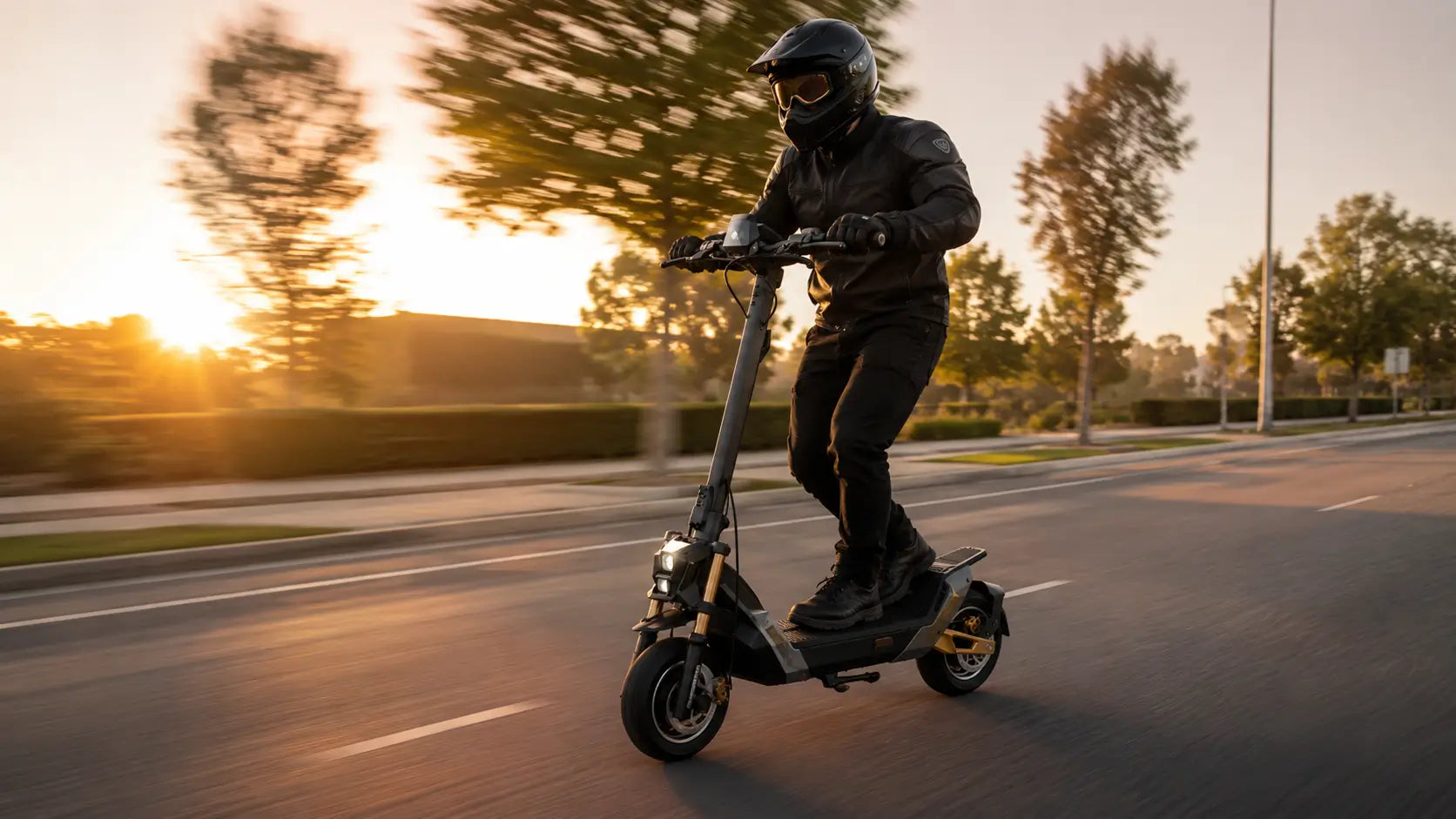
Si buscas un patinete eléctrico capaz de alcanzar de forma segura los 40 mph, la respuesta es el NAVEE NT5 Ultra X. Alcanzar estas velocidades requiere mucho más que una configuración estándar para desplazamientos urbanos: exige una ingeniería avanzada, que incluye potentes motores dobles, baterías de alto voltaje y sistemas de suspensión y frenado de alta resistencia.
En esta guía analizaremos los componentes específicos que hacen posible alcanzar los 40 mph, exploraremos casos de uso reales como desplazamientos por zonas suburbanas y subidas por cuestas, profundizaremos en las especificaciones de rendimiento del NT5 Ultra X y abordaremos las consideraciones esenciales de seguridad y legalidad para circular a alta velocidad.
¿Qué tipo de patinete eléctrico puede alcanzar los 40 mph?
No basta con instalar una batería más grande en un patinete urbano estándar y esperar que alcance velocidades de autopista. Los patinetes capaces de alcanzar los 40 mph están diseñados desde cero para ofrecer un alto rendimiento. Esto es lo que los hace funcionar:

Potentes motores dobles
Un solo motor es perfecto para pasear por el vecindario, pero para llevar un patinete a 40 mph se necesita un par motor considerable. Los patinetes eléctricos de alta velocidad cuentan con una configuración de dos motores: uno en la rueda delantera y otro en la trasera. Esta configuración de tracción integral proporciona la potencia necesaria para alcanzar altas velocidades máximas, acelerar rápidamente y mantener la inercia frente a la resistencia del viento.
Batería de mayor capacidad y mayor potencia
La velocidad consume energía increíblemente rápido. Para alimentar dos motores a máxima capacidad, un patinete capaz de alcanzar los 40 mph necesita una batería enorme de alto voltaje (normalmente de 48 V, 60 V o incluso 72 V). Una batería de gran capacidad no solo ofrece la autonomía necesaria para que el trayecto valga la pena, sino que también evita la caída de tensión, garantizando que los motores reciban constantemente la energía necesaria para mantener la velocidad máxima.
Mejores neumáticos, suspensión y frenos
Cuando circulas a 40 mph, encontrarte con un bache o necesitar frenar de golpe es algo serio. Los patinetes de alta velocidad están equipados con sistemas de suspensión de alta resistencia (a menudo hidráulicos o con robustos conjuntos de muelles) para mantener los neumáticos firmemente apoyados en el suelo y absorber impactos violentos. También utilizan neumáticos más anchos y neumáticos (llenos de aire) para ofrecer una mejor tracción, y cuentan con frenos de disco hidráulicos que garantizan una potencia de frenado rápida y sensible sin sobrecalentarse.
Casos de uso reales de un patinete eléctrico capaz de alcanzar los 40 mph
¿Por qué alguien necesitaría realmente ir tan rápido en un patinete? Resulta que hay muchas razones prácticas y recreativas.
Desplazamientos por zonas suburbanas
Si tu trayecto incluye largos tramos abiertos de carreteras o avenidas suburbanas donde el límite de velocidad es de 35 a 45 mph, circular en un patinete de 15 mph puede resultar peligrosamente lento. Un patinete capaz de alcanzar los 40 mph te permite mantenerte de forma segura al ritmo del tráfico, haciendo que tu trayecto sea más fluido y permitiéndote llegar a la oficina en una fracción del tiempo.
Subidas por cuestas
La velocidad se traduce directamente en potencia de subida. Si vives en una zona especialmente montañosa, un patinete estándar pronto se verá obligado a avanzar a paso de tortuga. Un patinete diseñado para alcanzar los 40 mph en terreno llano subirá fácilmente pendientes pronunciadas de entre 20 y 30 grados sin esfuerzo, llevándote a la cima a una cómoda velocidad de crucero.
Uso mixto en ciudad y senderos
La robusta construcción necesaria para alcanzar altas velocidades también convierte a estos patinetes en increíbles vehículos todoterreno. Gracias al par motor de sus dos motores y a su suspensión de alta resistencia, puedes pasar sin problemas de calles urbanas recién asfaltadas a caminos de grava, senderos de tierra y terrenos accidentados de parques.
Conducción deportiva de fin de semana
A veces, todo es cuestión de disfrutar de la emoción de la conducción. Para los amantes de la adrenalina y los entusiastas de los fines de semana, un patinete de alto rendimiento es un vehículo recreativo. Las salidas en grupo, la exploración de senderos remotos y la experiencia de la pura aceleración de una bestia con dos motores son grandes atractivos para la comunidad de patinetes eléctricos.
Descubre el NAVEE NT5 Ultra X
Si buscas un vehículo que combine una calidad de construcción premium, capacidad todoterreno y un rendimiento de 40 mph, el NAVEE NT5 Ultra X merece tu atención.
Diseñado para usuarios que se niegan a renunciar a la potencia o a la autonomía, el NT5 Ultra X cuenta con una configuración de dos motores que ofrece una aceleración vertiginosa y la confianza necesaria para conquistar cuestas pronunciadas. Está diseñado para afrontar desde calles urbanas accidentadas hasta senderos todoterreno, proporcionando una conducción fluida, estable y emocionante de principio a fin.
Especificaciones clave del NAVEE NT5 Ultra X
| Característica | Especificación |
|---|---|
| Potencia del motor | Motores dobles de 1200 W (2400 W de potencia máxima combinada) |
| Velocidad máxima | Hasta 40 mph |
| Batería | 46,8 V / 19,2 Ah (~898 Wh) |
| Autonomía anunciada | Hasta 56 millas |
| Autonomía real | ~35–50 millas |
| Suspensión | Suspensión telescópica delantera + suspensión trasera de muelles |
| Resistencia al agua | IPX6 (Excelente protección contra la intemperie) |
| Peso máximo del usuario | 330 lb |

Consideraciones de seguridad y legalidad antes de circular a 40 mph
La velocidad es divertida, pero exige respeto. Antes de acelerar a fondo, ten en cuenta los siguientes factores:
-
Usa el equipo adecuado: Un casco de bicicleta estándar no es suficiente a 40 mph. Necesitas un casco de motocicleta homologado por la DOT o un casco integral para bicicleta de descenso. También se recomienda encarecidamente usar guantes de motociclista, rodilleras y una chaqueta con protecciones para protegerte contra las abrasiones por carretera.
-
Consulta las leyes locales: Las normativas sobre patinetes eléctricos varían enormemente según el estado y la ciudad. En muchas zonas se restringe la velocidad de los patinetes a 15–20 mph en carriles bici o aceras públicas. Es posible que por ley debas circular por la calle junto con el tráfico o reservar esas velocidades máximas exclusivamente para propiedades privadas y senderos todoterreno.
-
Inspecciones antes de circular: A altas velocidades, un tornillo suelto o un neumático con baja presión pueden tener consecuencias desastrosas. Acostúmbrate a comprobar la presión de los neumáticos, las pastillas de freno y los mecanismos de plegado antes de cada trayecto largo.
Reflexiones finales
Pasar a un patinete eléctrico capaz de alcanzar los 40 mph cambia por completo las posibilidades de lo que se puede hacer sobre dos ruedas. Acorta tus desplazamientos, aplana las cuestas pronunciadas y abre rutas completamente nuevas para explorar los fines de semana. Si eres un usuario experimentado que busca pasar de modelos urbanos básicos, actualizarte a un vehículo potente como el NAVEE NT5 Ultra X te proporcionará la velocidad, autonomía y calidad de construcción que necesitas para dominar la carretera.
Preguntas frecuentes
¿Necesito una licencia de conducir para usar un patinete eléctrico capaz de alcanzar los 40 mph?
En muchas jurisdicciones, sí. Dado que estos patinetes superan el límite de velocidad estándar de 15–20 mph de los patinetes eléctricos básicos, las leyes locales suelen clasificarlos como ciclomotores, bicicletas motorizadas o incluso motocicletas. Esto significa que es posible que necesites legalmente una licencia de conducir válida, el registro del vehículo y, en ocasiones, una licencia específica para motocicletas para circular por vías públicas. Consulta siempre las directrices de tu Departamento de Vehículos Motorizados (DMV) local.
¿Cuánto cuesta normalmente un patinete eléctrico capaz de alcanzar los 40 mph?
Debido a que requieren ingeniería avanzada, baterías enormes y chasis reforzados, estas máquinas de alto rendimiento suponen una inversión. Por lo general, puedes esperar gastar entre 1.500 y más de 3.000 dólares. Modelos como el NAVEE NT5 Ultra X se sitúan en un punto ideal, ya que ofrecen velocidad y autonomía premium sin los precios inflados de los modelos insignia de algunas marcas boutique.
¿Puedo usar un patinete eléctrico capaz de alcanzar los 40 mph en la autopista?
No. Aunque 40 mph es una velocidad suficiente para mantener el ritmo del tráfico en calles suburbanas, los patinetes eléctricos tienen estrictamente prohibido circular por autopistas de acceso controlado e interurbanas. Carecen de la visibilidad, los conjuntos de iluminación homologados por la DOT y las velocidades sostenidas de más de 65 mph necesarias para mezclarse de forma segura con el tráfico de autopista.
¿Cuánto pesa un patinete eléctrico capaz de alcanzar los 40 mph?
Son significativamente más pesados que los patinetes urbanos estándar. Los grandes paquetes de baterías, los motores dobles y los sistemas de suspensión de alta resistencia suman rápidamente. La mayoría de los patinetes capaces de alcanzar los 40 mph pesan entre 70 y más de 100 libras. Aunque se pliegan para caber en el maletero de un coche, generalmente no están diseñados para subirlos por varios tramos de escaleras ni para llevarlos en un transporte público abarrotado.
¿Cuánto tiempo se tarda en cargar la batería de un patinete de alta velocidad?
Debido a que las baterías son mucho más grandes, tardan más en cargarse que las de los patinetes estándar. Por lo general, puedes esperar que una carga completa tarde entre 8 y 12 horas, aunque muchos usuarios utilizan cargadores dobles (si el patinete los admite) para reducir ese tiempo a la mitad.
Más información:Los mejores patinetes eléctricos que alcanzan 30 mph: velocidad, seguridad y para quiénes son
Compartir:
¿Cómo bloquear un patinete eléctrico?
¿Puedes recomendar patinetes eléctricos adecuados para viajes de larga distancia?