


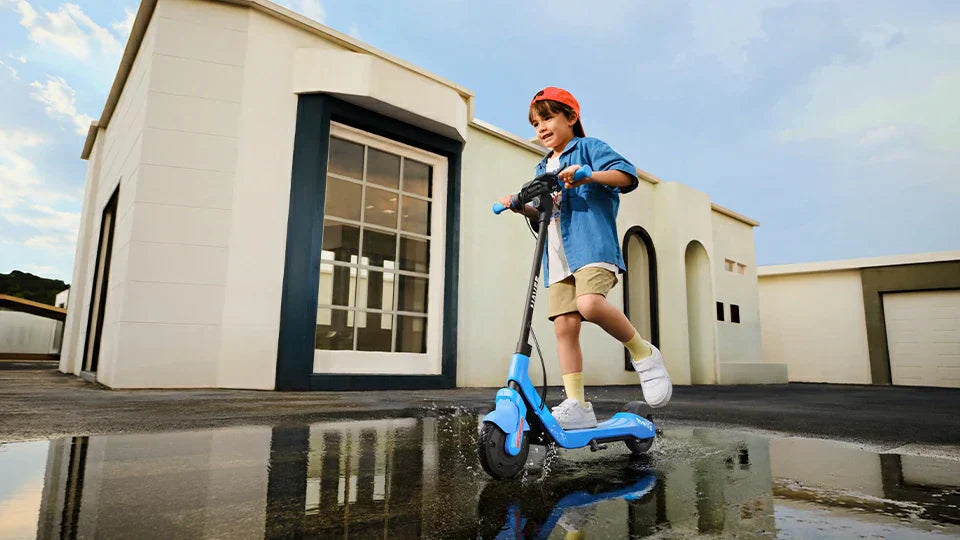
Parents choosing Electric Scooters for Kids should focus on a few essential factors. A kids’ scooter is considered safe and suitable only when its speed, motor power, size, braking system, and tire type match the child’s age and physical readiness. Models with speed limits, soft-start acceleration, stable braking, and anti-slip decks significantly reduce riding risks.
Children also benefit from scooters that fit their height and weight, use certified batteries, and stay stable on everyday surfaces like sidewalks and park paths. Proper safety gear, clear riding rules, and simple monthly checks further increase safety.
This guide gives parents clear, actionable steps to choose the right scooter, avoid common mistakes, and maintain safe daily riding.
How To Choose Safe And Suitable Electric Scooters For Kids?
Age, Height, And Weight Recommendations
A safe scooter begins with a proper fit. Use this simple readiness method:
- Balance: A child should ride a kick scooter steadily for at least 10 minutes.
- Height: When standing on the deck, handlebars should align between waist and chest height.
- Weight: Choose a scooter with a max-load rating at least 10–20% above the child’s weight for better control and battery efficiency.
Recommended safe speed ranges:
-
Ages 6–7 → 6–8 km/h
-
Ages 8–10 → 8–12 km/h
-
Ages 10–12 → 12–15 km/h
Matching speed and power to age prevents falls and builds early confidence.
Must-Have Safety Features
Parents searching for Electric Scooters for Kids focus strongly on safety. Prioritize these essentials:
Braking System: The safest setup is an electronic brake + mechanical or foot brake, offering backup stopping power.
Soft-Start Acceleration: Prevents sudden jumps when the throttle is pressed—critical for younger riders.
Speed Limit Modes: Beginner → Normal → Sport. These modes help kids develop skills safely.
Slip-Resistant Deck and Tires: Rubberized tires and wide decks improve balance on sidewalks and park paths.
Battery Safety Certifications: UL-certified batteries dramatically reduce overheating risks.
These features matter more than flashy design or “maximum speed” specifications.
Riding Environment Considerations
Different neighborhoods require different scooter setups. Match your choice to the riding environment:
| Riding Area | Best Tire Type | Why |
|---|---|---|
| Sidewalks with cracks | 6–7 inch rubber tires | Smoother ride, fewer bumps |
| Parks & mixed surfaces | 7–8 inch pneumatic tires | Better grip on light gravel |
| Smooth community roads | Any stable kids scooter | Focus on speed safety |
| Light hills | 200W+ motor | Prevents stalling and wobbling |
Choosing based on riding surface ensures safety and reduces early wear.

Practical Tips To Help Parents Avoid Common Buying Mistakes
Don’t Buy A Scooter That’s Too Powerful
Many scooters marketed as “kids’ models” still use adult-level motors.
Quick test for parents:
If a scooter hits 15 km/h in under 3 seconds, it’s too powerful for children under 10.
For young riders, 130W–150W motors offer smooth, predictable acceleration without overwhelming them.
Understand Real Battery Range
Real-world range rarely matches advertised numbers due to weight, terrain, and temperature.
Use this formula for a realistic estimate:
Actual range ≈ advertised range × 0.7
Adjust by:
-
–10% for hills
-
–10–15% in cold weather
-
–10% if the child approaches max load capacity
This prevents mid-ride battery surprises.
Check Weight And Portability
Kids must be able to maneuver and lift their scooter safely.
Ideal weight guidelines:
-
Ages 6–8 → 7–8 kg (15–17 lbs)
-
Ages 9–12 → 8–11 kg (17–24 lbs)
Families with limited storage also benefit from foldable designs and adjustable handlebars.
Safety Rules Every Parent Should Teach Kids
First-Ride Checklist
The first ride is the most important. Use this 5-step routine:
-
Test the brakes
-
Start in beginner mode
-
Ensure deck and tires are dry
-
Wear helmet and pads
-
Begin with slow laps while supervised
This establishes strong safety habits from day one.
Essential Protective Gear
Minimum protective gear includes:
-
A certified protective helmet
-
Knee and elbow pads
-
Closed-toe shoes
If it’s not safe for skateboarding, it’s not safe for electric scootering.

Basic Maintenance To Keep A Kids’ Electric Scooter Safe
Installation And Setup
Before the first ride:
-
Tighten all visible screws
-
Adjust handlebar height
-
Test brake responsiveness
-
Fully charge the battery
Most early performance issues come from skipped setup steps.
Monthly And Seasonal Maintenance
A quick monthly check improves safety and durability:
-
Inspect tire wear
-
Check brake tension
-
Tighten bolts
-
Monitor battery health
For seasonal storage, charge to 50–60% and keep indoors.
Introducing The NAVEE K100 Series — Safer, Smarter Choices For Young Riders
After understanding what makes Electric Scooters for Kids safe, many parents look for models designed specifically for children rather than downsized adult scooters. The NAVEE K100 Series does exactly that—three models built to support different ages, riding abilities, and daily routines. Each version improves stability, comfort, safety, and long-term usability.
NAVEE K100 — Lightweight And Confidence-Building (Ages 6–10)
Perfect for young beginners learning electric riding:
-
19 lbs lightweight frame that’s easy to control
-
130W motor + soft-start for safe, gentle acceleration
-
9.9 mph safe top speed
-
Up to 8.7 miles of range
-
7" shock-absorbing inner-tube tires
-
LED display + fun RGB lighting
A great choice for building confidence and control on neighborhood paths.
NAVEE K100 Pro — Adjustable, Foldable, And Built To Grow (Ages 6–14)
A versatile option designed to last through several growth stages:
-
3-level adjustable handlebar
-
Foldable frame for easy storage and travel
-
130W motor (160W peak) for smooth daily commuting
-
6.8-mile tested range
-
19.8 lbs stable, lightweight design
-
Rear drum brake + 7" shock-absorbing wheels
Ideal for families wanting a scooter that adapts as children grow.
NAVEE K100 Max — Longer Range And Stronger Performance (Ages 6–14)
The best choice for active riders who ride frequently or on slightly longer routes:
-
150W motor (260W peak)
-
12.4 mph safe but stronger top speed
-
Up to 11.2 miles range
-
Foldable frame + adjustable handlebar
-
Rear drum brake, 7" tires, and IPX4 water resistance
- Smarter parental control via the NAVEE App
- Apple Find My compatibility for added security
- Built-in Bluetooth speaker for music and fun
Perfect for kids who want a little more power—without compromising safety.
For parents comparing multiple models or looking for deeper buying advice, our article “How to Choose the Best Electric Scooter for Kids?” offers a step-by-step framework to make confident decisions.

FAQs
Q: What Age Can Kids Start Riding Electric Scooters?
Most children are ready between 6–8 years old, depending on balance and physical readiness.
Q: Are Electric Scooters Safe For Kids?
Yes—when equipped with speed limits, proper brakes, and protective gear.
Q: How Fast Should A Kids’ Electric Scooter Go?
6–12 km/h is ideal for younger or intermediate riders.
Q: Do Kids Need A Helmet For Electric Scooters?
Always. Helmets significantly lower injury risk.
Q: How Long Do Kids’ Electric Scooters Usually Last?
With monthly maintenance, most last 2–4 years or longer.
Conclusion
Choosing Electric Scooters for Kids becomes simple once parents focus on size, speed, safety features, riding environment, and basic maintenance. With thoughtful selection and clear rules, kids can enjoy safe, fun daily riding.
The NAVEE K100 Series offers reliable options for beginners, growing riders, and active children—giving families a safe, durable scooter lineup designed specifically for young riders.
Compartir:
E-Scooters as a Christmas Present – Is It a Good Idea?
Best Commuter Electric Scooter in 2026: Top Picks for Daily Rides