


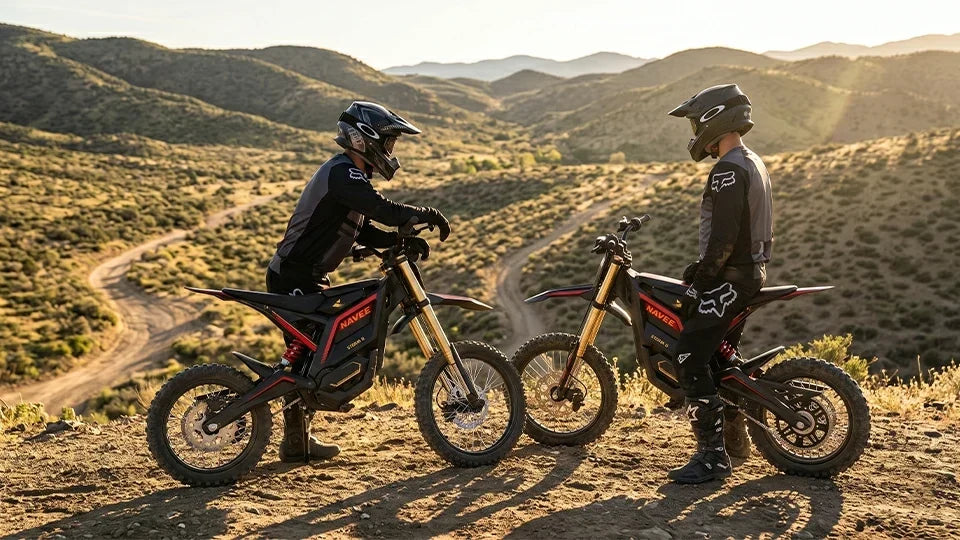
Las motos eléctricas de cross hacen que la conducción fuera de carretera sea más silenciosa y accesible, pero también plantean una pregunta que es fácil pasar por alto al comparar la potencia, la velocidad y la suspensión: ¿Son legales para circular por la vía pública las motos eléctricas de cross?
La respuesta corta es no necesariamente.
Muchas motos eléctricas de cross están diseñadas específicamente para senderos y conducción fuera de carretera, en lugar de para vías públicas. Si una puede circular legalmente por la carretera depende de cómo se clasifique el vehículo, si cumple los requisitos para su matriculación y de las leyes de su estado y ciudad.
El hecho de que una moto de cross utilice un motor eléctrico no la convierte automáticamente en una bicicleta eléctrica. Esta distinción es especialmente importante en modelos de mayor rendimiento como el NAVEE Storm G, que está diseñado para ofrecer una experiencia de conducción fuera de carretera al estilo de una motocicleta, en lugar de para un uso convencional como bicicleta.
Antes de sacar una moto eléctrica de cross a la vía pública, debe comprender en qué categoría se encuentra y dónde está permitido realmente circular con ese tipo de vehículo.
Por qué las motos eléctricas de cross no son automáticamente legales para circular por la vía pública
El error más fácil es suponer que «eléctrica» significa «bicicleta eléctrica».
Según la definición federal de productos de consumo, una bicicleta eléctrica de baja velocidad tiene pedales totalmente funcionales, un motor eléctrico de menos de 750 vatios y una velocidad máxima asistida por motor inferior a 20 mph bajo condiciones específicas. Puede consultar la definición oficial en la Guía sobre bicicletas de la Comisión de Seguridad de Productos de Consumo de EE. UU..
Una moto eléctrica de cross diseñada específicamente para este fin puede ser muy diferente. Puede utilizar estribos en lugar de pedales, un asiento de moto, un acelerador, neumáticos al estilo de una motocicleta, un recorrido de suspensión más largo y una potencia de motor sustancialmente mayor. Estas características pueden situar al vehículo fuera de las clasificaciones habituales de las bicicletas eléctricas y dentro de las normas que regulan las motocicletas para uso fuera de carretera u otros vehículos motorizados.
Por eso debe observar el vehículo real y su clasificación legal en lugar de suponer que cualquier vehículo eléctrico de dos ruedas es una bicicleta eléctrica.

¿Qué determina realmente si una moto eléctrica de cross es legal para circular por la vía pública?
No existe un único accesorio o especificación que haga que una moto eléctrica de cross sea legal para circular por la vía pública en todo Estados Unidos.
El punto de partida es cómo ha sido diseñada y clasificada por el fabricante. Si se trata principalmente de una motocicleta para uso fuera de carretera, su estado puede tratarla de forma muy diferente a una motocicleta homologada para la carretera, incluso si ambos vehículos tienen una velocidad o potencia similares.
La elegibilidad para la matriculación es otro factor importante. Dependiendo del estado y de la categoría del vehículo, el uso legal por carretera puede requerir matriculación, matrícula, seguro y el carné o la autorización correspondiente para motocicletas. Las motocicletas destinadas a la carretera también pueden estar sujetas a requisitos de equipamiento y seguridad que las motos para uso fuera de carretera nunca han sido diseñadas para cumplir.
Eso significa que añadir espejos, luces, claxon o intermitentes no resuelve automáticamente el problema.
Es posible que estos componentes sean obligatorios para algunos vehículos de carretera, pero la moto en sí sigue teniendo que cumplir los requisitos para la matriculación legal por carretera en primer lugar.
Si está considerando una moto eléctrica de cross específicamente porque quiere usarla para ir a la escuela, al trabajo o por la ciudad, compruebe este aspecto antes de comprarla, no después.
¿Se puede legalizar para circular por la vía pública una moto eléctrica de cross para uso fuera de carretera?
En algunos estados y con algunos vehículos, la conversión puede ser posible. En otros, un vehículo para uso fuera de carretera no puede convertirse simplemente en un vehículo de carretera instalando equipamiento adicional.
Aquí es donde los usuarios suelen gastar dinero innecesariamente.
Un faro delantero, una luz trasera, espejos, intermitentes y un soporte para matrícula pueden hacer que una moto parezca más apta para la vía pública, pero la apariencia no equivale a la clasificación legal. La elegibilidad para obtener el título de propiedad, la certificación del fabricante, la identificación del vehículo, la elegibilidad para el seguro y las normas de matriculación del estado aún pueden impedir su uso normal por vías públicas.
California, por ejemplo, distingue su categoría de eMoto para uso fuera de carretera de las motocicletas matriculadas para circular por carretera. Nueva York también trata por separado las motocicletas para uso fuera de carretera de las destinadas a la carretera.
Si le importa circular por carretera, póngase en contacto con el Departamento de Vehículos Motorizados (DMV) de su estado o con el organismo equivalente, proporcione la información exacta del modelo y pregunte si ese vehículo puede obtener un título de propiedad o matricularse para circular por carretera.
Sin embargo, para una moto eléctrica de cross comprada principalmente para uso recreativo, intentar convertirla puede hacer que pierda su propósito. Estas motos ofrecen su mejor rendimiento cuando se utilizan en entornos donde realmente se pueden disfrutar su suspensión, par motor, neumáticos y manejo fuera de carretera.
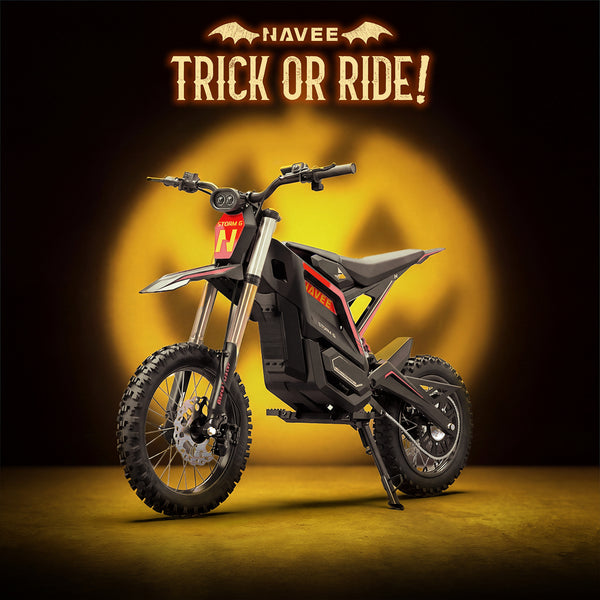
¿Dónde se puede circular legalmente con una moto eléctrica de cross?
Si una moto eléctrica de cross no está homologada para circular por vías públicas ordinarias, eso no significa que no haya ningún lugar donde pueda usarla.
La propiedad privada con el permiso del propietario suele ser una de las opciones más sencillas. Dependiendo de las normas locales, los usuarios también pueden tener acceso a áreas designadas para vehículos de uso recreativo motorizado (OHV), parques privados fuera de carretera, instalaciones de motocross y senderos que permiten específicamente vehículos motorizados fuera de carretera.
Lo importante es confirmar que se permite el tipo específico de vehículo.
Un sendero que permite bicicletas de montaña no permite necesariamente motos eléctricas de cross. Asimismo, un sistema eléctrico silencioso no exime automáticamente a una moto de las normas aplicables a los vehículos motorizados.
Nueva York, por ejemplo, permite que los vehículos todoterreno (ATV) y las motocicletas fuera de carretera matriculados circulen por terrenos públicos solo cuando la zona está específicamente designada para ese uso, mientras que la circulación por vías públicas está generalmente limitada a los accesos designados entre senderos fuera de carretera.
Antes de salir, consulte el sitio web del parque, del sistema de senderos o del organismo gestor del terreno en lugar de fiarse de si otros usuarios parecen utilizar la zona.
El terreno también debe influir en el lugar donde circula. La tierra suelta, la grava, las pendientes pronunciadas, las rocas y las superficies irregulares exigen mucho más de los neumáticos, la suspensión, los frenos y el control del usuario que el asfalto liso.
Si desea una explicación más detallada sobre cómo el terreno cambia la configuración del vehículo y la calidad de conducción, nuestra guía sobre elegir la configuración adecuada del vehículo eléctrico para aventuras fuera de carretera explica cómo factores como los neumáticos, la suspensión, el par motor y las condiciones de la superficie afectan a la conducción por terrenos accidentados.
¿Para quién es más adecuada la NAVEE Storm G?
Una vez que comprende que una moto eléctrica de cross es principalmente una máquina para uso fuera de carretera, la decisión de compra resulta mucho más clara.
La moto eléctrica de cross NAVEE Storm G está dirigida a usuarios que buscan rendimiento recreativo, exploración de senderos y una experiencia de conducción eléctrica más parecida a la de una motocicleta. Es especialmente relevante para usuarios adultos jóvenes y entusiastas noveles del uso fuera de carretera que desean ir más allá de las máquinas recreativas de menor potencia sin pasar inmediatamente al nivel de rendimiento más extremo de las motos de cross de NAVEE.
La Storm G utiliza un motor central con potencia nominal de 2000 W, con 3500 W de potencia máxima y 190 N·m de par motor, lo que le proporciona la fuerza de tracción necesaria para acelerar, subir pendientes y circular por superficies fuera de carretera sueltas. Su velocidad máxima es de 34 mph, mientras que la batería de 48 V y 22,5 Ah ofrece una autonomía máxima declarada de hasta 31 millas.
Esas cifras son importantes, pero la moto no se trata simplemente de ir rápido.
La conducción fuera de carretera transfiere constantemente el peso entre la parte delantera y la trasera de la moto cuando el usuario frena, acelera, sube, aterriza o cruza terreno irregular. La suspensión delantera y trasera y los frenos de disco hidráulicos dobles de la Storm G están diseñados para ofrecer al usuario más control a medida que cambian esas condiciones. Sus neumáticos de 14 pulgadas delanteros y 12 pulgadas traseros, al estilo de una motocicleta, también reflejan su diseño enfocado en las motos de cross en lugar de en las bicicletas.
Esto hace que la Storm G sea más adecuada para usuarios que buscan fines de semana en senderos, sesiones de conducción con amigos y tiempo para desarrollar habilidades fuera de carretera, en lugar de simplemente desplazarse del punto A al punto B.
La propia NAVEE presenta la Storm G en torno a la exploración de senderos, la conducción con amigos, el par motor potente y una postura fuera de carretera, lo cual es un indicador mucho mejor de cómo usar la moto que tratar su velocidad máxima de 34 mph como una razón para sacarla a las vías públicas ordinarias.
Para los usuarios que quieran comparar opciones de mayor rendimiento a medida que adquieran experiencia, la más amplia colección de motos eléctricas de cross NAVEE incluye más modelos destinados a la conducción seria fuera de carretera para adultos.
Lo que los usuarios noveles deben saber antes de conducir la Storm G
Una moto eléctrica de cross de 34 mph con 190 N·m de par motor merece una preparación mayor que un paseo recreativo de baja velocidad.
Los usuarios noveles deben familiarizarse con la moto en una zona de conducción controlada antes de probar senderos difíciles. Empiecen aprendiendo con qué suavidad responde el acelerador, cuánta fuerza de frenado hay disponible y cómo se siente la moto cuando mueven el peso del cuerpo hacia adelante, hacia atrás y en las curvas.
La progresión del terreno también es importante. La tierra compactada y las amplias zonas de conducción ofrecen a un usuario novel mucho más espacio para comprender la moto que la grava suelta, las subidas pronunciadas, las zanjas profundas o los senderos técnicos.
El equipamiento de protección debe adaptarse al tipo de conducción, no al hecho de que el motor sea eléctrico. Para una moto de cross de alto rendimiento, eso normalmente significa abordar la protección con la misma seriedad que se dedicaría a otras motocicletas fuera de carretera.
Lo más importante: no utilicen un motor silencioso como razón para circular por un lugar que no permita motocicletas fuera de carretera. Comprueben primero las normas y luego elijan una zona de conducción donde tengan suficiente espacio para desarrollar habilidades de forma segura.
¿Qué deben comprobar antes de comprar una moto eléctrica de cross?
Empiecen por dónde van a circular, no por la potencia máxima.
Si ya tienen acceso a terrenos privados, a un parque fuera de carretera o a senderos motorizados legales, una moto de cross diseñada específicamente para este fin, como la Storm G, puede tener sentido porque realmente pueden utilizar la suspensión, el par motor, los frenos y la capacidad para terrenos por los que están pagando.
Si su único entorno de conducción disponible son las vías públicas, la primera pregunta debería ser, en cambio, si el vehículo puede circular legalmente por allí.
También deben ser realistas sobre su nivel de experiencia. La Storm G se encuentra en una posición útil para usuarios que buscan un rendimiento fuera de carretera significativo sin pasar directamente a máquinas de competición mucho más rápidas, pero 3500 W de potencia máxima y una velocidad máxima de 34 mph aún requieren un control deliberado del acelerador y los frenos.
Por lo tanto, la moto eléctrica de cross adecuada no es simplemente el modelo más rápido dentro de su presupuesto. Es la moto cuyo rendimiento se ajusta a su experiencia y cuyo uso previsto coincide con los lugares donde puede circular legalmente.

Preguntas frecuentes sobre la legalidad de las motos eléctricas de cross para circular por la vía pública
1. ¿Son legales para circular por la vía pública las motos eléctricas de cross en EE. UU.?
No existe una única norma que haga que todas las motos eléctricas de cross sean legales para circular por la vía pública en todo Estados Unidos. La clasificación y las normas de uso por carretera varían según el estado, y muchas motos de cross diseñadas específicamente para este fin están reguladas como vehículos fuera de carretera en lugar de como bicicletas eléctricas ordinarias. Consulte el DMV de su estado y las normativas locales para el vehículo específico que pretende conducir.
2. ¿Se puede circular con una moto eléctrica de cross por vías públicas?
Solo cuando el vehículo esté legalmente permitido para circular por vías públicas en esa jurisdicción. No se debe suponer que una moto eléctrica de cross diseñada principalmente para uso fuera de carretera es legal para circular por la vía pública simplemente porque tiene luces o un motor eléctrico.
3. ¿Se puede circular con una moto eléctrica de cross por un carril bici?
No lo asuma. El acceso de las bicicletas eléctricas a los carriles bici normalmente depende de las definiciones estatales y locales de bicicleta eléctrica. Una moto de cross de alta potencia sin pedales funcionales puede quedar fuera de esas definiciones y estar regulada como otro tipo de vehículo motorizado. Nueva York, por ejemplo, distingue explícitamente las bicicletas con asistencia eléctrica equipadas con pedales de las motos de cross fuera de carretera.
4. ¿Añadir luces hace que una moto eléctrica de cross sea legal para circular por la vía pública?
No. Las luces, los espejos, los intermitentes y el equipamiento similar pueden ser obligatorios para algunos vehículos de carretera, pero instalarlos no cambia por sí solo la clasificación legal de una motocicleta fuera de carretera ni la hace elegible para la matriculación por carretera.
5. ¿Necesitan las motos eléctricas de cross matriculación?
Depende del vehículo y del estado. Algunas motocicletas eléctricas fuera de carretera requieren matriculación o identificación como OHV. California, por ejemplo, exige que las eMotos que cumplan los requisitos sigan sus normas de matriculación de vehículos para uso fuera de carretera.
6. ¿Es la NAVEE Storm G una moto eléctrica de cross legal para circular por la vía pública?
La NAVEE Storm G es una moto eléctrica de cross enfocada al rendimiento, con un motor de 3500 W de potencia máxima, 34 mph de velocidad máxima, neumáticos al estilo de una motocicleta, doble suspensión y frenos de disco hidráulicos. NAVEE no ofrece una declaración de legalidad para circular por la vía pública a nivel nacional, por lo que los usuarios deben comprobar las normas aplicables a este tipo específico de vehículo en su estado y área local antes de usarla en vías públicas.
Reflexiones finales
Entonces, ¿son legales para circular por la vía pública las motos eléctricas de cross? A veces, pero muchas motos eléctricas de cross diseñadas específicamente para este fin están pensadas principalmente para uso fuera de carretera y no deben tratarse como bicicletas eléctricas convencionales.
Esta distinción es aún más importante con un modelo de alto rendimiento como la Storm G. Su par motor potente, su suspensión avanzada, su sistema de frenos y su configuración enfocada en senderos están diseñados para una conducción recreativa exigente, en lugar de para el transporte diario por la calle.
Para los usuarios que consideren un modelo con este nivel de rendimiento, la pregunta clave no es simplemente «¿Puedo usarla en cualquier lugar?», sino «¿Tengo un lugar adecuado para circular y la experiencia necesaria para manejar este nivel de rendimiento de forma responsable?»
Para los usuarios que busquen la opción más capaz en la gama de motos eléctricas de cross de NAVEE, la NAVEE Storm G se sitúa en la parte superior de la gama, con componentes enfocados al rendimiento diseñados para una conducción fuera de carretera más exigente. Los usuarios que necesiten una opción menos orientada al rendimiento también pueden explorar la gama de motos eléctricas de cross para comparar modelos en función de la experiencia de conducción y el uso previsto.
Compartir:
Patinete eléctrico para reparto: Mejores modelos y guía de compra esencial
Patinetes eléctricos con un motor frente a patinetes eléctricos con dos motores