


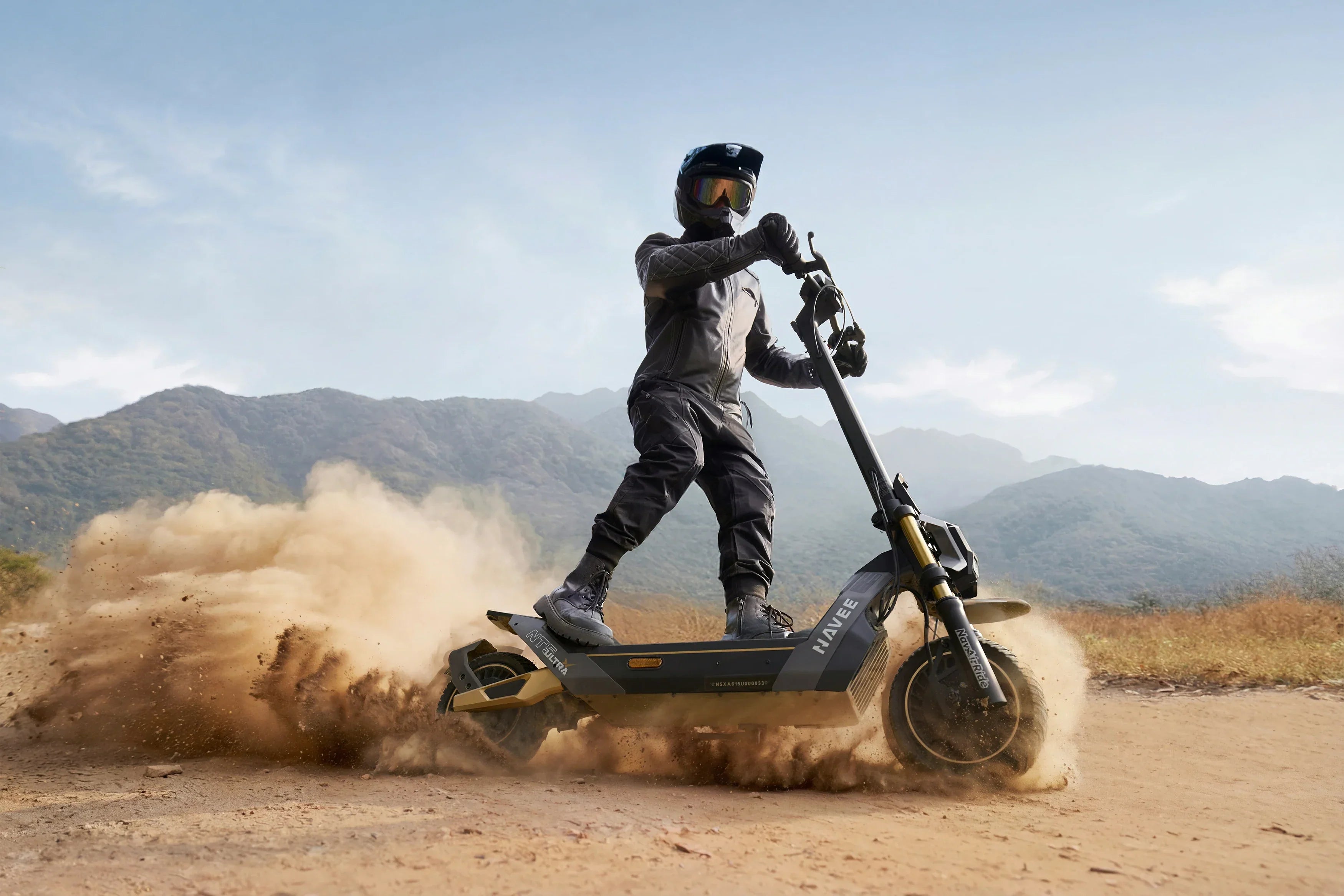
The useful difference between a single-motor and dual-motor electric scooter appears when your route asks the scooter to work hard. A flat trip to the train station and an apartment staircase may point toward a simpler, easier-to-manage scooter. A daily climb that slows every ride can point toward more drive. Start with the problem you meet most often, then decide whether another motor would improve that part of the day enough to justify the trade-offs.
Find the part of your ride that sets the limit
Think through a normal week rather than an ideal weekend ride. Is the difficult part a sustained hill, a long stretch where you need steady acceleration, rough pavement, or carrying the scooter into your building? The answer matters because those problems call for different priorities. A hill tests available drive; stairs test weight and portability; rough pavement makes tires, braking, and suspension more important.
Use the recurring problem as your starting point. An occasional steep street should not outweigh five easy commutes, while the same unavoidable hill every weekday should not be dismissed as a minor detail. This keeps the shortlist focused on the part of ownership that will affect you most.

What changes in real riding
With a single motor, one wheel supplies the drive. A dual-motor scooter drives both wheels, which can give an experienced rider more available drive when starting, climbing, or accelerating. The benefit becomes easier to notice on a route that repeatedly asks for it, especially when a climb or a longer open stretch is part of the ordinary ride.
That does not make dual motor the automatic upgrade. On flatter pavement at a measured pace, the extra capability may do little to improve the ride, while added mass and harder acceleration can make the scooter less convenient to carry and more demanding to manage. The best layout is the one that solves a frequent problem without creating a larger daily annoyance.
Match the motor layout to your routine
Use this comparison to narrow your first shortlist. It helps separate route needs from feature curiosity.
| Your regular situation | Single-motor starting point | Dual-motor starting point | What should decide it |
|---|---|---|---|
| Short, mostly flat city trips with stairs or indoor storage | Often practical | Only if a repeatable route problem remains | Carrying routine, storage, and route distance |
| A sustained hill on most rides | Check the exact model against the hill and load | Worth considering for more climbing headroom | Grade, rider/load, brakes, tires, and confidence |
| Longer routes with open sections | Can fit a controlled commute | May suit an experienced rider who needs more drive | Test-speed range, energy use, visibility, charging |
| New rider learning basic control | Often easier to build habits with | Only when route needs clearly justify it | Practice space, acceleration, braking, maintenance |
Why a single motor can be the better everyday choice
A single-motor scooter can be the better choice when convenience is the real constraint. If your route is mostly flat but the scooter has to go into a trunk, up stairs, or through a small office, the carrying task happens as often as the ride itself. A scooter that feels manageable in those moments is more likely to be used consistently than one whose extra capability stays unused.
Start with single-motor options when flat riding and portability dominate your week. Then look for a reason to move beyond them: a regular hill that leaves too little headroom, a route that demands more than the exact model can comfortably handle, or an experienced rider’s clear performance goal. “More power” alone is not a reason; a repeated route problem is.

When dual motor earns the trade-off
Dual motor is more compelling when the same hill, incline, or performance demand appears on ride after ride. More drive can make a climb feel less like the limiting part of the journey and can give an experienced rider more reserve when the route consistently calls for it. It is most useful when it answers a practical question: can this scooter handle the route I actually take?
There is a cost to that reserve. A performance-focused scooter can be harder to move around after the ride, can use more energy during faster or hillier riding, and makes tire condition and braking habits more important. If the scooter will be carried every day or used mainly on level streets, those costs may outweigh the benefit. If hills are routine and the rider is comfortable with the added responsibility, dual-motor electric scooters in the NAVEE NT Series are worth comparing.
Read hills as a drive-and-control question
A hill changes more than the amount of power you want. Grade, rider and cargo weight, battery state, temperature, surface grip, and the exact scooter all affect how a climb feels. A hill that is easy when dry and early in a ride can feel different after rain or after the battery has already been used. Looking at the route in those conditions gives you a more useful test than a broad “good for hills” claim.
When a climb is sustained and unavoidable, assess the way down as carefully as the way up. Braking distance, tire grip, and the room available to slow safely matter more as the route becomes more demanding. The electric scooter brakes guide can help you check the maintenance and control questions that belong beside a hill decision.
Plan range around your pace, not a maximum figure
Range changes with how and where you ride. Hills, quicker acceleration, faster travel, heavier loads, and colder conditions can all require more energy. That means the distance printed on a product page is most helpful when you read it together with the test speed and compare it with your own route.
Leave a margin if your commute includes repeated climbs or faster sections. A route that looks short on a map can still use more energy than expected when those conditions repeat. Our electric scooter range guidance can help you turn a controlled figure into a more realistic charging plan.
Check the ownership details before paying for performance
Weight, tires, and brakes can change the answer even after you decide that extra drive would be useful. Check the exact weight against the place where you lift, store, or load the scooter. If that movement happens twice a day, it is part of the commute—not a footnote. A heavier scooter may be comfortable while rolling but frustrating at a doorway, trunk, or staircase.
Then consider upkeep. Tires need enough grip for the surfaces you ride, and brakes need regular attention when the route includes descents, traffic, or stronger acceleration. Ask whether you can keep up with those checks and whether the places you ride give you room to slow smoothly. If not, a less demanding setup may make more sense even if its motor arrangement looks less exciting.
An example for a demanding regular route
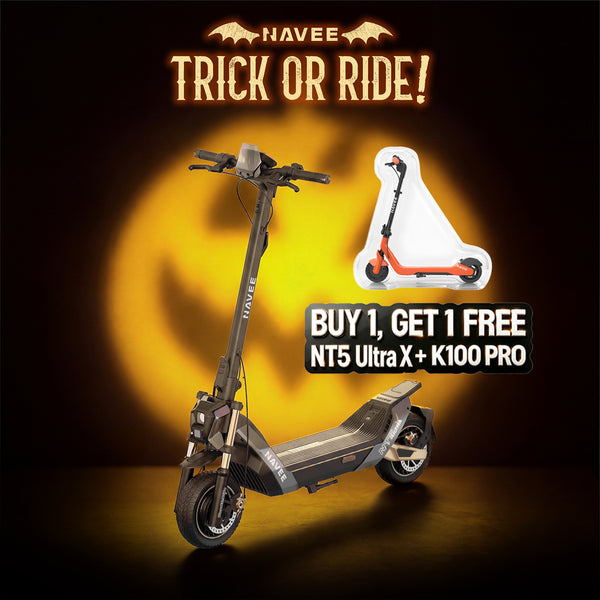
For an experienced adult rider whose normal route includes recurring hills and who does not need a carry-first scooter, NAVEE NT5 Ultra X is a relevant model to consider. Its dual-motor layout and dual-disc brakes with EABS align with a route where extra drive and controlled stopping both matter. Those features do not replace sound judgment about traction, tire care, or local riding rules.
Its range results show why riding conditions should remain part of the comparison: 55.9 miles at 9.3 mph and 28 miles at 24.9 mph. Faster riding, hills, rider weight, cargo, and weather can reduce the distance you see. Use the two test speeds to decide whether there is enough charging margin for your usual trip, rather than treating either result as a guaranteed commute distance.
Build a shortlist you can live with
- Map your ordinary ride. Note the hills, distance, surface, traffic, and where the scooter is stored.
- Name the recurring constraint. Is it climbing, carrying, range margin, rough pavement, or confidence at speed?
- Choose the simpler starting point. Begin with single motor for flat, carry-heavy routines; add dual motor when a repeatable demand makes it worthwhile.
- Compare the supporting systems. Look at the exact model’s weight, tires, brakes, range test conditions, and charging routine together.
- Picture a normal week. Choose the setup that removes the most common friction, not the one that wins on an occasional ride.
FAQs about single-motor and dual-motor electric scooters
Will a dual-motor scooter always be better on hills?
No. Two motors can add drive, but grade, load, battery level, surface, temperature, and the exact model still matter. Use the hill you ride repeatedly as the comparison point, and include brakes and tires in the same decision.
Does dual motor automatically mean a better long-distance scooter?
No. A faster or hillier ride can use more energy, so the useful range question is whether the documented test conditions leave margin for your route. A maximum at a slower test speed is not a promise for every commute.
Can a new rider choose dual motor?
A new rider can start by considering the route, but controlled practice, braking habits, and managing acceleration should come first. If a simpler scooter solves the regular trip, it may be the better place to build confidence.
What should I do if performance and portability pull in opposite directions?
Give the task you repeat most often more weight. If carrying happens daily, compare exact weight and storage routine before accepting a heavier option. If a sustained hill happens daily, make sure the scooter has enough route margin before prioritizing portability alone.
Still deciding which setup fits your routine? Explore NAVEE electric scooters to compare commuter, all-road, and performance options.
Share:
Are Electric Dirt Bikes Street Legal? What Riders Need to Know
How to Choose All-Terrain Electric Scooters for Adults?