

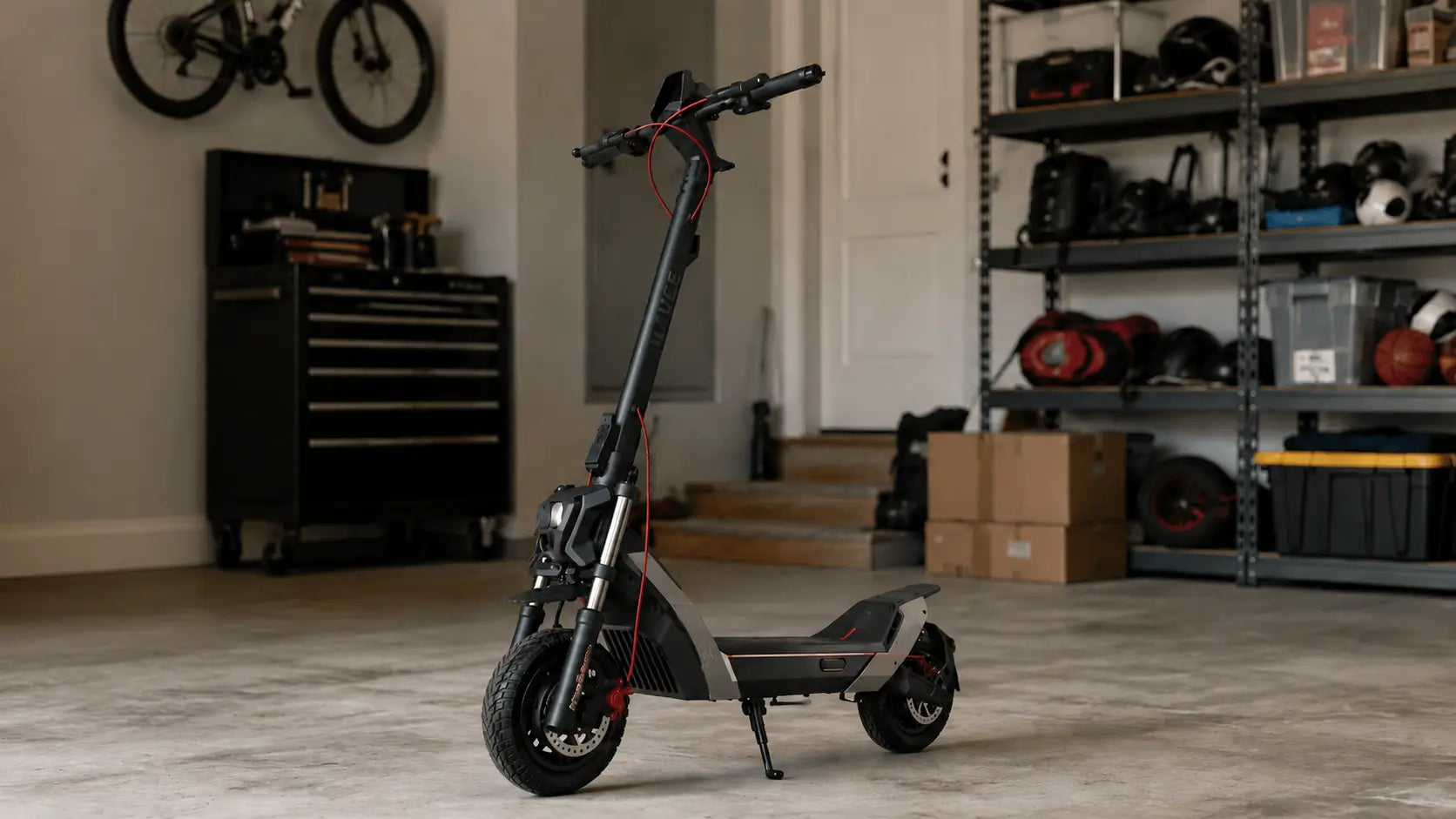
Most common electric scooter problems come from battery issues, loose connections, low tire pressure, brake wear, water exposure, or normal maintenance neglect. In many cases, simple electric scooter troubleshooting can help you identify the issue before contacting support. Start by checking the battery charge, charger, power button, brake response, tire condition, and any visible damage. If the scooter still feels unsafe, loses power, or shows electrical faults, stop riding and have it inspected by a qualified technician.
Common electric scooter problems usually fall into five categories: power, battery, tires, brakes, and ride stability. These issues can affect daily commuters, beginner riders, and casual users, especially if the scooter is used often on rough pavement, hills, wet roads, or long routes.
A scooter is a compact electric vehicle, so small problems can affect the whole riding experience. A weak battery can reduce acceleration. Low tire pressure can make the ride unstable. Poor brake adjustment can increase stopping distance. Loose parts can create rattling, vibration, or unsafe handling.
The key is to diagnose the problem in a structured way. Do not assume the motor is broken just because the scooter feels slower. Do not assume the battery is dead just because the scooter will not turn on. Check the basic causes first.
An electric scooter not turning on is one of the most common issues riders face. The cause is often simple, but it can also point to a deeper electrical problem.
The scooter may not turn on because the battery is fully drained, the charger is not working, the power button is damaged, the display cable is loose, or the controller has a fault. Some scooters also have safety lock settings or app-based controls that prevent startup.
First, charge the scooter fully using the original charger. Check whether the charger light changes when plugged in. Inspect the charging port for dust, moisture, or bent pins. Make sure the power button is not stuck. If the scooter has an app, check whether it is locked or in transport mode.
If the scooter still does not turn on after a full charge, avoid opening the battery compartment unless the manual specifically allows it. Electrical components should be inspected by support or a repair technician.

Electric scooter battery problems usually appear as reduced range, slow charging, sudden power loss, or inconsistent battery percentage readings.
Battery performance can drop because of age, cold weather, frequent deep discharge, charger damage, heavy rider load, steep hills, or long periods of storage without charging. Range can also fall if tire pressure is low or the rider uses high-speed mode often.
Use the original charger and charge the scooter in a dry indoor area. Avoid charging immediately after a long ride if the battery is hot. Let it cool first. If the scooter has been stored for weeks or months, recharge it before riding.
For daily use, avoid draining the battery to zero whenever possible. A healthy charging habit helps preserve long-term battery performance. If the battery drains unusually fast even under normal riding conditions, contact support instead of continuing to ride.
Electric scooter tire pressure has a major impact on comfort, control, braking, and range. Low pressure makes the scooter harder to ride and can increase the risk of punctures.
Tire problems may come from underinflation, worn tread, sharp road debris, valve leaks, or impact damage from potholes. Riders may notice poor handling, a bumpy ride, slower acceleration, or reduced range.
Check tire pressure regularly according to the manufacturer’s recommended PSI. Use a reliable pump with a pressure gauge. Inspect the tire surface for cuts, embedded objects, or uneven wear. If the tire loses air repeatedly, it may have a puncture or valve issue.
Do not ride on a visibly flat tire. Riding with low pressure can damage the tire, rim, and motor area. If your scooter uses tubeless tires, sealant may help with small punctures, but larger damage requires proper repair or replacement.
Electric scooter brake problems should be treated seriously. Weak brakes, squeaking, rubbing, or delayed stopping can make everyday riding unsafe.
Brake issues may be caused by worn brake pads, loose brake cables, misaligned disc brakes, dirt buildup, or improper adjustment. Regenerative braking may also feel different from mechanical braking, depending on the scooter model.
Start with a basic visual check. Look at the brake lever, cable tension, brake disc, and brake pads. If the brake feels loose, it may need adjustment. If the brake squeaks, the disc or pads may be dirty or slightly misaligned. Clean visible dust carefully with a dry cloth.
If the scooter takes longer to stop, do not continue riding at high speed. Brake adjustment requires precision. For disc brake alignment, pad replacement, or hydraulic brake problems, use professional service if you are not experienced.
A scooter that feels weak does not always have a motor problem. Power loss can be caused by battery level, riding mode, rider weight, hills, tire pressure, or overheating protection.
Low battery is the most common cause. Many scooters reduce power when the battery is low to protect the system. Riding uphill, carrying heavy loads, or using the scooter in hot weather can also reduce performance. Low tire pressure adds rolling resistance, making the scooter feel slower.
Charge the battery, check tire pressure, and switch to the correct riding mode. Let the scooter rest if it feels hot after a long ride. Avoid forcing the scooter up steep hills if performance drops sharply.
If acceleration cuts in and out, the issue may involve the throttle, controller, motor cable, or battery connection. Stop riding and have the scooter checked.
A loose handlebar or unstable stem can make the scooter feel unsafe, especially at higher speeds or on rough roads.
Folding mechanisms, stem bolts, handlebar screws, and latch systems can loosen over time because of vibration. Rough pavement, frequent folding, and daily commuting can speed up wear.
Before each ride, check that the folding latch is fully locked and the handlebar feels firm. Tighten visible bolts only according to the manual. Do not overtighten, because this can damage threads or folding parts.
If the stem still moves after basic tightening, stop riding. A loose steering system is a safety issue and should be inspected before further use.

Use this quick checklist before contacting support:
Charge the scooter fully with the original charger.
Check whether the charger and charging port look normal.
Confirm that the scooter is not locked through an app.
Inspect tire pressure and tire condition.
Test the brakes at low speed before riding.
Check the folding latch, handlebar, and visible bolts.
Look for water, dirt, cracks, or loose cables.
Restart the scooter if the display or app behaves incorrectly.
If the problem continues after these checks, document what happened, when it started, and whether any error codes appeared. This makes support faster and more accurate.
Small issues such as low tire pressure, loose screws, or minor brake adjustment can often be handled with routine maintenance. Battery faults, controller issues, motor problems, and repeated power failures usually require professional service.
If your scooter frequently loses range, feels unstable, struggles with your daily route, or needs repeated repairs, it may be time to compare newer electric scooters with stronger batteries, better braking systems, improved suspension, and commuter-friendly features.
For daily riders, the best scooter is not just the fastest one. It should match your route length, road surface, rider weight, storage space, and comfort expectations.If your current ride no longer meets those needs, explore the NAVEE to find an electric scooter built for safer, smoother, and more reliable daily travel.
Regular care can prevent many common electric scooter problems. Keep the scooter clean and dry. Avoid deep puddles, even if the scooter has some water resistance. Charge the battery properly. Store the scooter indoors when possible. Check tire pressure often. Test the brakes before each ride.
Do not ignore early warning signs. A small rattle, weak brake, or reduced range can become a bigger problem if you continue riding without checking it.
Most common electric scooter problems are easier to manage when you troubleshoot them step by step. Start with the basics: battery, charger, tire pressure, brakes, and loose parts. These areas explain many power, range, comfort, and safety issues.
If the issue is electrical, repeated, or affects braking and steering, stop riding and contact support. For commuters who rely on their scooter every day, regular maintenance and choosing the right model for the route are the best ways to reduce downtime.
You should check electric scooter tire pressure at least once a week if you ride regularly. Frequent riders should check it more often, especially before long commutes or after riding on rough pavement.
Light moisture may be acceptable for some models, but heavy rain, deep puddles, and standing water can damage electrical parts. Always follow the manufacturer’s water resistance rating and dry the scooter after wet rides.
Real-world range is affected by rider weight, speed mode, hills, tire pressure, wind, temperature, road surface, and stop-and-go riding. Advertised range is usually tested under controlled conditions.
Contact support if the scooter will not turn on after charging, loses power suddenly, has brake failure, shows error codes, makes unusual motor noises, or feels unsafe after basic troubleshooting.
More reading:5 Essential Tips for Maximizing Your E-Scooter Range
Share:
Moped vs. Electric Scooter: Which Is Better for Daily Commuting?
Electric Scooter Troubleshooting: Fix Battery, Brake, Tire, and Display Problems