


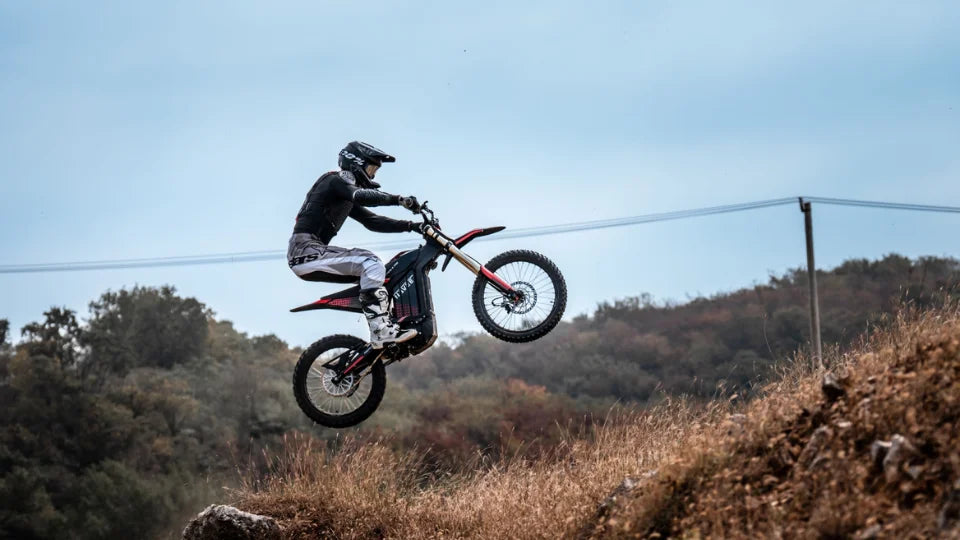
Electric dirt bikes have moved well past the novelty stage. What used to feel like a toy for teenagers has become a genuine category of off-road machines built for adult riders who want real torque, real range, and real control. The number of specs and models on the market today can feel overwhelming, especially for a first-time buyer or someone upgrading from a gas bike.
This guide breaks down exactly what matters so you can choose a bike that fits how you actually ride.
Why Choose an Electric Dirt Bike
Before getting into specs, it helps to understand why so many adult riders are switching to electric in the first place.
Lower Maintenance
There is no oil to change, no air filter to clean, and no carburetor to fuss with. Electric motors have far fewer moving parts than a gas engine, which means less time spent wrenching in the garage and more time riding. Most of the upkeep comes down to tire checks, brake pads, and basic battery care.
Quieter Rides
An electric dirt bike runs at a fraction of the noise level of a two-stroke or four-stroke engine. That matters if you ride near neighbors, share trails with hikers and wildlife, or simply prefer not to announce your arrival from half a mile away. Quieter operation also opens up more places to ride legally, since noise ordinances are one of the biggest restrictions on gas-powered off-road vehicles.
Cost and Environmental Benefits
Charging a battery costs far less than buying gas, and there is no exhaust to worry about. Over the life of the bike, riders typically spend less on energy and consumables combined than they would on gas and oil alone, and that savings adds up fast for anyone riding regularly.

Key Factors to Consider
Not every electric dirt bike is built the same way, and the spec sheet is where the real differences show up. Here is what to focus on before you buy.
Motor Power and Performance
Motor power, usually listed in watts, determines how quickly the bike accelerates and how well it climbs. Adult-sized electric dirt bikes typically range from around 3,500W of peak power up to mid-drive motors that peak near 17,000W. Higher wattage generally means stronger acceleration and better hill climbing, but it also adds weight and cost. Match the power to your terrain rather than chasing the highest number on the spec sheet.
Battery Life and Range
Range tells you how far you can ride on a single charge, and it varies significantly depending on riding mode, terrain, and rider weight. Pay attention to battery capacity and voltage, not just the advertised mileage, since real-world range during aggressive riding is almost always lower than the eco-mode figure listed on the box.
Weight and Frame Size
Adult riders need a frame sized for their height and a bike light enough to lift back up after a spill. A frame that is too small feels cramped and unstable at speed, while one that is too heavy becomes exhausting to maneuver on technical trails.
Suspension and Terrain Handling
Front and rear suspension travel determines how well the bike absorbs bumps, roots, and rocks. Longer-travel suspension smooths out rough trails, while a shorter dual-suspension setup works fine on smoother paths or casual rides. Adjustable compression damping is a useful extra for anyone who rides varied terrain.
Top Speed and Riding Modes
Top speed matters less than having riding modes that let you dial performance up or down. A bike with eco, sport, and full-power settings offers flexibility for cautious rides with beginners as well as full-throttle days on open trails.
| What to check | Why it matters | Typical range for adult bikes |
|---|---|---|
| Motor power | Determines acceleration and climbing ability | 3,500W to 17,000W peak |
| Battery range | Sets how far and how long you can ride per charge | 30 to 75 miles |
| Frame size and weight | Affects comfort, control, and ease of handling | Varies by rider height and terrain |
| Suspension travel | Smooths out rough terrain and improves comfort | Dual suspension up to 200mm front travel |
| Riding modes | Adjusts power for skill level and trail conditions | 2 to 4 selectable modes |
Peak power across current adult models spans roughly 3,500W to 17,000W. Browsing electric dirt bikes for adults side by side is an easy way to compare motor power, range, and suspension in one place before narrowing down a choice.

Match the Bike to Your Riding Style
The right bike depends heavily on how and where you plan to ride. As a quick reference:
| Riding style | Best fit | Why it works |
|---|---|---|
| Trail and off-road | Storm X | High torque and long suspension travel for climbs and rough ground |
| Casual riding | Storm G | Lighter build with a gentler power curve for relaxed rides |
| Racing and performance | Storm X Pro | Highest peak power and top speed in the lineup |
Trail and Off-Road Riding
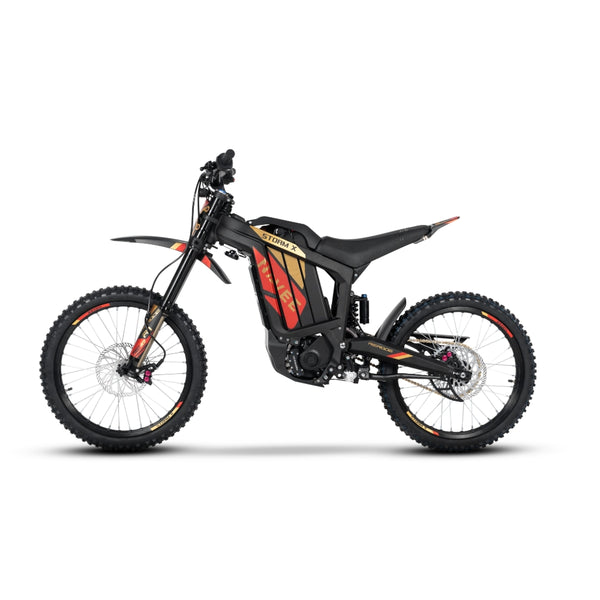
If your weekends revolve around dirt trails, loose gravel, or wooded terrain, prioritize torque and suspension travel over raw top speed. A high-torque electric dirt bike like the Storm X fits this use case well, with 390 N·m of torque and 200mm front / 85mm rear suspension travel that handle climbs and rough ground without sacrificing control.
Racing and Performance
Riders chasing speed and acceleration should look for higher peak power output and stronger torque figures. A high-performance electric dirt bike like the Storm X Pro sits at the top of the category, with a 17,000W peak mid-drive motor, 500 N·m of torque, and a top speed of 59.4 mph for riders who want maximum output.
Casual Riding
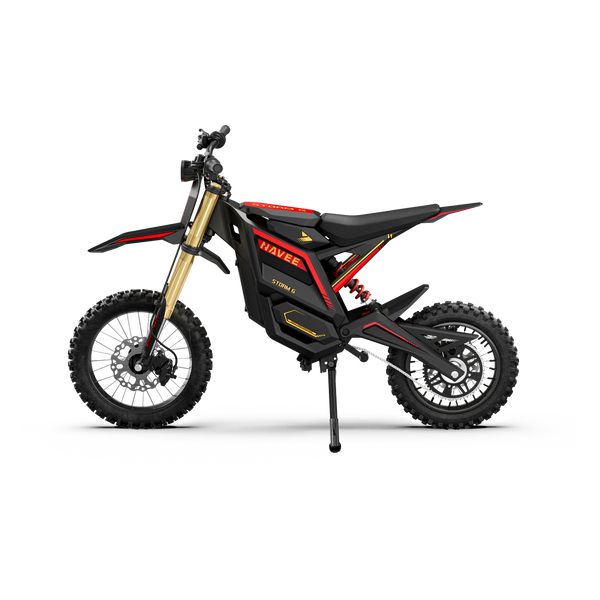
For riders who mostly want a relaxed way to explore backroads or open fields, a lighter, mid-power bike with simple controls is usually a better fit than a race-focused machine. An entry-level electric dirt bike for beginners like the Storm G is built for exactly this kind of riding, with a 3,500W peak motor, 190 N·m of torque, and a 34 mph top speed that keeps power delivery approachable for newer riders.
Safety Features to Look For
Performance is only half the equation. The right safety setup keeps you riding longer and with more confidence.
Braking Systems
Hydraulic disc brakes offer far more stopping power and better modulation than mechanical or drum brakes, especially at higher speeds or on loose surfaces. Dual disc brakes, front and rear, are worth prioritizing on any adult-sized electric dirt bike.
Lighting and Visibility
If there is any chance you will ride at dusk or after dark, a bright LED headlight is essential rather than optional. Look for models with multiple lighting modes so you can adjust brightness for trail conditions versus low-light street use.
Protective Gear
A good bike does not replace good gear. A DOT-approved helmet, gloves, boots, and riding-appropriate clothing should be part of every setup, regardless of how capable the bike itself is.
Budget Planning
Electric dirt bikes for adults span a wide price range, and knowing where your budget lands helps narrow the search quickly.
Entry-Level vs Premium Models
Entry-level adult models tend to offer solid power and decent range at a lower price, making them a practical starting point for new riders. Premium models add higher peak power, longer suspension travel, and extended range at a correspondingly higher price. The table below lines up three adult models by spec and price so it is easier to see where each one lands.
| Model | Peak power | Torque | Top speed | Range | Price |
|---|---|---|---|---|---|
| Storm G | 3,500W | 190 N·m | 34 mph | 31 miles | $1,799.99 |
| Storm X | 10,000W | 390 N·m | 53.1 mph | 75 miles | Around $4,499 |
| Storm X Pro | 17,000W | 500 N·m | 59.4 mph | 75 miles | $4,999 |
Hidden Costs
The sticker price is only part of the total cost. Before buying, budget for:
- A helmet and other protective gear
- A home charging setup
- Replacement parts over time, such as tires and brake pads
Some retailers also offer financing options, which can make a higher-tier bike more manageable on a monthly basis.
Where to Find the Best Deals
Seasonal sales, bundle offers, and direct-from-manufacturer purchases often provide better value than third-party resellers. Buying direct also tends to come with clearer warranty coverage and more reliable customer support if the bike ever needs servicing.

Maintenance Tips
A little routine care goes a long way toward keeping an electric dirt bike running well for years.
Battery Care
Avoid letting the battery sit fully drained for long periods, and avoid charging it to 100 percent every time if the bike will be stored for a while. Keeping the battery between roughly 20 and 80 percent during storage helps extend its overall lifespan.
Routine Checks
Before every ride, check the following:
- Tire pressure
- Brake responsiveness
- Suspension for any obvious wear
After muddy or wet rides, wipe down the frame and confirm that electrical connections are dry and secure.
Off-Season Storage
During winter or a rainy season, store the bike in a dry, temperature-controlled space whenever possible. Extreme cold and extreme heat both reduce battery efficiency and shorten its lifespan over time.
Final Thoughts
Choosing the best electric dirt bike for adults comes down to matching motor power, range, and suspension to how you actually plan to ride, then layering on the right safety gear and a realistic budget. Whether the goal is a relaxed trail companion or a performance machine built for speed, comparing specs side by side before buying is the best way to avoid an expensive mismatch down the road.

FAQs
How fast can an electric dirt bike go?
Top speed varies by model and motor size, from around 30 mph on entry-level bikes to close to 60 mph on high-power performance models.
Do electric dirt bikes require a license?
This depends on location and on whether the bike is classified for off-highway use or street use. In California, for example, electric off-highway motorcycles are subject to specific off-highway vehicle registration requirements rather than standard motorcycle licensing. Rules differ from state to state, so it is worth checking with the local department of motor vehicles before riding on any public land or roadway.
How long does the battery last?
Most adult models offer 30 to 75 miles of range per charge, depending on battery capacity and riding mode. Aggressive riding and hilly terrain reduce range compared to the manufacturer's eco-mode estimate.
Are electric dirt bikes good for beginners?
Yes, especially models with adjustable riding modes. Starting in a lower power setting lets new riders build confidence before working up to full throttle output.
What is the average price?
Adult electric dirt bikes generally range from around $1,800 for entry-level models to $5,000 or more for high-performance versions with stronger motors and longer suspension travel.
Share:
E-Bike Classes Explained: Class 1, Class 2, Class 3, and Moped-Style E-Bikes
Where To Fix An Electric Scooter: Cost, Warranty, And DIY Checks