


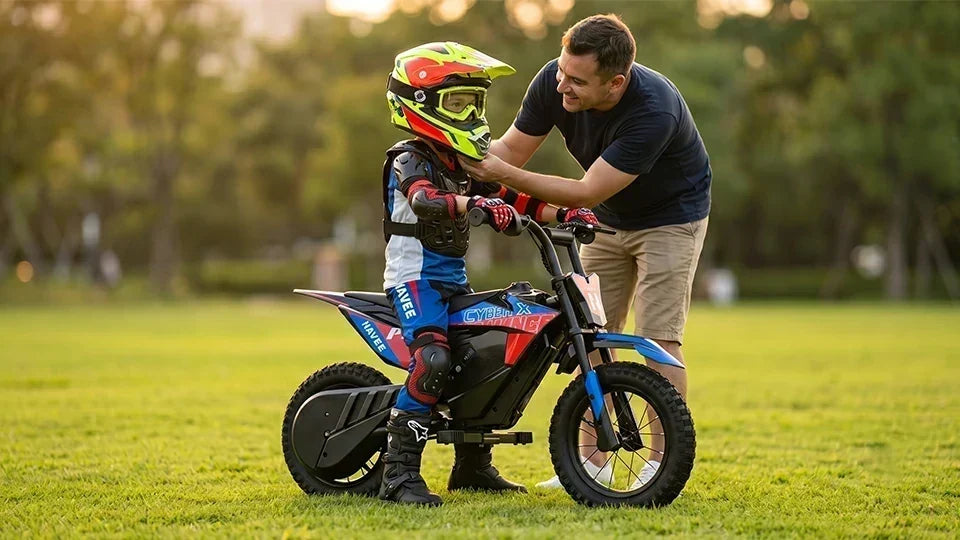
Unboxing a new electric dirt bike is a huge milestone for any child — but for parents, the excitement usually comes with real questions: Will they panic and lose control? How do I limit the top speed? Did I tighten every bolt correctly?
Unlike pedal bikes, electric dirt bikes deliver instant motor torque. Without a structured onboarding process, a small bump can make a beginner pull back on the handlebars and accidentally twist the throttle wider open — a rookie mistake known as "whiskey throttle."
A safe, panic-free first ride comes down to three things: a proper ergonomic setup, certified protective gear, and a gradual 4-step coaching plan with locked speed limiters. This guide gives you a simple, step-by-step playbook to eliminate first-day panic and turn your child's first ride into a confidence-building success.
Still deciding which model to buy? See our full breakdown in How to Choose a Kids Electric Dirt Bike: Age, Size, Speed, and Safety Checklist. This guide picks up once the bike is already in your hands — covering setup, gear, and how to teach your child to ride it safely.

Pre-Ride Kids Dirt Bike Setup: Sizing and Safety Check
Before powering on, configure the bike to your child's body and confirm it's mechanically safe.
Core sizing targets:
- Saddle height: balls of both feet touch the ground while seated
- Handlebar reach: elbows at a relaxed 15–20° bend
- Brake levers: small fingers reach easily without releasing the grips
The 3-Point Touch Test
Never buy an oversized bike for a child to "grow into" — it makes balance and emergency stops much harder. With riding shoes on, have your child sit on the saddle and check:
- Feet flat on the ground — both feet touch simultaneously so they can stabilize at a full stop.
- Neutral arm bend — 15–20° elbow bend; locked-straight arms transfer bumps into the shoulders and limit steering.
- Finger reach to the brakes — two fingers should rest on the levers without letting go of the grips. If reach is too far, adjust the lever reach screw on the perch.
60-Second Pre-Ride Inspection Checklist
| Check | What to Do | Suggestion |
|---|---|---|
| Tire pressure | Measure with a digital gauge | Grass/dirt: 12–15 PSI · Hard-pack/asphalt: 18–20 PSI |
| Brakes | Squeeze each lever independently | Firm engagement before halfway pull, no sponginess |
| Chain/belt | Check tension and alignment | ~0.5" vertical play, free of debris |
| Hardware | Check axle nuts, footpegs, stem bolts | Fully torqued |
| Throttle | Twist and release with power OFF | Snaps back to 0% instantly |
Essential Kids Dirt Bike Safety Gear
Standard bike helmets and sneakers aren't enough for motorized off-road riding. Full protective gear turns minor tip-overs into harmless learning moments instead of injuries.
Recommended gear hierarchy:
- Head: full-face helmet (DOT or ECE 22.06 certified) — protects the chin and jaw, which open-face helmets leave exposed
- Eyes: anti-fog off-road goggles — blocks dirt, dust, and branches
- Hands: padded riding gloves with textured grip — prevents slipping off the brake levers
- Joints: knee and elbow armor — absorbs impact from low-speed falls
- Feet: over-ankle boots — prevents twists and sprains
Fit tip: Don't buy oversized gear to "grow into." A loose helmet can slide over the eyes, and loose pads shift during falls, leaving joints unprotected. Use a measuring tape (chest, knees, and skull one inch above the eyebrows) and match it to the manufacturer's size chart rather than an age label.
Speed Limiter Settings for Kids Electric Dirt Bikes
The biggest safety advantage of an electric bike over a gas one is precise, adjustable power control.
| Stage | Mode | Max Speed | Focus |
|---|---|---|---|
| Day 1–3 | Mode 1 | 5 MPH | Balance, steering, stopping |
| Week 2+ | Mode 2 | 7.5 MPH | Smooth turns, cone slaloms |
| Mastery | Mode 3 | 15.6 MPH | Open trails, bumps, standing posture |
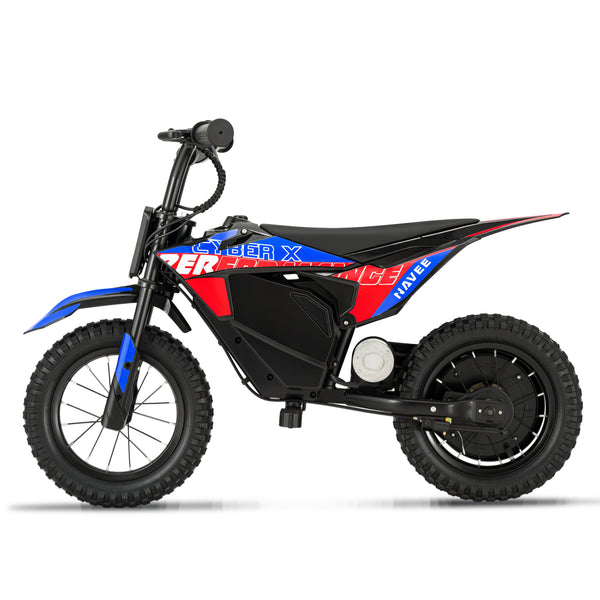
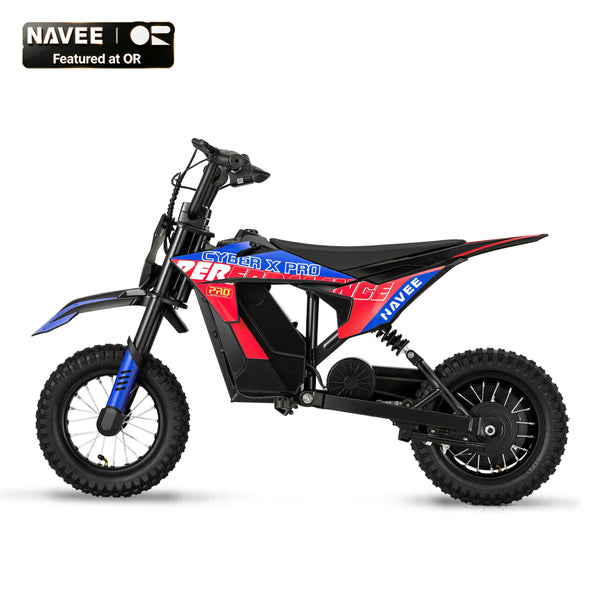
Locking the bike into Mode 1 for the first sessions means that even if your child twists the throttle wide open by accident, the bike won't exceed a manageable walking pace. These three-mode presets are standard across NAVEE's kids electric dirt bike lineup, so the same coaching plan below applies whether you're riding a Cyber X or a Cyber X Pro.
Battery care: Fully charge the battery before the first ride to balance the lithium cells. Clean with a damp microfiber cloth and mild soap — never a pressure washer — to protect the controller, throttle wiring, and motor hub, even with IPX4/IPX7 water resistance ratings.
How to Teach a Child to Ride an Electric Dirt Bike: A 4-Step Plan
Never just hand over the bike and say "go." Run every lesson in an open, flat, grassy field away from trees, curbs, traffic, and pets.
- Power-OFF balance and braking — With the power switch off, let your child coast like a balance bike, pushing off with their feet before lifting them onto the pegs. Practice two-handed stops (rear brake first, front brake progressively). It's normal for a child's first few stops to be jerky or lopsided — that's a sign they're still learning brake pressure, not a sign the bike is unsafe.
- Micro-throttle control — Teach the "wrist-down" grip so a startled backward pull rotates the throttle closed, not open. In Mode 1, roll 10% throttle for 10–15 feet, release, and brake to a stop. Repeat 10 times. Many kids instinctively stiffen their arms the first time the motor engages; if you see that, pause and remind them to keep elbows soft before continuing.
- Head-up turning — Set cones 20–30 feet apart. Coach: "Look where you want to go, not at what you want to avoid," to beat target fixation. Practice wide figure-eights. Expect the first few turns to drift wide or clip a cone — that's normal muscle memory building, not a coordination problem.
- Standing attack position — Knees bent, feet centered on the pegs, elbows out, hips lifted 2–3 inches off the seat, so arms and legs absorb bumps alongside the suspension. Only introduce this step once Steps 1–3 feel automatic; layering it in too early tends to make kids overcorrect and sit back down mid-bump.
Troubleshooting Common First-Ride Mistakes
| Problem | Root Cause | Fix |
|---|---|---|
| "Whiskey throttle" panic | Wrist too high on the grip | Lower wrist below grip level; keep Mode 1 locked |
| Rear wheel skidding | Grabbing the brake like an on/off switch | Squeeze levers gradually, "like a sponge" |
| Staring at the front wheel | Target fixation, panic looking down | Point toward the turn exit; keep chin up |
FAQs
1. What age is right for a youth electric dirt bike?
Most entry-level models suit ages 5–12, but coordination and the ability to follow multi-step instructions matter more than age. If a child can ride a pedal bike without training wheels and use hand brakes confidently, they're likely ready for a speed-governed electric model.
2. Can my child wear a regular bicycle helmet?
No. A DOT- or ECE 22.06-certified full-face off-road helmet is required — bicycle helmets leave the jaw and chin exposed, which matters given the higher torque and speed of a dirt bike.
3. Where's the safest place for a first ride?
A wide, flat, dry grassy field. It maximizes traction, naturally slows top speed, and cushions any low-speed tip-overs. Avoid asphalt, gravel, hills, and traffic areas.
4. How long does the battery last per charge?
Most youth models run 45 minutes to an hour of active riding per full charge, though this varies with rider weight, terrain, and how much time is spent at higher throttle. Output naturally tapers as the charge drops, so treat the last 10–15% as reduced-power riding rather than full performance.
5. Does my child need to know how to ride a pedal bike first?
It helps but isn't strictly required. Comfort balancing on two wheels — whether from a pedal bike, balance bike, or scooter — makes Step 1 of the coaching plan go faster. Kids with no prior two-wheel experience should simply spend extra time on power-off balance drills before the throttle is introduced.
6. How should I store and maintain the bike in the off-season?
Store it indoors or in a dry, temperature-stable space, and charge the battery to roughly 50–60% before long-term storage rather than leaving it fully charged or fully drained. Recheck tire pressure and brake function before the first ride of the new season, since components can shift slightly during storage.

Quick Reference: Before Every Ride
Once your child is past the initial training phase, keep this checklist handy for a fast pre-ride routine:
- [ ] Helmet, goggles, gloves, and knee/elbow armor on and properly fastened
- [ ] Tire pressure checked and within range for the terrain
- [ ] Brakes tested and engaging firmly
- [ ] Speed mode confirmed appropriate for skill level
- [ ] Battery charged and throttle snapping back to neutral
- [ ] Riding area clear of traffic, obstacles, and other hazards
NAVEE's Kids Electric Dirt Bike Lineup
NAVEE builds youth electric dirt bikes engineered around child-centric ergonomics and safety certifications, including the entry-level Cyber X and the higher-performance Cyber X Pro. Both are validated with 1,000+ km of road testing and 100+ drop tests, and pair IPX4 body and IPX7 battery seals with app-based speed governance and manufacturer warranties.
Share:
How to Commute by Electric Scooter: Transit, Charging & Route Planning
What Are the Best Electric Scooters for University Campuses?