

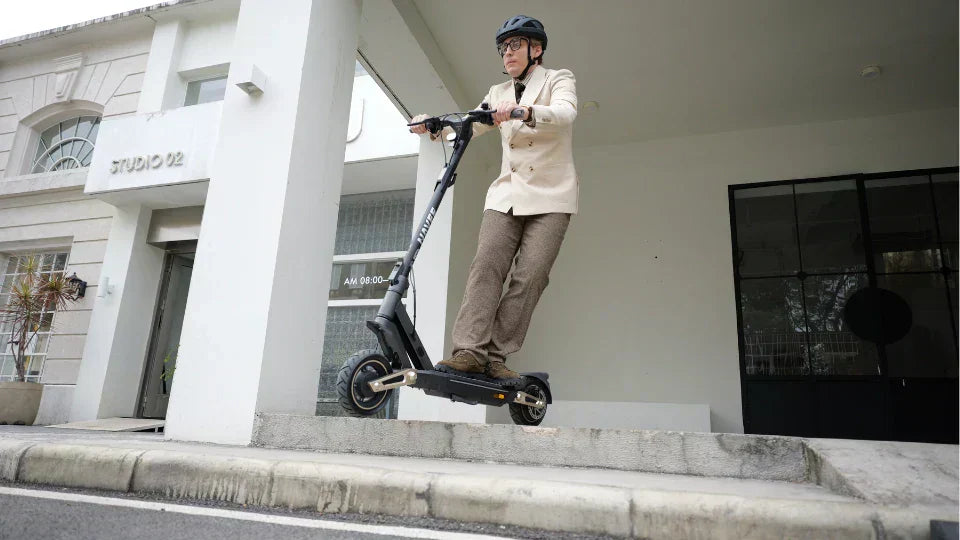
Balancing on an electric scooter may feel tricky at first, but with the right approach, it becomes easier over time. To balance, position your dominant foot near the center of the scooter’s deck, with the other foot placed behind it, keeping both feet parallel. Your weight should be centered over the scooter for stability. If you're using a Navee Electric Scooter, you're in luck—these scooters are designed to offer enhanced stability, making it easier for beginners to maintain their balance and enjoy a smoother ride. Keep reading for more tips and techniques to help you master balancing on your scooter!
Balancing on an electric scooter may seem intimidating at first, but with the right approach, you can get the hang of it quickly. Here are the key principles to help you build a strong foundation.
For beginners, the primary challenge is simply standing upright on a two-wheeled vehicle that is moving. The fear of falling, combined with the need for steady speed control and steering, can make it seem tricky at first. You might feel wobbly or unsteady when starting, turning, or stopping.

A common hurdle for new riders is the fear of falling. This fear can cause hesitation, making it harder to balance. Here’s how to tackle it:
The fear of falling is a natural reaction when you’re learning to ride a scooter. You might worry about losing control, especially when accelerating, turning, or stopping. It’s normal, but it can be overcome.
1.Start Slow: Practice in a safe, open area without traffic or distractions. Begin at a low speed and gradually increase as you build confidence.
2.Use Protective Gear: A helmet, knee pads, and elbow pads can help reduce the risk of injury and provide peace of mind.
3.Take Your Time: Don’t rush. Build confidence by focusing on one skill at a time. Master the basics before progressing.
Steering and turning are essential parts of balancing on an electric scooter. Many beginners struggle with these skills, but with practice, you can master them.
When turning, you must lean into the direction you want to go. If you're not used to the steering, you may either overcompensate or understeer, which can lead to instability.

Controlling your speed is crucial for maintaining balance. Accelerating too quickly or braking suddenly can throw off your stability.
Many electric scooters have a sensitive throttle. This means that beginners often accelerate too fast or decelerate too quickly, making it harder to stay balanced.
Related Reading: How Fast Do Electric Scooters Go?
1.Start Slowly: Don’t rush to accelerate. Gradually increase your speed as you gain confidence.
2.Use the Throttle Gently: Apply smooth, steady pressure to the throttle. Sudden movements can cause instability.
3.Brake Gradually: Use both the front and rear brakes if available. Avoid sudden braking, as it can cause the scooter to jerk and throw you off balance.
Balancing becomes more difficult when riding on rough or uneven surfaces like gravel, grass, or sidewalks with potholes. Here’s how to handle it:
Riding on bumpy surfaces can cause your scooter to wobble, especially at low speeds. The key is to anticipate these obstacles and adjust your posture accordingly.

Climbing hills or descending inclines adds complexity to balancing on an electric scooter. Here’s how to manage your balance on hills:
When riding uphill, your scooter’s power needs to work harder, and when going downhill, you need to manage your speed to avoid losing control.
1. Lean Forward Going Up: When going uphill, lean slightly forward to keep the scooter stable and ensure better traction.
2. Lean Back When Going Downhill: When descending, shift your weight backward to prevent tipping forward and losing control.
3. Control Your Speed: Don’t accelerate too much while going downhill. Apply the brakes gently to maintain a steady pace.

Mastering balance on an electric scooter takes time and patience, but with consistent practice, you can become a skilled rider. Start with the basics: focus on your posture, practice turning, and control your speed. As you gain confidence, gradually challenge yourself with different terrains and environments. With the right techniques, you'll be riding smoothly in no time!
If you're looking for an excellent scooter to start with, check out the Navee Electric Scooter, known for its stability and smooth ride. It’s a great option for beginners who want to build their skills and confidence.
Q: How long does it take to learn how to balance on an electric scooter?
A: It can vary, but most people learn the basics in a few hours of practice. Expect to need several practice sessions to get comfortable.
Q: Do I need special gear to learn to ride an electric scooter?
A: While not required, wearing a helmet, knee pads, and elbow pads is highly recommended for safety, especially for beginners.
Q: Can I ride an electric scooter on rough terrain?
A: Yes, but adjust your technique. Ride slowly and use both feet for stability when on rough surfaces.
Q: How do I maintain my scooter to improve balance?
A: Check tire pressure regularly, ensure the wheels are aligned, and perform routine maintenance on the brakes and throttle to keep the scooter in top condition.
Share:
Breaking Down the Costs of Electric Scooters for Adults
Top Lightweight Electric Scooters for Adults in 2026