


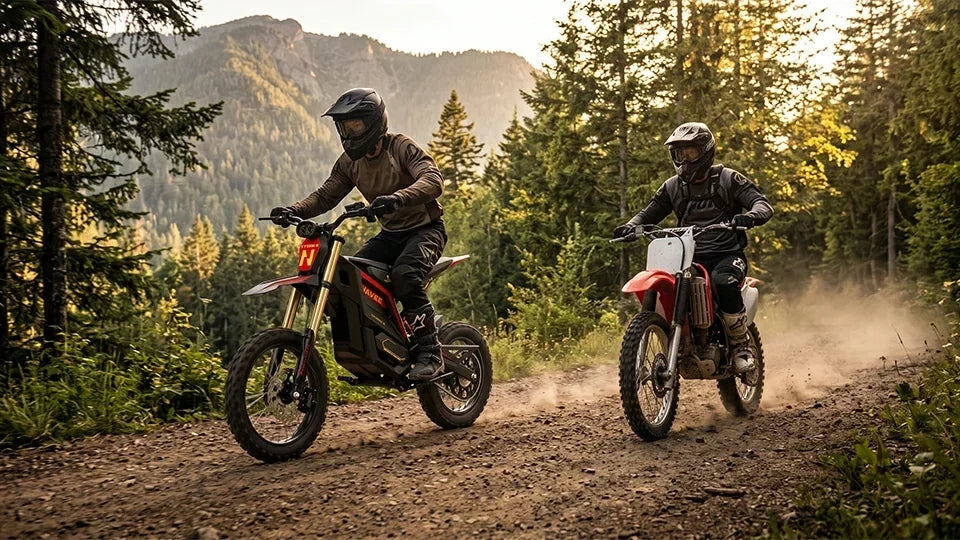
Choosing between an electric dirt bike and a gas-powered dirt bike comes down to how you ride, where you ride, and what type of ownership experience you want.
Electric dirt bikes are usually a better choice for riders who want quiet operation, simple controls, lower routine maintenance, and convenient charging at home. Gas dirt bikes are often better suited for riders who need longer riding sessions, quick refueling, and the traditional engine-powered riding experience.
For example, a rider who spends weekends exploring nearby trails, rides for a few hours, and charges at home after each trip may find an electric dirt bike more convenient. On the other hand, a rider who spends an entire day on remote trails where charging is unavailable may prefer a gas bike because fuel can be replaced in minutes.
Neither option is automatically better. The right choice depends on your riding environment, performance needs, maintenance preferences, and expectations.
This guide compares electric dirt bike vs. gas dirt bike options to help you understand the differences and choose the one that fits your riding style.
Electric Dirt Bikes: Features, Benefits, And Best Uses
Electric dirt bikes use battery-powered motors instead of traditional combustion engines. This changes the way the bike feels, performs, and fits into everyday ownership.
For many recreational riders, the biggest advantages are easier operation, quieter riding, and less engine maintenance.
Motor Power And Riding Performance
Motor power directly affects how an electric dirt bike performs when conditions become more demanding.
A lower-powered model may work well for flat dirt paths, beginner riding areas, or casual recreational use. However, riders who frequently encounter steep climbs, loose surfaces, or heavier loads need more power because the motor has to work harder to maintain acceleration and control.
A stronger motor helps with:
- maintaining speed on uphill sections
- accelerating through loose terrain
- carrying heavier riders
- recovering quickly after slowing down on difficult trails
However, higher power does not automatically mean a better riding experience. A bike with excessive power can be harder for beginners to control, especially on slippery surfaces.
The right motor output depends on your terrain and riding ability. A recreational rider may value smooth, predictable power delivery, while a more experienced rider may want stronger acceleration for challenging trails.
Battery Range And Charging Convenience
Battery range is one of the biggest differences between electric and gas dirt bikes.
The important question is not only how far the bike can travel in ideal conditions, but whether it can comfortably complete your normal riding session.
Real-world range changes depending on factors such as rider weight, terrain, speed, temperature, and throttle usage. A rider cruising on smooth trails may achieve much longer range than someone climbing hills, riding aggressively, or frequently accelerating.
For riders who usually return home after riding, charging can be very convenient. You can store the bike, plug it in, and have it ready for the next outing.
However, riders who spend full days in remote areas should think carefully about battery capacity. Once an electric dirt bike runs out of power, extending the ride is not as simple as carrying extra fuel.

Suspension, Brakes, And Off-Road Capability
A capable off-road electric dirt bike needs more than a powerful motor.
Suspension plays an important role when riding over rocks, roots, bumps, and uneven ground. Riders who mainly use smooth dirt roads may not notice a major difference, but riders on technical trails will feel the benefit of better suspension because it improves comfort, stability, and control.
Braking performance is equally important. More powerful bikes need stronger braking systems because riders need confidence when descending hills, approaching corners, or controlling speed on loose surfaces.
When comparing electric dirt bikes, look at how the entire bike works together. Motor power, suspension, brakes, tires, and overall handling should match the type of terrain you plan to ride.
Who Is An Electric Dirt Bike Best For?
Electric dirt bikes are often a good fit for riders who:
- ride close to home
- prefer quieter outdoor activities
- want simpler operation
- do not want frequent engine maintenance
- are beginners or recreational riders
They are especially attractive for riders who want more time riding and less time managing fuel, engine servicing, and mechanical adjustments.
Gas Dirt Bikes: Features, Benefits, And Best Uses
Gas dirt bikes remain popular because they offer long riding range, quick refueling, and the traditional motorcycle experience many riders enjoy.
For decades, gas engines have been the standard choice for off-road riding, and they still offer advantages in certain situations.
Engine Performance And Long-Distance Riding
Gas dirt bikes provide a familiar riding experience with engine sound, clutch control, gear changes, and mechanical feedback.
For experienced riders, these features are part of the enjoyment. The feeling of managing engine power through shifting and throttle control is something many riders specifically look for.
Gas bikes also have an advantage when riding far from home. Carrying additional fuel allows riders to continue their trip without waiting for a charging cycle.
This makes gas dirt bikes practical for riders who:
- explore remote trails
- ride for several hours at a time
- travel to off-road locations
- need quick energy replacement
Maintenance And Mechanical Ownership
The biggest trade-off with gas dirt bikes is maintenance.
Gas engines require regular care, including oil changes, air filter cleaning, fuel system maintenance, and engine servicing.
For some riders, this is not a disadvantage. Many motorcycle enthusiasts enjoy maintaining and upgrading their machines.
However, riders who mainly want to ride after work or on weekends may prefer an option that requires fewer engine-related tasks.
Electric bikes reduce many of these maintenance requirements, while gas bikes provide the advantage of familiar mechanical systems and widely available repair knowledge.
Who Is A Gas Dirt Bike Best For?
Gas dirt bikes are often better suited for riders who value:
- long-distance riding capability
- fast refueling
- traditional motorcycle controls
- mechanical involvement
They remain a strong choice for riders who spend more time exploring remote areas than riding close to home.
Electric Dirt Bike Vs. Gas Dirt Bike: Feature Comparison
| Feature | Electric Dirt Bike | Gas Dirt Bike |
|---|---|---|
| Power Delivery | Immediate torque and smooth acceleration | Traditional engine power with gears |
| Riding Feel | Quiet and simple operation | Classic motorcycle experience |
| Range | Limited by battery capacity | Extended quickly with fuel |
| Refueling | Requires charging time | Fuel added in minutes |
| Maintenance | Fewer engine-related tasks | More regular mechanical servicing |
| Beginner Friendly | Easier controls for many riders | Requires clutch and gear skills |
| Best Use | Local trails and recreational riding | Long rides and remote areas |
Performance Comparison: Which One Handles Trails Better?
Performance depends on the type of riding you do.
Electric dirt bikes often feel easier to control because power delivery is smooth and immediate. This can help beginners and recreational riders focus on balance, braking, and terrain instead of managing gears and clutch operation.
Gas bikes have advantages for riders who need sustained performance over longer distances. They can continue operating as long as fuel is available, which makes them practical for extended trail adventures.
When comparing performance, focus on the features that affect your actual riding:
Motor power determines how well the bike handles hills and acceleration.
Suspension affects comfort and control on rough terrain.
Brakes affect confidence when slowing down on steep or uneven surfaces.
Tires influence traction on different types of ground.
The right bike is the one that matches your riding conditions.

Which One Costs Less To Own?
The lower-cost option depends on how often you ride and what type of expenses matter most.
Electric dirt bikes can reduce ongoing costs because they do not require gasoline and eliminate many engine-related services. For riders who charge at home and ride regularly, daily operating costs can be very low.
Gas bikes usually require more maintenance, but they benefit from established repair networks and widely available mechanical knowledge.
When comparing ownership costs, think about the complete picture:
- purchase price
- fuel or electricity costs
- routine maintenance
- replacement parts
- long-term support
A casual rider may value convenience more than small cost differences, while frequent riders may pay more attention to long-term operating expenses.
Which Dirt Bike Should You Buy?
The right choice depends on your riding situation.
Choose An Electric Dirt Bike If You:
An electric dirt bike is likely a better fit if most of your rides happen near home, you prefer quieter operation, and you want a simpler ownership experience.
It is especially suitable for riders who enjoy weekend trail rides, recreational off-road riding, or want an easier way to get started.
Choose A Gas Dirt Bike If You:
A gas dirt bike may be the better choice if you regularly ride far from home, need quick refueling, or enjoy the traditional dirt bike experience.
For riders who spend entire days exploring trails, fuel availability can be more important than charging convenience.
Related Reading: Are Electric Dirt Bikes Street Legal?
Before choosing an electric dirt bike, it is also important to understand where you can legally ride it. Street legality depends on factors such as local regulations, vehicle classification, required equipment, and where you plan to use the bike.
If you are considering using an electric dirt bike beyond private trails or off-road areas, read our guide on Are Electric Dirt Bikes Street Legal to learn more about road-use requirements and important considerations before riding.
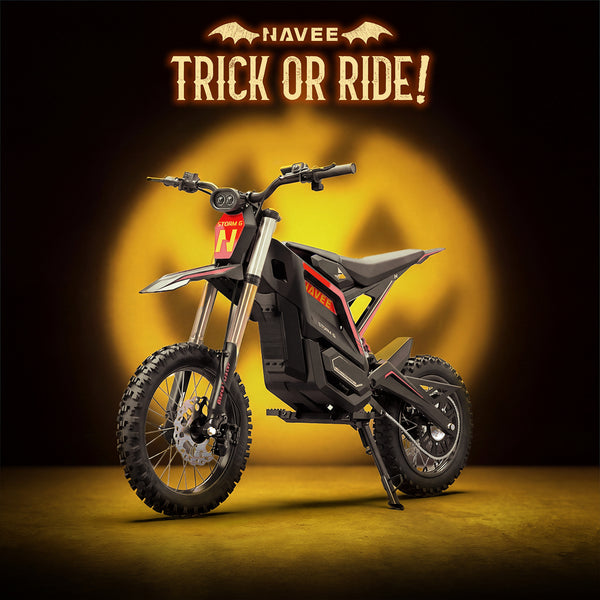
NAVEE Storm G: An Electric Dirt Bike Built For Recreational Off-Road Riding
For riders who decide that electric is the right direction, the next step is choosing a model with the right balance of power, comfort, and control.
The NAVEE Storm G electric dirt bike is designed for recreational off-road riding with features that support trail performance.
Its 3,500W peak power motor provides strong acceleration for riders who need responsive performance on dirt paths and uneven terrain. The Long-Travel dual suspension system helps absorb impacts from rough surfaces, while hydraulic brakes provide stronger control when riding downhill or approaching corners.
With up to 34 mph top speed and up to 31 miles of range, Storm G is suited for riders looking for an electric dirt bike for adults that can handle planned recreational rides without the fuel and engine maintenance requirements of traditional models.
When choosing any electric dirt bike, the goal is not simply finding the highest specification. The better choice is finding a bike whose power, suspension, and range match how you actually ride.
FAQs
Are Electric Dirt Bikes Better Than Gas Dirt Bikes?
Electric dirt bikes are better for riders who value quiet operation, simpler controls, and lower routine maintenance. Gas dirt bikes are better for riders who need longer riding sessions, quick refueling, and traditional motorcycle performance.
How Much Power Does An Electric Dirt Bike Need?
The required power depends on terrain and rider needs. Casual riders on flat trails may not need maximum output, while riders who climb hills or ride rough terrain benefit from stronger motors.
How Long Does An Electric Dirt Bike Battery Last?
Battery range depends on the model, battery size, terrain, speed, rider weight, and riding style. Riders should choose a battery capacity that comfortably covers their normal riding sessions.
Are Electric Dirt Bikes Good For Adults?
Yes. Many models are designed specifically for adult riders with stronger motors, larger frames, improved suspension, and longer range compared with beginner models.
Final Thoughts
Electric and gas dirt bikes both have situations where they perform best.
Choose electric if you want quieter riding, easier ownership, and convenient charging for regular recreational use.
Choose gas if you need long-distance capability, quick refueling, and the traditional motorcycle experience.
The best dirt bike is not the one with the biggest specifications. It is the one that fits your riding habits, terrain, and expectations. When those factors match, every ride becomes more enjoyable.
Share:
Which Electric Golf Caddy Is Best for Hilly Courses and Small Trunks?
What Is a Moped-Style Electric Bike? A Complete Guide Before You Buy