


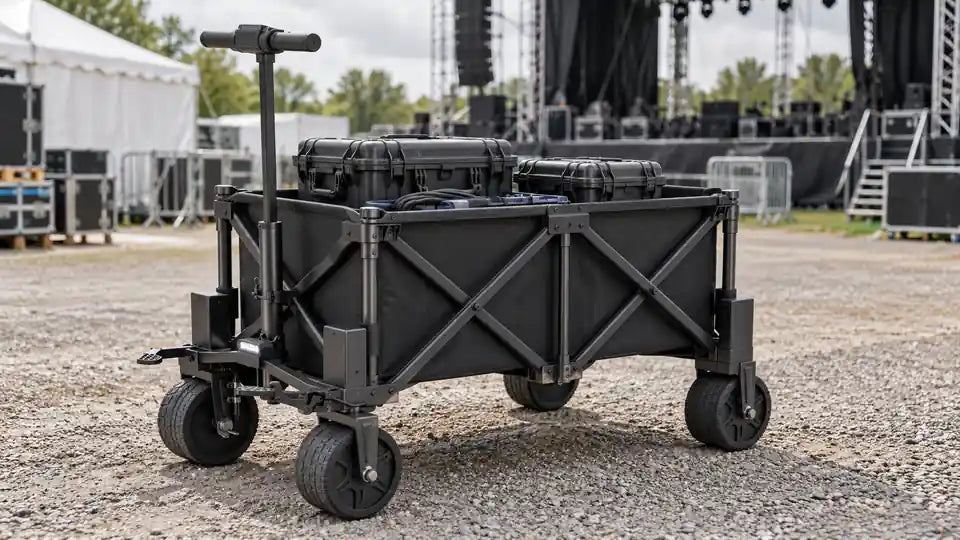
Festival setup depends on getting equipment where it belongs: cable totes to the stage, tools to the vendor area, and supplies to the green room. Deliveries continue after the gates open, when service routes become busier and access windows get shorter. Electric work carts can reduce pulling effort on repeated runs and help crews move organized batches of gear.
For festival setup and backstage hauling, the right cart needs enough usable cargo space, manageable loaded handling, and battery capacity suited to the delivery schedule. Compact wagons work best for contained equipment and supply loads; large road cases and stage structures may require other handling equipment.
Festival Tasks for Electric Work Carts
Use compact electric cargo wagons to shuttle gear between loading zones, storage points, and backstage work areas. Assignments change as the event moves from setup to performances and teardown.
Moving Cables, Tools, and Signage
Typical setup loads include cable totes and tool kits for audio crews, or boxed signage and installation supplies for vendor areas. Label containers by stage or tent, and agree on a delivery sequence with the crew receiving them.
Restocking Backstage Supplies
Once performances begin, the cart's role often shifts to restocking water, towels, paper goods, and other consumables. Use labeled, closed containers that can be unloaded quickly at an agreed delivery point.
Coordinate runs with backstage staff, especially around artist arrivals and stage changeovers. Keep food and drinks in appropriate containers, separate from tools and dirty equipment.
Collecting Gear During Teardown
Return packed cables, tools, and supply bins to designated collection points, sorted by department or outbound vehicle. Confirm the route for the final runs as barriers move, vehicles arrive, and temporary lighting is removed.

Features That Matter on Festival Grounds
Load Capacity and Equipment Fit
Match electric utility wagons to the crew's heaviest recurring load and largest routinely carried items. Include the weight of cases, containers, and restraints in the total.
For example, three 35-pound cable totes plus a 25-pound tool kit create a 130-pound load. This illustrative load also needs a fit check: the totes must sit securely with room for restraints and access to handles.
Use the manufacturer's moving-load rating for the intended terrain and mode, rather than a stationary capacity figure. Check usable bed dimensions as well as cargo volume.
Traction on Grass and Gravel
Drive configuration and tire design matter when hauling across grass and gravel. Assess them against the actual site: firm service paths, soft turf, loose stones, ruts, and slopes place different demands on a loaded cart.
Test a representative load along the proposed route within the cart's operating limits. Check starts, turns, and stops. Reassess soft areas after rain.
Braking and Maneuverability
Backstage routes require frequent stops and tight turns. Check overall cart width, clearance through gates, turning space, and access to the controls when fully loaded. Identify parking positions that leave crew passages and delivery access open.
Prioritize electric wagon speed control that lets the operator adjust pace to visibility, foot traffic, and available space. Smooth starts and predictable stopping matter more here than maximum speed. Use braking and parking functions according to the model's instructions.
Battery Life for Repeated Hauling Runs
Estimate battery needs from the hauling schedule: round-trip distance, number of runs, typical load, and terrain. Include travel between storage and charging locations. A maximum range figure alone cannot establish runtime for a loaded festival shift.
Record battery use during representative runs to plan each delivery block with a reserve. Retain those notes for recurring events.

Planning Setup and Backstage Runs
Map Loading Areas and Stage Access
Mark loading zones, storage points, backstage entrances, and unloading positions on the site plan.
Walk each route and check:
- Gate widths, tight corners, and slopes.
- Cable crossings, surface transitions, and standing water.
- Places to stop and unload without blocking access.
- Alternate paths when a service lane closes or becomes crowded.
Agree on delivery points with the production team before equipment starts arriving.
Group Loads by Destination
Prepare loads by destination and priority, keeping urgent stage deliveries separate from general supplies.
Estimate trip counts using both weight and cargo space. For example, nine totes that fit securely three at a time require at least three loaded trips. Include return travel, loading, unloading, and access delays in the schedule.
Secure Gear and Balance Loads
Follow the model's loading instructions, keeping heavier items low and distributing weight evenly. Protect sensitive equipment in suitable cases and secure loads using approved attachment points.
Before each run, check that:
- Containers are closed and the load cannot slide or tip.
- Straps and loose cords are clear of wheels and controls.
- The operator can see the route and reach the controls.
- Nothing interferes with steering or the operator's walking space.
Coordinate Routes and Charging Breaks
Assign an operator or coordinator and give departments a clear way to request deliveries. A simple schedule should show the destination, load, required delivery time, and next available cart slot.
Schedule charging during predictable gaps in demand, using an appropriate location and manufacturer-approved equipment. Keep another hauling option available for urgent deliveries during charging breaks.
NAVEE E-Wagon 4X for Festival Hauling
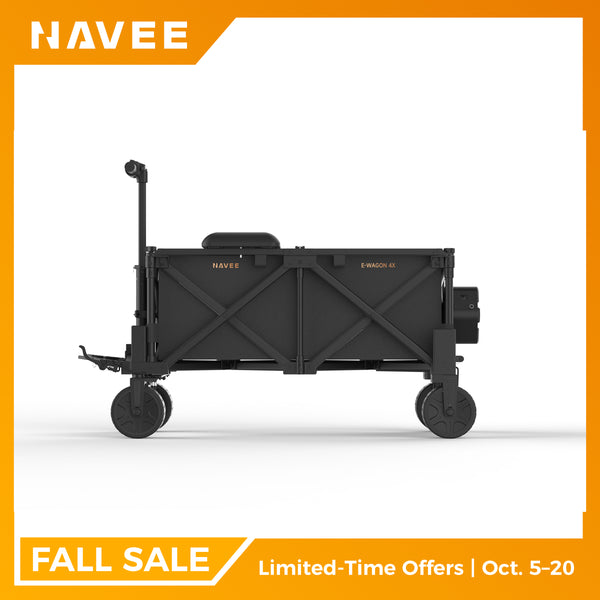
For repeated transfers between equipment storage, vendor areas, and backstage stops, the NAVEE E-Wagon 4X pairs powered outdoor hauling with cargo space for contained supplies.
| Product feature | Application to festival work |
|---|---|
| Independent four-wheel drive and all-terrain tires | Relevant to hauling along suitable grass and gravel service routes. Verify loaded handling on the actual path. |
| 3,000W peak power | Supports powered equipment transfers. Peak wattage does not establish a continuous load rating. |
| 183L cargo capacity | Useful for planning cable-tote, tool-kit, and supply-bin loads. Confirm fit using usable bed dimensions. |
| Detachable 36V 12Ah, 432Wh battery | Allows charging separately from the wagon during scheduled breaks. Plan runtime from representative hauling runs. |
| Foldable frame | Helps with storage and transport between events. Check folded dimensions and lifting arrangements. |
The strongest match is routine, repeated hauling of securely contained gear. Confirm the model-specific moving-load limit before assigning heavier loads, and use separate handling equipment for oversized cases or stage components.

FAQ
What festival equipment can an electric work cart carry?
Common loads include cable totes, tool kits, boxed signage, water, towels, and supply bins. Each load must fit securely and stay within the cart's operating limits for the route.
How much load capacity does a festival crew need?
Add up the heaviest recurring load, including cases and containers. Match that total to the cart's moving-load rating for the intended terrain and mode, then check cargo dimensions.
Can electric work carts handle grass and gravel?
Outdoor models may handle firm grass and gravel, depending on tires, drivetrain, and load. Soft turf, mud, and slopes need separate assessment under the model's operating guidance.
How long can an electric cart run between charges?
Runtime varies with battery capacity, load, terrain, and trip frequency. Measure battery use during representative runs to estimate how many deliveries can be completed before the next charging break.
Share:
How to Move Camera Gear with an Electric Cargo Cart?