

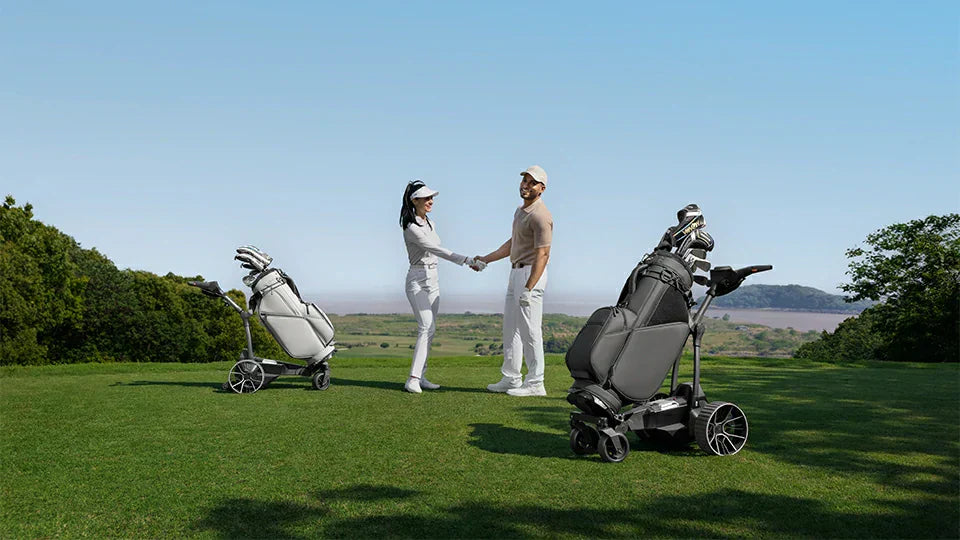
Choosing your first golf trolley doesn’t have to be hard. If you like things simple and affordable, a manual push or pull trolley is a great start—lightweight and easy to use for most courses. If you want to save effort or play on hilly ground, electric golf trolleys are worth the investment for their power and convenience. This guide will help you decide which type fits your needs, show you what features to focus on, and answer the most common beginner questions, so you can confidently choose the best golf trolley for your game.
Golf trolleys are mainly divided into two types: manual and electric. Each type has its own pros and cons, so it’s important to match your choice to your needs and playing style.
Manual trolleys are moved by your own effort—either pushing or pulling. They’re lightweight, simple to use, and usually the most affordable option. If your course is mostly flat and you don’t mind a bit of walking exercise, a manual trolley is a practical and budget-friendly choice. Always check the folding mechanism and make sure it fits your car before you buy.
Electric golf trolleys use a battery-powered motor to move your clubs for you. Basic electric models provide motorized assistance, making it much easier to play on hilly courses or during long rounds. Look for models with reliable batteries, easy controls, and strong frames.
If you want more advanced features, consider a smart electric golf trolley. These offer extras like remote control, follow-me function, and app connectivity. For example, the NAVEE Birdie 3X stands out with its quick-fold design, wide all-terrain wheels, remote control and smart follow features—making it a great fit for golfers seeking both convenience and innovation.

Always test how easily the trolley folds. If you can, fold it yourself at the shop. Choose a model that you can handle without help and that fits into your car or storage space. Avoid big or heavy designs if you struggle to lift them.
Pick a trolley you can comfortably lift into and out of your car. Don’t be fooled by ultra-sturdy models that are too heavy for daily use. Remember, electric golf trolleys are usually heavier—try lifting with the battery installed before you buy.
Be sure to check battery size and user reviews for real-life range. Some models, like the Birdie 3X, have a detachable battery that supports up to 18–36 holes on one charge, making them reliable for long games or two full rounds without worry.
Wobbly trolleys tip over and make rounds miserable. Choose a trolley with wide, sturdy wheels—especially for hilly or wet courses. Try pushing the trolley loaded with a bag in-store if possible. Metal frames last longer than cheap plastic.

You don’t need every fancy option at first. Skip extras like GPS or phone apps unless you’re sure you’ll use them. Focus on a solid, easy-to-use basic trolley—manual or electric—for your first purchase.
Always ask about the warranty length and what it covers. Choose brands with easy access to customer support and spare parts. Keep your receipt and warranty info in case you need service or repairs.
Ask for a demo in-store or borrow a friend’s trolley for a round. Testing lets you spot annoyances (awkward handles, tricky folding) before you spend money. Never buy online without double-checking size and return policy.
After each round, wipe down your trolley and check for loose parts or worn wheels. For electric golf trolleys, always charge the battery after use and store it in a dry place. A little care keeps it running smoothly and extends its life.
Add-ons like umbrella holders, drink holders, or phone mounts can be helpful, but don’t buy every extra right away. Start with the basics, then upgrade if you find something truly useful for your routine.
If your budget is tight, look for gently used or demo trolleys at golf shops. You can often find quality models at a discount. Just check the battery and frame condition carefully before you buy electric golf trolleys second-hand.

A: Most electric golf trolleys are easy to operate. Read the manual, practice at home, and ask for a demo if possible. Controls are usually straightforward, with start/stop and speed buttons.
A: Basic manual trolleys can cost less than $200. Entry-level electric golf trolleys usually start from $700–$800 for the most basic models. If you want a high-quality option that’s reliable for years, the NAVEE Birdie 3X—priced at just $1,699.99—offers premium features and durability, making it a smart choice you can use confidently from beginner all the way to advanced player. Always balance your budget with features, quality, and warranty for the best experience.
A: Choose a trolley with wide wheels, strong frame, and—if possible—a motor (electric). Anti-tip features are a big help. Avoid skinny-wheeled or top-heavy designs on uneven ground.
A: Check the folded size and measure your car trunk before buying. If in doubt, bring your golf bag to the shop and try fitting both inside.

The best golf trolley for beginners is the one that fits your course, budget, and lifestyle—without overcomplicating things. Use these hands-on tips to avoid beginner mistakes and choose a trolley that will keep your golf days easy and fun, whether you go manual or electric.
Share:
Are Electric Push Carts Worth the Investment? A Golfer’s Perspective
Navigating Royal Portrush: How Electric Golf Push Carts Help On Challenging Links Courses